The 1950s marked a turning point in women’s fashion and beauty, riding the wave of post-war prosperity and the rise of mass media. Disposable income and new home hair care products empowered women to style their hair at home, while film, television, and advertising helped popularize a diverse range of iconic looks. Hair trends reflected a mix of Hollywood glamor, teenage rebellion, and evolving social norms, with salons still playing a crucial role for many as a center of style.
Influences on the Era’s Hairstyles
Film stars and television personalities shaped public taste. Leading ladies like Audrey Hepburn, Grace Kelly, Elizabeth Taylor, Dorothy Dandridge, Debbie Reynolds, and Doris Day inspired the latest silhouettes, while others such as Marilyn Monroe and Jayne Mansfield carried signature looks into the spotlight. Television further amplified these influences, with Lucille Ball’s I Love Lucy (1951-7) becoming one of the era’s most-watched programs and beauty ads saturating every medium from TV to magazines. Mass media unified beauty ideals and fashion, featuring the biggest stars on covers and in campaigns.
There was a strong Italian influence in fashion and attitude during the era, particularly in the USA, with Italian cinema and Hollywood productions fueling a romance with la dolce vita. Hairdressers became celebrities in their own right, with names like Raymond Bessone, Alexandre de Paris, and Sydney Guilaroff shaping trends for the rich and famous. Hollywood’s most glamorous women often relied on expert stylists for wedding-ready looks, red-carpet updos, and daily elegance.
Teenagers emerged as a distinct demographic, prompting beauty brands to tailor products for youth culture. Rock and roll amplified the connection between music, fashion, and hair, creating a feedback loop that defined the decade’s teen mood and aesthetic. A contemporary video from 1956 demonstrates how teens incorporated accessories into popular hairstyles, underscoring the era’s playful experimentation with texture and shape.
Key 1950s Hairstyles
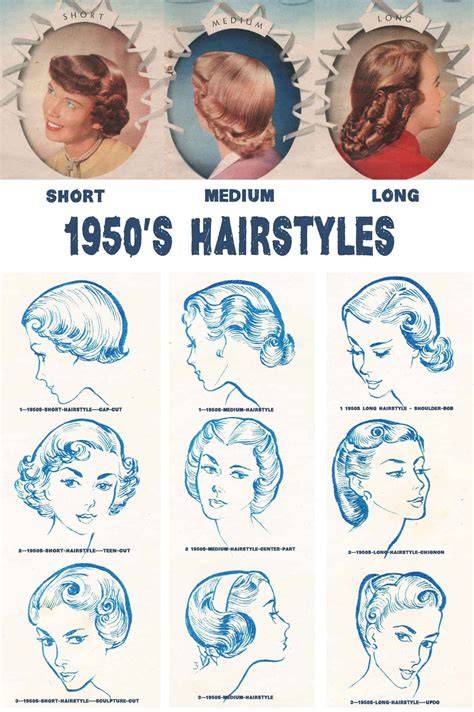
- The Poodle Cut (or bubble cut): A short, tightly curled style suited to naturally curly hair; popular in the first half of the decade and often requiring many curlers and regular trims. Some sources credited Betty Grable’s postwar volume as a precursor, with variations worn by Marilyn Monroe and Lucille Ball.
- The Italian Cut: Emerging in 1953, this short, curly, tousled look featured soft curls and spit curls to frame the face. Gina Lollobrigida, Sophia Loren, and Elizabeth Taylor helped popularize it, which blended with other voluminous styles over time.
- Soft Bob: A medium-length, versatile version of the bob with looser curls and waves for a fuller, more approachable silhouette.
- The Cube Cut: A very short haircut with a mid-ear fringe and angular side lengths, popular in Britain in the mid-1950s.
- The Gamine Look or Pixie Cut: A short, layered cut with a high fringe, popularized by Audrey Hepburn in Roman Holiday (1953). It represented independence and a break from more traditional femininity.
- Pageboy or Brushed Under Bob: A sleek, smooth bob that curled under to form a continuous U-shaped roll; Grace Kelly and Marilyn Monroe wore variations of this look.
- Long Hair & Horsetails: While shorter looks dominated, long hair persisted among teens and some adults, often worn in ponytails or “horsetails,” a term used at the time and famously depicted on Barbie’s first appearance in 1959.
- Bouffant: A tall, voluminous crown achieved by backcombing and backstaying with hairspray, often set with large mesh rollers; it foreshadowed the beehive and became a defining late-50s silhouette.
- Natural and Relaxed Looks in Black Communities: Some women straightened hair at home or in salons, using hot combs, chemical relaxers, or early perms; wigs offered a quick path to the latest style, while keeping the hair protected and stylable.
- Setting & Perming: Wet sets with pin curls or rollers created curls and waves, while perms provided longer-lasting sets for those seeking easier maintenance.
- Hair Colour and Accessories: Hair colour experiments included two-tone hues and metallic highlights, with sprays, powders, and hairpieces called flashes offering temporary fashion statements. Flowers, headbands, scarfs, and various hats completed many looks.
Details by Hair Length
Short hairstyles dominated the early and mid-1950s, often featuring poodle, Italian, and bewitching bobs. By the late 1950s, bouffants and beehives rose to prominence, while shorter, tailored cuts remained popular among movie stars. Medium-length hair balanced shape and volume, ideal for updos and sleek styles, while long hair could be styled into chignons, twists, or soft waves for evening wear. The ponytail, hats, and scarves provided practical ways to switch up looks without a full haircut.
Colors, Accessories, and Home Styling
Hair colour became more adventurous in the mid- to late-1950s, with do-it-yourself products enabling home colour changes, bleaches, and two-tone looks. Metallic powders and color sprays offered temporary shimmer, while chameleon streaks and hair flashes provided dramatic accents. Hairpieces and wigs allowed longer looks without commitment, and flowers or ribbons added feminine detail. Hair care products marketed as non-greasy oils and pomades helped maintain shine and manageability for daily glamor.
Practical Tips for Recreating 1950s Styles Today
- Start with a solid setting routine: use setting lotions, curl with rollers or pin curls, and allow for proper drying time to achieve authentic volume.
- Choose a length and cut that matches your face shape and lifestyle, remembering that the era favored volume, smooth lines, and clearly defined parts.
- Incorporate period-appropriate accessories like headbands, scarves, flowers, and pillbox hats to complete the look.
- For color experimentation, consider temporary sprays or semi-permanent dyes to recreate the bold, two-tone or metallic accents popular in the decade.
- When aiming for a bouffant or beehive, use backcombing and strong hold hairspray, setting the style with mesh rollers or cans for height that lasts throughout the day.
As the decade progressed, the 1950s shifted from pure novelty to enduring glamour, influencing later generations’ fashion and hair trends. The era’s hairstyles balanced precision and playfulness, creating a lasting template for red-carpet elegance and everyday chic alike.
6 Easy Vintage 1950s Back To School Hairstyles [CC]
Table: Snapshot of popular 1950s hairstyles by characteristic
| Hairstyle | Length | Key Features | Celebrity/Influence |
|---|---|---|---|
| Poodle Cut | Short | Tightly curled, voluminous top | Marilyn Monroe, Lucille Ball |
| Italian Cut | Short | Soft waves, spit curls | Sophia Loren, Gina Lollobrigida |
| Bouffant | Medium to long crown | Backcombed, high volume | Becoming everyday glamour |
| Pixie | Short | Gamine silhouette, face-framing | Audrey Hepburn |
| Be-Hive/Beehive | Long crown, updo | Height, sculpted curls | Hollywood icons |
tags: #1950s #hairstyles #for #women