The water electrolysis market is undergoing a transformative phase as the world intensifies its shift toward clean energy solutions and sustainable practices. The growing interest in hydrogen as a clean fuel, coupled with advancements in electrolysis efficiency and cost-effectiveness, is driving widespread consideration across industries and governments. Green hydrogen produced via water electrolysis is increasingly viewed as a pivotal element of the global energy transition, with supportive policies and investments further accelerating adoption. The integration of electrolysis technology into existing energy systems promises a smoother transition toward a hydrogen economy, while recognizing ongoing challenges such as infrastructure development and the optimization of energy sources.
Market Magnitude, Growth Drivers, and Technological Momentum
As per MRFR Analysis, the Water Electrolysis Market valued at USD 1.82 Billion in 2024 is projected to reach USD 14.96 Billion by 2035, growing at a CAGR of 21.11% during 2025-2035. The market is experiencing rapid expansion due to increasing demand for clean energy solutions and the decarbonization of multiple sectors. Recent innovations in electrolysis technology are enhancing efficiency and reducing costs, which strengthens the case for wider deployment across transportation, industrial processes, and energy storage. The hydrogen economy could attract significant investments, with IEA and other agencies forecasting substantial capital inflows that bolster the development of electrolyzer technology and hydrogen infrastructure. Governments worldwide are implementing policies that favor renewable energy technologies, including water electrolysis, thereby creating a favorable environment for investment and scale-up. The combined effect of policy support, capital influx, and technological maturation underpins a broadly optimistic market outlook.
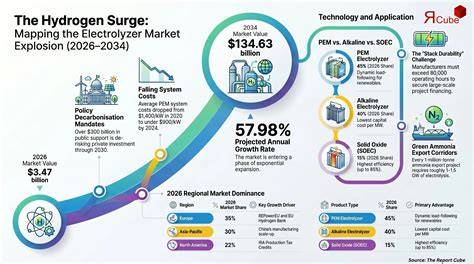
Hydrogen production via water electrolysis remains a central application, with the energy and industrial sectors increasingly adopting hydrogen for processes such as ammonia production and refining. The rise of green hydrogen, produced from renewables, is reshaping market dynamics and prompting the shift toward modular, scalable electrolyzer deployments. The market is characterized by a diverse technology base, where Alkaline Electrolysis holds the largest share due to low capital costs and established reliability, while Proton Exchange Membrane (PEM) electrolysis is gaining traction for higher efficiency and flexibility in fluctuating renewable energy contexts. As technology evolves, both segments are expanding, with PEM often positioned as the fastest-growing complement to traditional alkaline systems.
The expansion of the market is aided by robust demand in hydrogen as a clean energy carrier and as an energy storage medium for renewable integration. End-use applications span industrial hydrogen production, transportation (hydrogen fuel cells for vehicles), and energy storage solutions that help smooth the intermittency of wind and solar resources. The transportation sector, in particular, is accelerating demand for hydrogen fuel cells, while the industrial sector increasingly adopts hydrogen in processes such as steel and chemical manufacturing. These dynamics reinforce the market’s growth trajectory and highlight the interconnected nature of hydrogen supply chains and energy systems.
Regional Dynamics: Leaders, Opportunities, and Trajectories
Europe leads in policy support and hydrogen strategy execution, with programs such as the EU Green Deal and various national initiatives driving sizable investments in electrolyzers and hydrogen hubs. Germany, France, and the United Kingdom are notable contributors within Europe, leveraging high industrial demand and ambitious decarbonization targets. The region’s emphasis on decarbonizing heavy industries-steel, chemicals, and refining-creates a substantial and persistent demand for alkaline electrolysis solutions, while PEM technologies expand to address flexibility needs. The European market benefits from regulatory frameworks, subsidies, and R&D funding that collectively accelerate deployment.
North America follows with strong policy support and mature energy infrastructure that facilitate hydrogen production and distribution. The Infrastructure Investment and Jobs Act (IIJA) and related regional initiatives underscore the region’s commitment to regional hydrogen hubs and decarbonization. The United States, in particular, emphasizes large-scale projects and industrial uptake, supported by strategic R&D and private investment. North America’s market growth is closely linked to the availability of renewable electricity and the development of hydrogen refueling and distribution networks.
Asia-Pacific emerges as a fast-growing region due to rising energy demand, rapid industrialization, and aggressive hydrogen strategies in China, Japan, South Korea, and India. The region’s fast-paced adoption is driven by government incentives, renewable integration, and substantial investments in hydrogen infrastructure. Asia-Pacific is expected to register the fastest growth in the coming years, with a strong emphasis on heavy industries and large-scale electrolyzer deployments to meet decarbonization goals.
Latin America, the Middle East & Africa are increasingly investing in hydrogen infrastructure and electrolyzer projects, supported by favorable solar and wind resources in some markets and government strategies that emphasize energy transition and decarbonization. In these regions, cost advantages, policy support, and access to renewable energy sources contribute to growing opportunities, particularly for on-site industrial hydrogen production and distributed generation models.
Market Structure: End-Use, Technology, and Scale
The Water Electrolysis Market is driven by a mix of end-use segments, with Hydrogen Production as the leading application due to the broad adoption of hydrogen across transportation, industrial processes, and energy storage. Transportation and mobility, especially hydrogen fuel cell vehicles and associated refueling infrastructure, are growing rapidly as part of the broader shift toward clean energy in the transport sector. The energy storage segment is gaining prominence for its role in stabilizing grid operations and enabling higher penetration of intermittent renewables. Industrial applications-such as ammonia synthesis, refining, and chemical manufacturing-remain a core and expanding area for on-site hydrogen production using electrolysis.
In terms of electrolyzer sizes, Large-Scale (>2 MW) units hold a dominant market share due to their efficiency and capacity to meet substantial demand in industrial hubs. Small-Scale (<500 kW) electrolyzers are gaining traction for pilot projects, distributed hydrogen production, and research applications, reflecting a growing interest in modular and decentralized solutions. The technology mix continues to balance mature Alkaline electrolysis with the technologically agile PEM segment, which is favored in applications requiring higher efficiency and dynamic response to renewable energy fluctuations.
Key Players and Competitive Landscape
Industry leaders include Nel ASA, Siemens Energy, ITM Power, and major industry players like ThyssenKrupp AG, Cummins, Plug Power, and Ballard Power Systems. These companies are pursuing growth through capital investments, research and development, strategic partnerships, and mergers and acquisitions to broaden their product portfolios and enhance electrolyzer performance. Nel ASA focuses on scalable hydrogen production solutions, with a strong emphasis on renewable energy integration. Siemens Energy provides modular and scalable electrolysis systems designed for diverse industrial applications, leveraging its know-how in smart grid integration and energy storage. ITM Power emphasizes high-performance PEM electrolyzers for decentralized hydrogen generation and related infrastructure, including hydrogen refueling stations. These players, along with regional and mid-sized entrants, contribute to a dynamic competitive landscape driven by technological innovation, policy incentives, and the expanding hydrogen market.
Other market dynamics include the push for cost reduction through materials science, membrane improvements, and process optimization. Government incentives, subsidies, and tax credits (for example, hydrogen-focused initiatives in the EU, US Inflation Reduction Act, and other national strategies) are reinforcing investment in electrolyzer technologies. Ongoing R&D aims to improve durability, efficiency, and scalability, with modular designs and automation/AI-enabled monitoring featured as prominent trends shaping the next generation of alkaline and PEM electrolyzers.
Technical and Economic Considerations
Alkaline water electrolysis (AWE) is a mature technology with a long industrial track record. It uses an alkaline electrolyte (commonly potassium hydroxide) and traditional membranes, delivering cost-effective hydrogen production at scale. The technology’s attractiveness lies in its reliability and established design, especially for large-scale industrial hydrogen production in steel, chemicals, and refining sectors. Across geographies, techno-economic analyses emphasize the capital cost dominance of the stack, with membranes contributing a smaller fraction to overall cost; scale-up strategies and module design play crucial roles in reducing life-cycle costs. For economic assessments, Life Cycle Cost (LCH) and Net Present Value (NPV) models are used to evaluate the attractiveness of electrolyzer investments, incorporating capital expenditure, operation and maintenance costs, electricity prices, and policy incentives. The use of WACC as a discounting metric reflects the practical considerations of financing structures, equity versus debt, and tax treatments in different regions.
Electricity price scenarios and the upstream electricity mix are pivotal in cost modeling, given the significant energy demand of electrolysis. Regions with abundant renewable generation and low-cost electricity create favorable conditions for green hydrogen production. The development of hydrogen hubs, cross-border projects, and infrastructure for production, storage, and distribution are essential to unlocking scale. The ongoing advancement of advanced membranes, catalysts, and heat management technologies holds promise for improved efficiency and longer stack life, potentially expanding the role of alkaline systems and sustaining cost-competitiveness against PEM designs in certain applications.
Product Forms and Applications
Alkaline Water Electrolysis Systems are offered in containerized and skid-mounted configurations. Containerized systems dominate market share due to deployment flexibility, rapid commissioning, and suitability for remote locations. Skid-mounted units offer compactness and easier integration with existing processes, appealing to laboratories and smaller facilities. In industrial settings, on-site installations in power generation, steel plants, electronics manufacturing, and energy storage applications enable direct hydrogen production aligned with decarbonization goals. The technology’s relevance to green hydrogen-produced with renewable electricity-positions alkaline electrolyzers as a foundational component of decarbonized industrial value chains.
Projected Outlook and Emerging Opportunities
News and market analyses indicate that the market is expected to grow rapidly through the next decade, with the power plants segment anticipated to capture a substantial share of revenue by mid-decade. The shift toward gigawatt-scale hydrogen projects and large-scale electrolyzer deployments is already underway, supported by energy transition policies, infrastructure investments, and the decarbonization needs of heavy industries. In emerging economies, cost advantages and government backing are accelerating the adoption of alkaline electrolyzers, creating regional growth opportunities in energy-intensive sectors and distributed hydrogen generation. As demand for green hydrogen grows, modular system designs, AI-based monitoring, and automation will further enhance performance, reliability, and cost efficiency, enabling broader market penetration across sectors and regions.
Representative Company Profiles
- Nel ASA: Global leader in hydrogen technology, offering integrated systems to produce hydrogen from renewable energy and alkaline electrolyzers, with a focus on scalable and cost-efficient solutions.
- Siemens Energy: Provides modular and scalable electrolysis solutions, leveraging smart grid integration and energy storage to optimize hydrogen production across industries.
- ITM Power: Specializes in high-performance PEM electrolyzers for decentralized hydrogen generation and related clean energy infrastructure.
- ThyssenKrupp AG: Focused on large-scale industrial electrolyzers and catalyst technology to improve efficiency for heavy industries.
Overall, the Alkaline Water Electrolysis System market is positioned for robust growth driven by rising demand for green hydrogen, supportive public policy, and ongoing innovation in materials, membranes, and process integration. The ongoing consolidation and collaboration among manufacturers, researchers, and end-users will continue to shape the market landscape and accelerate the transition to a hydrogen-based economy.
Hydrogen: fuel of the future?
In summary, the market’s trajectory is underpinned by strong hydrogen demand, decarbonization imperatives across industrial sectors, and targeted policy support that fosters large-scale electrolysis capacity, while remaining attentive to capital intensity and infrastructure needs that influence adoption timelines.
tags: #alkaline #water #electrolysis #market