During Roman times, the hairstyles of emperors were well-documented and often set trends for the rest of society. A prime example is Augustus, whose portraits consistently feature his trademark hairstyle with distinct, forked locks on his forehead. Emperors were generally regarded as fashion leaders, as illustrated by Emperor Nero (54-68 AD), who embraced elaborate hairstyles with curls and even sported sideburns, sparking a wider trend among men to curl their hair. In the subsequent Flavian period, it became fashionable for men to have their hair cut short at the crown, typically without much styling or volume. Delving into the depths of history, we uncover the powerful influence of Ancient Roman hair trends. Gone are the days when hairstyles were mere expressions of personal taste; in ancient Rome, every curl and twist was laced with meaning.
The city’s cobbled streets were a showcase for the symbols of status among the patricians. It was a common sight to see elite hairstyles in ancient Rome, with hair carefully curled and coiffed to denote nobility and wealth. Yet, it wasn’t solely vanity that directed these styles. Hairstyles bore religious and political ties, serving as a tactile reflection of devotion and allegiance. The deities they worshipped, the leaders they followed, and the events they honoured, all tied into the way they styled their hair. Whether one’s hair was crowned with laurel in homage to Caesar or styled in the divine fashion of Venus, every hairpin had a purpose, every plait a story.
As historians and enthusiasts of cultural fashion, we’re endlessly fascinated by the grooming practices in ancient Rome. The craftsmanship of Roman barbers was not just a service; it was an art that played a pivotal role in society. Latin literary sources reveal that these early barbers, known as “tonsors,” were organized into local guilds during the Republic era. These guilds functioned similarly to other craftsman associations, providing mutual aid and protecting the interests of their profession against competition from slaves. Tonsors were an integral part of daily Roman life, reflecting the society’s emphasis on body care, beauty, and elaborate hairstyles. Like their predecessors in Ancient Egypt, barbers often roamed the streets and taverns in search of clients. While they sometimes offered their services in public spaces, there is evidence of dedicated barber shops, known as “tonstrinae,” where they worked more formally. Barbers could achieve public acclaim, wealth, and popularity through their craft. For instance, Thalamus was known as Nero’s barber, and Pantagathus is remembered for his exceptional skills. There were, however, instances of customer dissatisfaction due to poor shaves or injuries, exacerbated by the absence of modern shaving aids such as creams or foams.
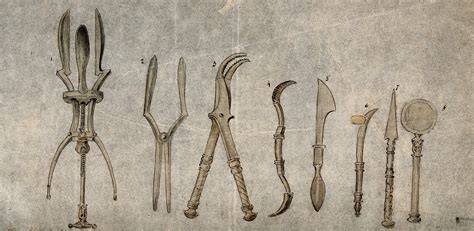
The tools of the tonsor were quite sophisticated, featuring blades or knives typically made of bronze. These evolved into a scissor-like tool called “forfex,” which consisted of two blades joined by a curved, horseshoe-shaped connector, the precursor to modern scissors. In the fabric of Ancient Roman society, where the barber, or “tonsor,” held a razor close to the throats of the elite, trust was paramount. The role of the tonsor extended beyond mere grooming; these artisans wielded sharp blades capable of both sculpting beauty and, potentially, executing harm. This trust was cultivated through rigorous training and adherence to a strict code of conduct within the barber guilds. Despite these precautions, the inherent risk remained-a slip of the hand or a betrayal of trust could prove lethal. Adding to the narrative of Roman barbers is the story of a notorious incident where a barber’s blade became an instrument of conspiracy. In a tale shrouded in legend, a barber was once implicated in a plot to assassinate a high-ranking official, using his razor as the weapon. These dynamics reveal the complex role tonsors played in Roman society, balancing the art of hairstyling with the weighty responsibility of wielding a potentially deadly instrument.
Within this framework of societal norms, the barbers exhibited their expertise in various hairstyles, from the simple to the elaborate. We recognize, even now, the resonance of these ancient methods with modern haircutting techniques, a testimony to the lasting influence of the skills developed by these ancient craftsmen. In the realm of ancient Rome, we find that the culture’s conception of idealized beauty remains astonishingly accessible through the lasting visual narratives of the age. We uncover this idealized beauty by examining the Ancient Roman hairstyles in art, a testament to timeless aesthetics captured in various mediums, from the enduring frescoes and mosaics to the stoic statues and busts. Among the colorful and intricate frescoes and mosaics found in ancient Roman dwellings, we observe the silent language of style that spoke volumes of an individual’s place in society. These works of art offer us a window into the past, presenting the diversity of hairstyles that graced the heads of both men and women. The marble artists of ancient Rome mastered the chisel to such an extent that their statues and busts capture the subtle intricacies of coiled locks and waves, immortalizing the idealized beauty in ancient Rome. The precision with which these sculptors depicted hair illustrates the importance placed on grooming and fashion.
In ancient Roman society, presenting oneself in public was a practice steeped in rituals and expectations. Preparing hair for ancient Roman public life was not merely a matter of personal hygiene; it was a meticulous art that aligned with ancient Roman social norms. When considering hairstyles for public appearances in ancient Rome, one was mindful of the requirement for balance and neatness. Men in particular would have their hair groomed in ways that exemplified cleanliness and order, embodying the virtues of the civilization itself. However, the meticulousness of grooming for public events went beyond mere aesthetics. These grooming rituals were influenced deeply by the ancient Roman social norms. The consistency of grooming before public appearances reveals much about the continuity of tradition and the values held by the culture. Authentic Roman grooming traditions have left an indelible mark on history, shaping the self-presentation and aesthetics that were so vital to the Roman identity.
Shaving for the first time remains a pivotal milestone for young men today, a meaningful rite of passage that traces its roots back to Roman tradition. This significant event is historically known as the “Depositio barbae.” For the ancient Romans, the first shaving of the beard marked a solemn ceremony signifying the transition from adolescence into early adulthood. The freshly shaved hair, referred to as “lanugo,” was carefully preserved and offered to the gods as a sacred offering. Beginning in the bustling streets of Rome itself, we observe how standardized grooming reflected unity and order, essential values of Roman society. Moving outward to the farther reaches of the empire, the Mediterranean basin offers a fascinating glimpse of regional variations in Roman hairstyles. Intriguing variations are uncovered as we examine the local interpretations of what constituted empire-wide grooming trends. Britons may have sported well-oiled and neatly trimmed hair to signify their status, while in the east, beards and mustaches became integrated into Roman fashion through the influence of Greek and Persian grooming customs. As much as hairstyles and grooming were modes of personal expression, they also served as a unifying aesthetic thread that connected the empire.
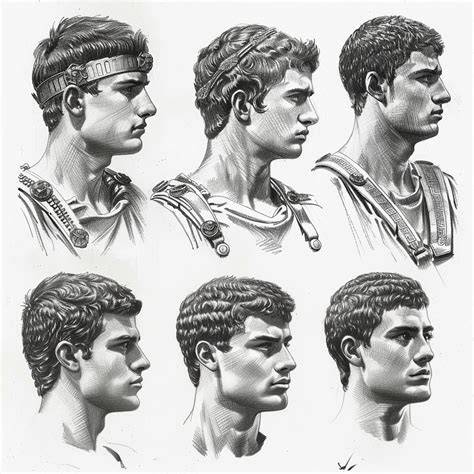
Hairstyles like the cropped Caesar cut transcended local fashion, becoming an empire-wide grooming trend due to its association with the famed ruler. The canvas of ancient Roman society was vibrant with a cultural exchange that shaped every facet of life, including the often overlooked realm of grooming and hairstyles. The grandeur of Egyptian civilization captivated the Romans, who were seduced by the sophisticated techniques observed in Egyptian hair styling. Their admiration went beyond mere appreciation, as they began to weave the luxurious elements they encountered into their own grooming practices. Not to be overshadowed by Egyptian flair, the Greek hairstyle traditions offered a softer, more philosophical resonance that appealed to Roman sensibilities. These Grecian styles, characterized by flowing curls and thoughtful arrangement, were adopted and adapted within Rome’s borders.
Throughout history, the personal styles of celebrity emperors in ancient Rome have had a profound impact on grooming trends far beyond the walls of their palaces. The influence of emperors on hair fashion is a tale not just of personal vanity, but also of political messaging and cultural trendsetting. In Ancient Rome, a lush mane was highly prized among men, symbolizing strength and virility. Julius Caesar, however, grappled with balding-a condition seen at the time as a notable physical flaw. To address his thinning hair, Caesar carefully combed his sparse strands forward over his scalp. Historian Suetonius observed that Caesar was significantly distressed by his baldness. To discreetly cover his receding hairline, he was granted a special privilege by the Senate: the right to wear a laurel crown. The name Julius Caesar not only conjures images of a formidable ruler but also evokes the iconic haircut that bears his name. Julius Caesar’s haircut, characterized by its short, forward-brushed hair, became much more than a mere personal grooming choice-it was a symbol of power and authority.
As we turn the pages of history to the reign of Emperor Hadrian, we find a contrasting approach to personal grooming. Hadrian was known for sporting a well-trimmed beard, which was unusual for an era when clean-shaven faces were the norm amongst Rome’s elite. Hadrian’s beard represented a philosophical and cultured image, leading to a resurgence of facial hair among Roman men. Their personal choices in hairstyle and grooming reverberated through society, solidifying their status as icons of fashion. The indelible role of wealth in Roman hair grooming is also clear: the ability to maintain elaborate hairstyles was a luxury afforded largely by the affluent. The influence of patronage on grooming trends was substantial. Patrons, often from the upper echelons of society, endorsed certain hairstyles, making them coveted trends throughout Rome. Critical yet often overlooked, the slave stylists in ancient Rome were the unheralded architects of coiffure. Their skilled hands were responsible for the iconic looks that we associate with Ancient Roman sophistication.
In the intricate tapestry of Roman grooming traditions, the influence of Greek culture was profound, particularly evident in the hairstyles of philosophers. This distinctive style, known as “Philosopher Locks,” was more than a mere fashion statement-it was a symbol of intellectual identity. Beards were relatively rare among the Roman elite, who generally preferred to be clean-shaven as a mark of distinction from the Greeks. Thus, the “Philosopher Locks” and beards served as potent symbols within Roman society, distinguishing the philosophers not only through their discourse but also through their distinct appearance. This style broadcast their intellectual prestige and set them apart in a society where physical appearance could reflect personal philosophy and intellectual pursuits.
In public, Roman men often sported hairstyles that conveyed their dignity and status. The classic Caesar cut, named after Julius Caesar himself, featured hair trimmed short with a horizontally straight-cut fringe. Privately, however, men had the liberty to explore styles that were less constrained by societal expectations. In the comfort of their domus, grooming might lean towards longer, more relaxed cuts that required less frequent maintenance. They often reflected personal preference more than public persona. Throughout the expansive Roman Empire, the integration of local styles into the mainstream culture was not only profound in politics and cuisine but also in how hair signaled belonging and identity. Hairstyles (Latin capillitium) in Ancient Rome, as in our time, were strongly influenced by fashion. The way hair was styled changed throughout Roman history for both women and men, and the fashion for hairstyles changed more rapidly than the fashion for clothes. The Romans borrowed a lot from Greek culture, and until the end of the 4th century BC, most men followed the Greek fashion for hairstyles: they grew lush beards and long hair. This lasted until the 3rd century BC, when fashion began to change dramatically: after the conquest of Greece, short haircuts and clean-shaven stubble became fashionable. Shaving began when a man was 21 years old, the first shave. The moustache and beard were carefully shaved to ensure smoothness, although this was not the most pleasant task in the Roman shaving technique.
During the empire, complex high styling, structures of curls and braids, as well as various types of curls began to enter fashion. The tutulus hairstyle was very popular: the hair, curled in numerous curls, was fixed above the forehead on a wire frame like a kokoshnik, and on the back of the head it was braided into small braids and laid in the form of a basket. The nodus style was particularly common in the Republican period. In Imperial iconography the nodus coiffure was associated predominately with the women of Augustus' household. Other styles in the Julio-Claudian era were designed to be simple, with hair parted in two and tied in a bun at the back. Flavian and Antonine hairstyles differed greatly between men and women in real life and in the physical appearance of hair for male and female sculptures. In ancient Rome hair was a major determinant of a woman's physical attractiveness; women preferred to be presented as young and beautiful. Therefore, female sculptures were known to have dramatic curls carved with strong chiaroscuro effects.
Beards and certain moustaches signified shifts in fashion and status. Hadrian’s beard, for instance, marked a cultural and philosophical orientation toward Greek aesthetics, while many emperors prior favored clean-shaven looks as a marker of discipline and civic virtue. The barber’s craft, with its high social stakes, connected grooming to politics, religion, and identity across the empire. Philosopher Locks and other signature styles illustrate how hair served as a public message about leadership, intellect, and allegiance. In sum, the chronology of Roman male hair reveals a dynamic interplay between personal vanity, social hierarchy, and imperial propaganda, with each era weaving its own meaning into the strands a tonsor cut.
Tagging together the threads of empire, we note that public appearances often dictated neater, more orderly styles, while private grooming allowed more personal expression. The tonstrinae and the tonsors occupied a pivotal social space, blending artistry with the potential for danger, and their influence extended from the public stage to the intimate rituals of manhood and power.
The History of Barbering: From Ancient Rituals to Modern Style
| Figure | hairstyle | Era | Significance |
|---|---|---|---|
| Augustus | forked locks on forehead | Early Empire | emperor as trendsetter |
| Nero | elaborate curls, sideburns | Early Empire | court fashion influence |
| Hadrian | well-trimmed beard | Hadrianic | Greek-cultural affinity |
tags: #ancient #roman #male #hairstyles