When we think of dreadlocked hair, we usually think of people, but several dog breeds with dreadlocks also exist. These dogs develop unique corded coats either naturally or through grooming techniques, giving them a rare and striking appearance. In this guide, we'll introduce you to the breeds known for their dreadlocked coats and share essential care tips for maintaining these distinctive looks.
How do dreadlocks develop in dogs?
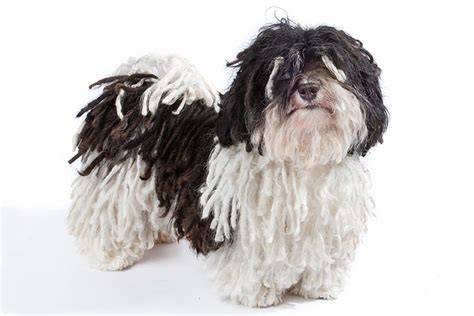
Dreadlocked coats in dogs are known as "corded coats" or "cording." While it might seem like the coat is simply left unattended, forming natural dreadlocks actually requires careful work and maintenance. Improper care can cause the coat to become an uncomfortable mat that is difficult to undo. To form cords, the dog's fur is separated into sections manually, and these sections gradually grow into rope-like strands. Cording begins with dividing the coat into the right-sized segments, which are then allowed to grow and maintain their shape. These cords often gather dust, dirt, and debris, so regular grooming is important to keep them clean and prevent discomfort for your dog. Cording is a relatively high-maintenance grooming style compared to typical brushing and trimming.
The Hungarian Puli
The Puli is one of the most iconic dreadlocked dog breeds. Originating in Hungary over 2,000 years ago as a sheepdog, the Puli’s coat begins very fluffy and sticks out at right angles before eventually forming distinctive cords. Their cords typically start developing around nine months of age, and weekly maintenance is needed to prevent matting and keep their coats healthy and neat.
The Komondor
The Komondor, also from Hungary, is famous for its large stature and thick, white corded coat. They were bred for herding and guarding livestock. The cords take about nine months to a year to develop fully and require regular hand grooming to remove dirt and prevent tangles. Unlike the Puli, the Komondor’s coat is always white or off-white.
The Bergamasco Sheepdog
The Bergamasco sheepdog from Italy has a unique coat with three layers: a smooth oily base, a coarse middle called "goat hair," and a woolly top layer. These layers mat and weave together over time, forming the breed’s characteristic dreadlocks or "flocks." The full coat develops by around five years of age and can reach the ground in mature dogs. These dreadlocks provide protection and insulation in harsh weather.
The Spanish Water Dog
The Spanish water dog is a hardworking herding and fishing assistance breed, known for its water-resistant, woolly, curly coat. Their single coat can form natural cords with minimal grooming, which aids them in aquatic environments. Regular maintenance helps prevent matting while preserving the fluffy, protective quality of their coats.
The Poodle
The poodle, especially the standard and miniature varieties, can also have corded coats, though this does not form naturally without effort. Owners must manually separate and cord the fur, dedicating significant grooming time. The corded look was popular historically, particularly in the Victorian era, but today it’s less common due to the maintenance required.
Additional breeds known for dreadlocks
Other breeds that can develop corded coats include the Havanese, the smallest breed with manageable cords that take up to two years to form, and the Berger Picard, which sometimes has a matted or corded appearance. These coat types provide natural protection and add to the breeds’ distinctiveness.
Responsible Ownership and Maintenance
Owning a dog with a dreadlocked or corded coat demands commitment to regular grooming. Neglected cords can cause pain, skin infections, and discomfort. Whether a dog will live harmoniously with other animals in the household depends on a combination of breed instincts, early socialisation, and individual temperament. Some breeds carry a strong prey drive that makes coexistence with cats, rabbits, or other small animals challenging, while others are naturally sociable and adaptable. Initial introductions are best made on neutral territory with both animals under calm control. Allow them to acclimatise at their own pace over several sessions before granting unsupervised access. Management tools such as stair gates and separate feeding areas remove competition triggers and create safe spaces for each animal.
Summary: Natural dreadlocks in dogs
Natural dreadlocks in dogs are a fascinating feature seen in several hardworking breeds like the Hungarian Puli and Komondor, the Italian Bergamasco sheepdog, the Spanish water dog, and occasionally the poodle. The corded coat is a unique grooming style requiring regular attention and care. Whether formed naturally or through grooming, these cords are distinctive and demanding; they reflect centuries of breed history and working roles.
Quite unusual in the UK and originated in Hungary with a history of working as a herding dog, the Komondor is a gentle, calm, affectionate dog with a life span of around ten to twelve years. When Komondor puppies are born they are not born with dreads, they have a short, white coat that gradually forms into fluffy curls and as the dog grows so do the curls. At around one year old the curls form into matted patches and that is when human intervention is needed to separate into individual cords. Once the Komondor has reached age five the coat will have reached its full potential length and you will probably need to trim the ends so that it is not dragging along the floor. The Puli is very similar to the Komondor, sharing more than just the same coat but their origin - Hungary. The cords of this intelligent, active dog start to develop around the age of six to ten months and they are a breed that must never be shaved or clipped. Their cords can tend to clump together so they will need human intervention to pull the large clumps apart to avoid any matting. When thick cords form they need to be carefully brushed apart to form thinner ones and any dirt that the cords contract needs to be removed. With the Puli it is important that you check their ears regularly as too many hairs can stop the air circulating which can lead to yeast infections therefore plucking the hairs out is vital. Originating from the Italian Alps near Bergamo this breed was originally a herding dog and with its large head and thick tail that hangs down to the hock their most distinctive feature is their coat. Their coat is characterised by three types of hair: a fine, dense, oily undercoat, long harsher hairs and a top woolly outer coat. As the dog gets older, the three types of hair weave together to form flat mats or flocks ranging anywhere from one and a half inches to three inches wide - their coat does not cord. Owning this bichon type toy breed requires serious maintenance for their double coat from their owners. Owners must form sections of hair that continually need checking so that mats don’t form as the fur grows very fast making it easy to become tangled. Due to their dense and curly coat they are more prone to tangling or matting so should be combed at least twice a week to prevent this from happening. It can be difficult to achieve the corded look if you have never done it before and the entire process can take around two years - it may be worth consulting your local groomer. The poodle is bred in three different sizes - miniature, toy and standard and all boast single layer coats which are dense and curly with minimal shedding. However, when the poodle does shed its fur it becomes tangled in surrounding hair which can cause matting. The poodles coat can be corded when the adult coat is in, although this is very rare nowadays as it can be very difficult to keep clean and takes a long time to dry. The texture of their fur can be coarse and woolly or soft and wavy and they come in a wide variety of colours such as; black, brown, white, cream or sable. If you decide to choose a dog with dreads maintaining their locks is not an easy task.
Corded Dog Maintenance - Working On A Puli - Gina's Grooming
tags: #animal #with #dreadlocks