DiagnosisBefore making a diagnosis, your doctor will likely give you a physical exam and ask about your diet, your hair care routine, and your medical and family history. Blood test. Pull test. Your doctor gently pulls several dozen hairs to see how many come out. Scalp biopsy. Your doctor scrapes samples from the skin or from a few hairs plucked from the scalp to examine the hair roots under a microscope. Light microscopy. Your doctor uses a special instrument to examine hairs trimmed at their bases.
TreatmentEffective treatments for some types of hair loss are available. You might be able to reverse hair loss, or at least slow it. With some conditions, such as patchy hair loss (alopecia areata), hair may regrow without treatment within a year.
Cream-focused approaches: what the evidence says
MedicationIf your hair loss is caused by an underlying disease, treatment for that disease will be necessary. Medications are available to treat pattern (hereditary) baldness. Minoxidil (Rogaine). Over-the-counter (nonprescription) minoxidil comes in liquid, foam and shampoo forms. To be most effective, apply the product to the scalp skin once daily for women and twice daily for men. Products with minoxidil help many people regrow their hair or slow the rate of hair loss or both. It'll take at least six months of treatment to prevent further hair loss and to start hair regrowth. It may take a few more months to tell whether the treatment is working for you.
Finasteride (Propecia). This is a prescription drug for men. You take it daily as a pill. Many men taking finasteride experience a slowing of hair loss, and some may show new hair growth. It may take a few months to tell whether it's working for you. You'll need to keep taking it to retain any benefits. Rare side effects of finasteride include diminished sex drive and sexual function and an increased risk of prostate cancer. Other medications. In the most common type of permanent hair loss, only the top of the head is affected. During a hair transplant procedure, a dermatologist or cosmetic surgeon removes hair from a part of the head that has hair and transplants it to a bald spot. Each patch of hair has one to several hairs (micrografts and minigrafts). Sometimes a larger strip of skin containing multiple hair groupings is taken. This procedure doesn't require hospitalization, but it is painful so you'll be given a sedation medicine to ease any discomfort. Possible risks include bleeding, bruising, swelling and infection. You may need more than one surgery to get the effect you want.
Laser therapyThe Food and Drug Administration has approved a low-level laser device as a treatment for hereditary hair loss in men and women. A few small studies have shown that it improves hair density.
Emerging creams and topical approaches
Meet PP405, a new topical cream that’s stirring up serious buzz in the hair restoration world. Unlike the usual suspects, minoxidil (Rogaine) and finasteride (Propecia), which are often slow, inconsistent, and plagued by side effects, PP405 allegedly works smarter. According to the scientist behind this formula, it doesn’t just stimulate circulation or block hormones. These dormant cells sit quietly under your scalp, waiting for a cue. PP405 blocks this specific protein, releasing those stem cells from their slumber, and they waste no time.
You may also likeContinue readingSome participants saw new hair sprouts in early trials that lasted just seven days. And we’re not talking about peach fuzz. Unlike minoxidil, which often only produces vellus hairs, PP405 encourages terminal hair growth, the thick, strong, pigmented strands you actually want. The Trial That Turned HeadsIn a Phase 2a study at UCLA, 78 men and women applied the cream nightly for one week. Even the researchers were surprised. Initial concerns that PP405 might overactivate or damage follicles were quickly replaced with cautious optimism. Instead of harm, it delivered high-functioning hair growth with a safety profile that’s so far looking clean.From Lab Bench to Bathroom ShelfPP405 isn’t just another biotech experiment stuck in limbo. Thanks to some help from Google Ventures and guidance from UCLA’s Technology Transfer Group, Pelage Pharmaceuticals has raised more than $16 million to keep the momentum going.Next up are larger clinical trials, FDA clearance, and a consumer-ready product that could hit shelves as soon as 2027. That’s right. In just a couple of years, you could apply a fast-acting cream that regenerates hair from dormant follicles.
How topical creams fit into a broader treatment plan
At NYU Langone, dermatologists who specialize in hair loss and scalp disorders have treated thousands of people with all types of hair loss. They often recommend medication to help prevent further hair loss and, whenever possible, to regrow hair. Topical minoxidil stops hair from thinning and stimulates new hair growth. This medication can help people with many different types of hair loss, including male and female pattern hair loss, alopecia areata, telogen effluvium, anagen effluvium, hypotrichosis, and some forms of cicatricial, or scarring, alopecia. The way this medication works is not well understood, but many people see significant results. Although it is available without a prescription, you may have better results if you use it while seeing a dermatologist. He or she can diagnose the exact cause of hair loss and determine whether a 2 percent or 5 percent concentration of minoxidil is right for you. The dermatologist can also show you how to apply it correctly. Available as a foam or a liquid, minoxidil is applied directly to the scalp, twice a day for best results. It may take four months to a year for hair to noticeably thicken. Increased shedding may initially be observed soon after the medication is begun and may continue for a month or two. After six months, dermatologists assess how well the medication is working by counting the number of new hairs on the scalp and comparing current photographs with those taken at the start of treatment. If you like the results, treatment can continue indefinitely.
Oral finasteride is a prescription medication for men who have male pattern hair loss, or androgenetic alopecia. Finasteride slows the rate of hair loss and stimulates new hair growth by inhibiting the body’s production of a hormone that destroys hair follicles. This medication is taken once a day by mouth and is most effective when taken at the same time each day. Finasteride starts to work after about four months, but you may not notice significant hair growth for as long as a year. Your dermatologist measures this progress after six months to determine whether to continue treatment. If the medication is working, treatment may continue for as long as new hair growth is desired.
Medications that inhibit androgens-sex hormones that damage or destroy hair follicles-may stop hair loss in female pattern baldness, also known as androgenetic alopecia. Antiandrogen medications are available by prescription only and include spironolactone and oral contraceptives, or birth control pills, that contain estrogen. Antiandrogens usually start to work after four months. Long-term treatment is necessary to prevent hair loss from recurring. Antiandrogens can produce side effects, including irregular menstrual periods and drowsiness. Some types of hair loss are caused by an autoimmune disease and are treated differently than hormonally induced hair loss. With an autoimmune condition, the body’s immune system attacks healthy organs and tissues, including the skin. Sometimes the body destroys healthy hair follicles.
Corticosteroid medications are used to treat people with alopecia areata, lichen planopilaris, and discoid lupus erythematosus. These immune system suppressors can counteract the effects of an autoimmune disease, allowing hair to grow. Steroids are available as topical solutions or injections, and all require a prescription. Dermatologists determine which type of treatment is most appropriate based on your age and severity of symptoms. For children who have been diagnosed with alopecia areata, a topical steroid cream can be applied to the skin or scalp. For adults, the doctor may inject steroids into the skin or scalp. As many as 80 injections may occur during one appointment. Steroid treatments can take place every four to six weeks, and you may see hair regrowth in one or two months. If your hair doesn’t grow, or if you can’t tolerate needles, a dermatologist may prescribe corticosteroid to be taken by mouth for 8 to 10 weeks. If it doesn’t have a visible effect after six months, this treatment should be stopped. Topical and injected corticosteroids have side effects, including scalp irritation that may lead to a rash, thinning skin on the scalp, and a red or puffy face. If a fungal infection called tinea capitis, or scalp ringworm, is the cause of hair loss, a dermatologist prescribes an antifungal medication to be taken by mouth daily. Often, it takes one or two months before you can see results, and treatment usually lasts for several months in order to fully eliminate the fungus. Many types of hair loss are treated with a combination of medications for optimal results.
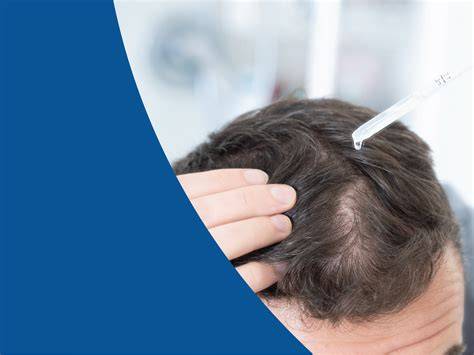
ULTIMATE HAIR LOSS GUIDE | DERMATOLOGIST TIPS
- Minoxidil can slow hair loss and promote regrowth but requires consistent use and time to show results.
- Finasteride is effective for men but carries potential sexual side effects and requires ongoing use.
- Emerging creams like PP405 aim to reactivate dormant stem cells to stimulate terminal hair growth.
- Autoimmune-related hair loss may respond to corticosteroid therapies, either topical or injectable.
- Antiandrogens offer options for female pattern baldness but require careful management of side effects.
Practical guidance for patients
Preparing for your appointment: You’re likely to first bring your concerns to the attention of your family doctor. Your time with your doctor is limited, so preparing a list of questions will help you make the most of your time together. List your questions from most important to least important in case time runs out.
What to expect from your doctor: Your doctor is likely to ask you a number of questions. Being ready to answer them may reserve time to go over any points you want to spend more time on.