Eyebrow piercing is a bold, stylish form of facial modification that has cycled in and out of fashion while crossing social boundaries. It’s enjoyed a recent resurgence, appearing on celebrities, professionals, and alternative crowds alike. While it’s a surface piercing and can provoke anxiety for some, eyebrow jewelry is among the easier piercings to heal when done correctly and cared for properly.
Choosing the right piercing and placement
To enjoy a successful eyebrow piercing, you need enough piercable skin in the eyebrow area, and you must choose a reputable piercer with proven success in eyebrow placements. If your piercer determines there isn’t enough tissue, listen to them. Wearing jewelry that’s too heavy or an incorrect shape can contribute to rejection, even after healing. You should only wear curved barbells or hoops in your eyebrow since these are more suited to your anatomy. The weight of your jewelry will depend upon your anatomy; some piercees can wear bigger jewelry than others. To determine the correct jewelry size, talk to your piercer.
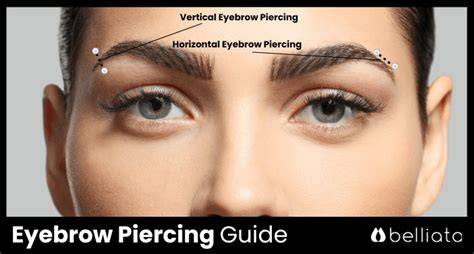
Although most eyebrow piercings appear vertically toward the outer edge of the eyebrow, there are several piercable areas in the eyebrow region. Horizontal placement is gaining popularity, but some placements may look unnatural or be impossible depending on anatomy. If you want to get creative, consult a piercer before committing to a design.
Eyebrow piercing is a surface piercing and carries a risk of migration or rejection if not pierced deeply enough or if the wrong jewelry is used. The placement and depth influence both aesthetics and longevity. The area should be chosen with care to balance look and safety.
Healing, swelling, and initial jewelry
While the piercing itself is relatively painless, you may experience some discomfort in the first days of healing, and some piercings swell more than others. Swelling can cause the jewelry to sit slightly away from the skin. If you’re planning around events, consider getting pierced before a weekend so you can recover at home if needed. As swelling can require a longer post, initial jewelry is often chosen to accommodate this change.
Healing times vary, but eyebrow piercings typically require several months to fully settle. Three to four months is common, though some individuals may heal closer to five or six months. If you’re an active or rough person, or wear protective gear like a helmet often, assess whether this piercing fits your lifestyle. Healing also depends on jewelry choice; heavier or ill-fitting pieces can contribute to irritation or migration.
Initial aftercare involves cleaning with a piercing aftercare saline solution 2-3 times daily, using only salt and water. Keep the area dry and avoid standing water, keep the jewelry as still as possible, and avoid sleeping on the piercing. Do not change jewelry before healing is confirmed by a piercer. Some people may need a longer post during swelling, and only a professional should replace jewelry if needed during healing.
Care and jewelry choices
The eyebrow’s surface location makes it a high-movement area; thus, choosing the right jewelry is crucial. Titanium is a popular, safe, hypoallergenic option that promotes healing and minimizes allergic reactions. It’s also affordable and widely available in professional studios. Always opt for sterile jewelry supplied by the salon; bringing own jewelry is discouraged to avoid contamination.
Common jewelry types include barbells, curved barbells, and captive bead rings. Each type exerts different pressure on the piercing and can influence migration over time. The gauge size matters: a larger gauge reduces rejection risk, but the choice should be guided by the piercer to fit your anatomy. Directional pieces are sometimes used, but with surface piercings there’s a risk of misalignment as the piece threads through the base, so precise placement before piercing is essential.
Aftercare and lifestyle considerations
Post-piercing care is vital to prevent infection and ensure smooth healing. Avoid sun exposure, swimming pools, jacuzzis, lakes, and seas during healing. Keep hands clean, wash the area with mild, fragrance-free soap, and rinse away all soap. Use saline spray twice daily, leaving the solution on the area for about five minutes before washing off with warm water and patting dry. Do not twist or remove jewelry during healing; sleeping on the piercing should be avoided if possible.
When deciding about changing jewelry, consult your piercer to verify complete healing. If unsure, have a professional perform any changes. In the meantime, maintain hygiene and use a sterile approach for new jewelry. If irritation, redness, or discharge occurs, consult your piercer or doctor promptly.
History and cultural perspectives
Body piercing has a long history across cultures, often tied to rites of passage, status, or spiritual beliefs. Eyebrow piercing, however, has a shorter documented history, rising to prominence with punk subculture in the 1970s. The broader history of ear and facial piercings reveals a tapestry of cultural meanings-from status symbols in ancient civilizations to fashion statements in modern times.
Today, eyebrow piercings reflect a blend of bold personal style and cultural awareness, with ongoing conversations around aesthetics, safety, and self-expression. Because facial piercings are highly visible, thoughtful decision-making and professional guidance are especially important for those considering this modification.
Performing the piercing and what to expect
Eyebrow piercing is performed with a single needle under sterile conditions, followed by insertion of jewelry. You’ll likely feel a momentary pinch and a brief pressure as the jewelry goes in. Pain perception varies, but many rate it as a mild discomfort. The procedure typically uses a Pennington clamp to guide the needle, and common jewelry types include barbells, curved barbells, and captive bead rings. An occlusive bandage may be applied for a short period after the procedure.
- The piercer cleans and disinfects the area and marks the entry point for symmetry.
- A hollow needle creates the hole, and jewelry is inserted.
- The piercer ensures the jewelry is secure and provides aftercare guidance.
Eyebrow piercings are considered relatively straightforward but require care due to high movement and proximity to nerves. They are generally safe when performed by qualified professionals in sterile environments, and the risk of eye damage is extremely low, though improper technique can pose risk to nearby nerves.
Practical tips for a successful eyebrow piercing
- Choose a reputable piercer with a proven track record for eyebrow placements.
- Expect swelling and plan around your schedule; have longer jewelry ready for the healing phase.
- Stick to sterile, hypoallergenic jewelry like titanium; avoid heavy or ill-fitting pieces.
- Adhere to aftercare guidelines: keep the area clean, avoid trauma, and confirm healing with a professional before changing jewelry.
- Be mindful of lifestyle factors (sports, helmets, activities) that might affect healing.
In case you want more details on anti-eyebrow variations (below-eye surface piercings), these are a different category and carry similar considerations about movement, healing, and potential rejection. Each type requires careful planning and professional guidance to maximize comfort, safety, and aesthetic result.