Keratin treatments help smooth hair cuticles, giving hair a shinier appearance. They can also help your hair dry faster. But they’re also expensive and may contain potentially harmful ingredients. A keratin treatment, sometimes called a Brazilian blowout or Brazilian keratin treatment, is a chemical procedure usually done in a salon that can make hair look straighter for as long as 6 months. However, the treatment may increase health risks, including certain kinds of cancer, due to exposure to certain chemicals in the treatment. If you’re not sure if keratin treatment is right for you, weigh the pros and cons below.
The body naturally makes the protein keratin. It’s what hair and nails are made up of. The keratin in these treatments may be derived from wool, feathers, or horns. Certain shampoos and conditioners contain keratin, but you’ll typically get the most significant benefits from a salon treatment done by a professional. The benefits of getting a professional keratin treatment or doing one at home can include: Chemically straightened hair, Smooth, shiny hair. It adds intense glossy shine to hair and can reduce frizz. Keratin smooths cells that overlap to form hair strands, which means more manageable hair and less frizz. This results in hair that dries with little frizz and has a glossy, healthy look. Keratin can also reduce the look of split ends by temporarily bonding the hair back together. Some formulations can smooth curls, making them appear softer. Thicker looking hair. Replenishing the keratin in your hair can cause it to look thicker. Long-lasting results. If you care for a keratin treatment by not washing your hair too frequently (2 to 3 times a week is enough), your keratin treatment can last up to 6 months. More manageable hair. Keratin treatments make hair more manageable, especially if your hair is particularly frizzy. If you constantly heat style your hair, you’ll notice that a keratin treatment makes it dry more quickly. Some people estimate that keratin cuts their drying time by more than half. Your hair may also become healthier and stronger because you can air dry it more often, preventing heat damage. Hair growth. Keratin can strengthen and fortify hair so it doesn’t easily break off. This can make hair seem to grow faster because the ends aren’t breaking off.
Health considerations and ingredients
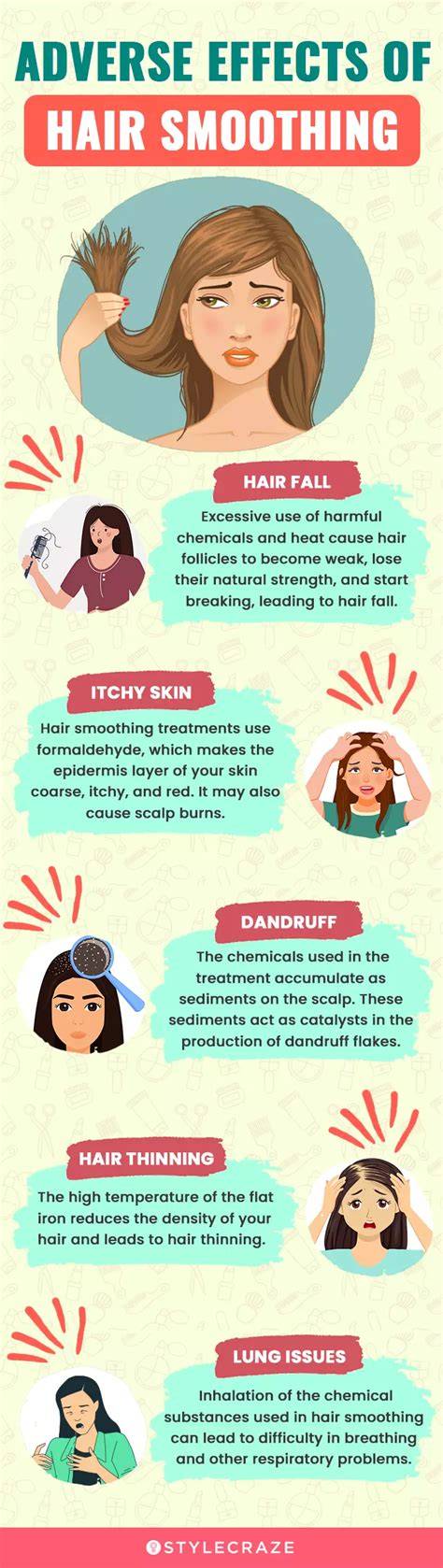
Formaldehyde and formaldehyde-releasing chemicals. Many (but not all) keratin treatments contain formaldehyde, which can be dangerous if inhaled. It can cause symptoms such as headaches, dizziness, eye issues, sore throat, cough or wheezing, chest pain, nausea and vomiting, rash, kidney injury. Formaldehyde is what actually makes the hair look straighter. Hazardous chemicals may release formaldehyde gas when heated. A 2021 case study reported that a 13-year-old female experienced severe kidney injury due to formaldehyde in a keratin treatment product marketed as formaldehyde-free. The FDA recommends reviewing the ingredients list and communicating with your stylist about the salon’s safety practices to limit formaldehyde exposure. They have issued warning letters to brands whose products contained unsafe amounts of formaldehyde or did not disclose the presence of formaldehyde.
Cancer risk. Research from 2019 linked chemical straighteners and breast cancer risk. Females in the study who used straighteners every 5 to 8 weeks or more often had a 31% higher risk of breast cancer. Research from 2021 suggests a link between chemical straighteners and ovarian cancer. The researchers noted an increased risk of uterine cancer in females who used chemical straighteners more than four times a year. Additional research from 2022 links chemical straighteners and uterine cancer. The researchers noted an 80% higher adjusted risk of uterine cancer in females who used a chemical straightening product within the previous 12 months.
Cost, maintenance, and practicality
Cost. Each treatment can range anywhere from $300-$800, plus tip. Less expensive at-home options are available, but the results do not last as long. Hard to maintain. Washing your hair less and avoiding swimming might make it harder for some people to maintain it. The type of water on your hair matters: Swimming in chlorinated or salt water can shorten the life of your keratin treatment. You’ll also need to invest in shampoo and conditioner free of sodium chloride and sulfates, as these can strip the treatments. Wait to wash: You’ll have to wait 3 to 4 days post-keratin treatment to get your hair wet, so if you don’t like skipping wash days, this treatment may not be right for you. Some people report a musty smell even after washing. Not recommended for all: It’s not recommended for pregnant people.
Is keratin treatment good for your hair? A keratin treatment can benefit your hair, including smoothing frizz, straightening, and giving hair a shiny appearance. What is a keratin treatment, and how long does it last? A keratin treatment is a chemical procedure that can make hair smoother and more manageable. It can last as long as 6 months. What are the pros and cons of keratin? Keratin treatments can make hair smooth and shiny and reduce the appearance of frizz. It can also help hair dry faster. However, the chemicals involved may have a negative effect on overall health, including increasing the risk of breast, cervical, and uterine cancers.
Types and alternatives of hair smoothing treatments
There are a range of smoothing hair treatments available, offering varying levels of smoothness to suit your needs. Whether you want semi-permanent straightening or a frizz-fighting solution that retains your natural texture, there are options for all hair types and needs. Formaldehyde-free options exist, using glyoxylic acid derivatives, though results may be less dramatic or shorter-lasting. Some treatments aim to reduce frizz and humidity sensitivity without fully altering texture. In addition to keratin, Brazilian blowouts, and Japanese straightening, other organic or protein-based smoothing methods are marketed as gentler alternatives.
At The Smoothbar, the emphasis is on bespoke smoothing treatments that preserve hair integrity. Treatments can last up to several months, gradually fading over time. Some newer formulas rely on glyoxylic acid or derivatives to lock the hair into a straighter position without formaldehyde. The choice between keratin, Brazilian blowouts, organic smoothing, and Japanese straightening depends on your hair type, desired results, and tolerance for maintenance and risk. A professional stylist assessment can guide you to the most suitable option.
Practical tips for choosing and maintaining
- Identify your hair type and desired outcome: frizz control, shine, or straightness.
- Consult a professional stylist to assess texture, thickness, damage, and porosity.
- Consider formaldehyde exposure and seek formaldehyde-free options if concerned.
- Switch to sulfate-free shampoos and avoid salt-containing products to extend results.
- Avoid chlorine and excessive sun exposure to prolong the effect.
- Test a small section of hair before committing to a full treatment if you’re unsure.
- Schedule treatments with time for proper setting and avoid heavy events immediately after.
Choosing the right hair smoothing treatment for your hair type is essential to achieving the best results and maintaining the health of your hair. Whether you’re looking to tame frizz, reduce curl, or add shine, the right treatment will depend on your hair’s texture, condition, and your desired outcome. For long-lasting results, a few changes to your hair regimen are helpful: switch to sulfate-free shampoo, minimize heat styling, and incorporate deep conditioning to nourish the hair between treatments.
Natural Hair KINKY TO STRAIGHT Hair Science-How keratin treatment ,Rebonding and Straightening work?
In summary, keratin treatments can deliver smoother, shinier hair and faster drying, with long-lasting results when properly maintained. They carry health considerations due to chemical components, especially formaldehyde, and vary in price, durability, and effect depending on the formulation and hair type. A professional evaluation remains the best path to a safe, tailored result.