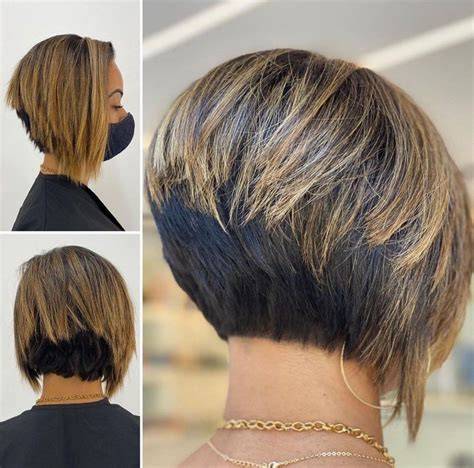
The inverted bob has achieved iconic status in hairstyling, celebrated for its angled shape that highlights a stylist’s skill and exudes a confident vibe. The inverted bob, also known as the “graduated bob,” features shorter hair at the nape of the neck that gradually lengthens toward the front, creating a stacked effect. Unlike the classic bob with even lengths all around, the inverted bob is all about angles. Clients love this cut for its low maintenance, suitability for multiple face shapes, and versatility across hair textures.
Key structure and versatility
Key elements of the inverted bob include a stacked nape, graduated layers, and precise angles at the front. The structure of the inverted bob can be tailored to suit straight, wavy, curly, fine, or thick hair types. Optional tools like a razor can help with texturing. Sectioning the hair with a clean, horizontal guide at the nape of the neck helps control the cut. Start at the back, working from the bottom up to establish a foundation. To achieve the stacked look, cut a baseline at the nape and layer upwards, using each layer as a guide for the next. A smooth graduation effect without harsh lines requires precision and control. For the angled front, determine the client’s preferred length, then create a soft or sharp angle to flatter their face shape. Achieving symmetry here is key so it is usually best to keep sections wet so that they are manageable while cutting. After cutting, check for symmetry and balance. Clippers or texturizing scissors can help you refine dimension and shape along the nape and the perimeter.
Styling approaches: polished vs. tousled
For clients seeking a polished look, straight styling with a flat iron is the way to go. For a laid-back, tousled version, use texturizing techniques like razor-cutting or point-cutting to add dimension. The inverted bob can be extended to shoulder length for clients who want a little more length. Adjust the graduation for a subtle stack that doesn’t add bulk. Curly-haired clients can rock an inverted bob with minimal adjustment-just make sure to account for shrinkage. Cutting curls dry can help retain curl shape while creating the inverted silhouette. For an edgier look, create a steep angle with an elongated front.
Color, texture, and added depth
Adding a hidden panel of color will really make this striking style pop! Clients seeking statement colors can pair their bob with pastel shades like a soft pink, deep browns, or even fashion colors (blue, pink, etc.) for a modern twist. Root shadowing adds depth to the stacked nape, giving the inverted bob a more dynamic look. Balayage techniques highlight the angles and layers of the inverted bob by creating added dimension with natural blending that complements the graduated cut.
Special considerations and variations
The inverted lob is a longer version that continues the same angled, stacked aesthetic. The inverted bob is a one-size-fits-all haircut: hitting the shoulders, it will work with the curliest of curls and the straightest of straight hair. The back view often benefits from a neat, compact stack, while the front can range from soft to sharp angles depending on facial features. For thick hair, a long undercut inverted bob-cut can reduce bulk while preserving length. For thin or fine hair, the inverted cut can add volume with strategic layering and careful placement of weight lines. A long inverted bob reaching the collarbones remains a chic option that balances movement with length.
Inspiration from celebrities and looks to try
Inverted bobs have been championed by celebs and fashion-forward profiles, including Victoria Beckham’s iconic yogurt-volume take and Lily Collins’ chic, face-framing version. Rihanna and Gigi Hadid demonstrate how a long inverted bob can pair with dramatic side parts and bold color, while Selena Gomez’s inverted lob shows a softer, framing approach. The versatility of the inverted bob is evident in dozens of looks-from blunt, Parisian-inspired ends to textured, wavy silhouettes that read as effortless and modern.
For different face shapes, angles can be adjusted: a steep angle elongates the face, while a gentler angle can balance rounder jawlines. Bangs or side-swept fringe can be integrated to further tailor the silhouette. Wavy or curly textures respond well to minimal layers and strategic sizing of the nape to keep the graduated effect intact. A quick note: the inverted bob is long enough to style in a variety of ways, yet short enough to retain that signature stacked back.
- Natural curls benefit from dry-cutting to honor shrinkage and volume.
- Relaxed, beachy waves pair beautifully with the graduated front for a soft, modern look.
- Razor-cut texturing adds feathered movement across the crown and along the perimeter.
- A color strategy such as balayage or root shadowing enhances depth and emphasizes the angles.
- Careful sectioning at the nape ensures a clean, precise stack and a balanced front.
Practical guidance for clients and stylists
The inverted bob’s strength lies in its adaptability to hair type and lifestyle. It flatters multiple face shapes, from oval to square, and works across straight, wavy, and curly textures. Maintenance can be straightforward with regular trims to preserve the weight lines and the stacked silhouette. A tailored approach-considering thickness, natural texture, and face shape-ensures the angle and length visually flatter the client.
How I Style My Inverted Or Stacked Bob --Asymmetrical Bob--A-Line Bob--Red Lowlights
Ready to explore more? The inverted bob continues to evolve with fashion trends and color techniques, proving itself as a perennial favorite in modern hairstyling.
tags: #hairstyles #long #inverted #bob