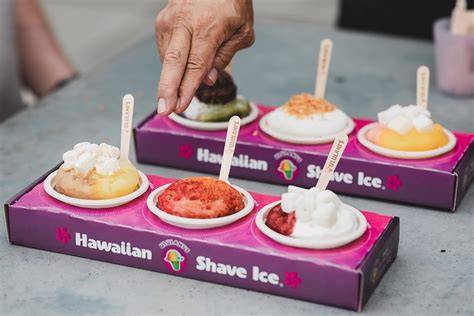
This article distills the journey of launching a mobile shaved ice venture in Tampa, Florida, inspired by Hawaiian shave ice, and chronicles the practical steps, challenges, and insights from idea to first sale within 30 days.
Origins: inspiration from Hawaii and local opportunities
The Hawaiian shave ice is different from a snow cone, as the ice is shaved like powder snow instead of being chunky. It’s usually filled with vanilla ice cream and topped with sweetened condensed milk. Hawaiians refer to it as “shave ice,” dropping the “d” in “shaved ice” and it’s now accepted as the proper name for this iced confection. When done properly, Hawaiian shave ice is superior to classic snow cones, ice cream, or frozen yogurt. While in Hawaii, Zaira and I talked about opening a shave ice shop in our current hometown of Tampa, Florida.
Although we both believed that a shave ice business would be very successful in Tampa, realistically, we didn’t have the time to open up a shop. It would require an investment in a storefront, expensive equipment, employees, and a lot of our time. A mobile route began to appear more viable, offering flexibility and lower upfront risk while we tested demand.
Initial exposure to the concept: shaved ice on the go
During a work dinner, I met Kari, who ran a small shaved ice golf cart business without a storefront, a large investment, or multiple employees. I was impressed by her ability to run a successful business with limited resources, and I was intrigued by the concept of a shaved ice golf cart. After work, I spent about two hours researching golf carts for sale and familiarized myself with Florida’s food cart regulations, which apply to golf carts with food service capabilities. One requirement that caught my attention was the need for a commissary, since using a personal residence for water and utensil cleaning is prohibited.
Today was a long day in the office. After work, I spent about 30 minutes looking up golf carts for sale, but nothing else. My regular job is my priority, and I don’t want anyone to think that I’m neglecting my work to build this golf cart. I continued to shop around for golf carts. I called a local golf cart shop, but they didn’t have any of the beverage cart-style carts. Then, I found one on eBay that is located in Fort Myers, only two hours away from me. I’m a little concerned because it is listed at $3,750, which is much cheaper than anywhere else. I called the golf cart guy in Fort Myers and scheduled a pickup.
Acquiring the cart and planning the build
From Google Maps, it appeared that he operated a used outdoor equipment shop that sold refurbished lawnmowers, forklifts, golf carts, etc. He was kind of an asshole. I tried asking him about the condition of the cart and he cut me off abruptly with, “Do you want the cart or not?” He was very terse and not interested in answering any more of my questions. His customer service sucked, but the golf cart was a really great deal. My first test run was really chunky, like old-school snow cones from the Jersey Shore. For a moment, I thought that I made a huge mistake to think that I could create Hawaiian-style shave ice. Then I realized that I could adjust the blade to make the ice finer.
I picked up a 20′ U-Haul van and drove to Fort Myers. I was a little anxious and had my fingers crossed that this guy was legit. When I arrived at his shop, he greeted me in the yard without a shirt. He was definitely classic Florida-country. He was actually nicer in person than on the phone, and most importantly, the cart was exactly what I was looking for - a used EZ-Go Refresher Golf Cart. It ran well, had new tires, and since it was an older 2003 model, I got it much cheaper than a new model. He loaded the 1,000 lb cart on the U-Haul with a forklift.
unloading the cart at home became the next challenge. I didn’t know how I would unload the cart when I got home, but I had two hours to brainstorm ideas. Ultimately, I settled on the idea of building wooden ramps. The ramps needed to be long so that the cart wouldn’t bottom-out on the back of the U-Haul. I stopped at Home Depot on the way home and purchased four 2″x12″x12′ planks. Unloading the cart was a challenge. I slowly backed the cart onto the planks, afraid that they would slip out from the back of the U-Haul. In my head, I planned to jump away from the cart if it fell in order to avoid getting smashed by a 1,000 lb beverage cart.
Preparation, painting, and branding
That night, I did a little more shopping on Amazon. I woke up early at 6:00 am on a Sunday with nothing else on my mind except the shave ice cart. My goal for the day was to paint the cart, but I still needed to decide on a color scheme. I had tossed and turned all night trying to make a decision. It was hard for me to believe that I had bought a golf cart the day before. Part of me imagined that I was dreaming and that when I went to the garage, it would be empty. However, when I got out of bed, fed the dogs, ate breakfast, and went to the garage, the golf cart was still there. I thought to myself, “Nope, not a dream. I can’t believe that there’s a freaking golf course beverage cart sitting in my garage. I got to work by removing panels and unnecessary pieces, sanding the cart’s surfaces, pressure washing it, and taping over the pieces I didn’t want to be painted.
I estimated that the cart would require about 15 cans of spray paint and enamel - 10 for the cooler compartment and 5 for the body. Usually, I paint small projects in my yard, but 15 cans of paint would blanket my house and cars in the street with a damaging layer of paint dust. So, I built a makeshift paint booth in my garage using plastic drop cloths to create a booth and two box fans for intake and exhaust ventilation. I also used a home air conditioner filter over the exhaust fan to filter the out-blowing air. While preparing the cart for painting, I thought, “It would be cool if I could paint the body with a wicked design, like waves or koi fish or something.” Then I remembered that many cars use vinyl covers for intricate artwork. A quick Google search led me to vinyl covers for golf carts - score. I painted the cooler compartment gloss black and then ordered a blue vinyl cover for the cart.
I have also been working on the name. While moving the cart into my makeshift paint booth, I ran into a problem. The cart wouldn’t run. The engine turned over and appeared to idle, but nothing happened when I pressed the gas. I suspect that the water from the pressure washer short-circuited the battery somehow. Today was Monday, and I didn’t get home until about 7 pm in the evening. I was already leaning towards calling the business Davis Islands Shave Ice, so the vote helped reaffirm my decision. Davis Islands is a unique community - golf cart friendly and with a population around 3,000 - making it a natural focal point for a mobile shave ice venture. I searched the internet and Florida business registry to make sure that no one else was using a similar name.
Market positioning and initial feasibility
There are plenty of ice cream shops and an Italian ice shop in Tampa, but the nearest shaved ice shop is over 14 miles away from me. The nearest shop is a food truck called Kona Ice, based in Brandon, about 30 minutes away. They serve shaved ice with flavor syrup but do not serve ice cream or condensed milk. On the islands, my only local competition is the single ice cream shop on Davis Islands. Across the nation, there are many other businesses that have versions of “Island Ice” in their business name. I also created a motto, “Da Kine from Hawaii.” “Da kine” is a Hawaiian pidgin term that means the best.
Filing an LLC was a straightforward step, taking about 5 minutes. The main challenge is choosing a name and performing due diligence to avoid copyright or trademark conflicts. To file an LLC, I submitted articles of incorporation online, and I kept the business purpose simple. I also purchased a domain name through Bluehost, islandsice.com. This branding step laid the groundwork for a recognizable mobile shave ice proposition on Davis Islands.
Operational plan, costs, and break-even projections
Today, I reassembled the cart after finishing the paint. I tried to crank it again, and it worked. I drove the cart up and down the street to test it out, staying on back streets to avoid public view since it still looked like a piece of junk. The hardest part was planning how to sew the overhead canopy. I found a pineapple pattern design but couldn’t figure out how to finish the edge. I spent about two hours looking up sewing machines and attachments. Everything is proceeding well. The cart is coming together and I have a handful of long lead items on order, including the canopy, vinyl wrap, side display panels, and a small generator. I planned to use a generator mounted on the front of the cart to power equipment, as a battery-only setup could restrict location flexibility. I also ordered signage for the side of the cart using large window decals on plastic boards.
Today, I’ll figure out how to legally sell Shave Ice and be compliant with health codes and regulations. Yesterday, someone asked if I have a business plan. Nope - I’m following my instincts and passion. I calculated initial financials: current investment around $6,394.62 with an all-in forecast of about $7,500. The cost per shave ice in consumables is $1.23, and the profit margin on bottled water is 300%. With a selling price of $5 per cone, I would need to sell 1,500 cones to break even. I estimate selling 12 cones per hour, operating the cart for about 8 hours per week, totaling roughly 100 cones per week. This implies a break-even horizon of about 15 weeks, not accounting for labor costs. I also note that many neighbors on Davis Islands spend $10,000 on personal golf carts that generate zero profit, reinforcing the value proposition of a mobile shave ice business rather than a storefront life.
Regulatory steps and next actions
Tomorrow, I’ll start the challenging process of figuring out how to legally sell Shave Ice and be compliant with all the health codes and regulations. I will require a commissary, essentially a restaurant, grocery store, or catering facility that I can utilize for storing food, washing dishes, and disposing of dirty water. On the island, there are about 10 restaurants, so I plan to approach their respective owners next week to try and convince them to allow commissary access and shared facilities. This step is crucial for mobile food ventures in Florida and will shape long-term operations.
In parallel, I’m exploring a few ready-made scaffolds and start-up packages for shaved ice businesses to accelerate time-to-market. Our start-up packages can help new operators get up and running quickly, including a battery-operated block shaver for flexibility and reliability away from fixed outlets. Potential partners and instructors emphasize the importance of a reliable ice shaver, varied flavors, and appropriate serving ware to ensure customer satisfaction. Real Hawaiian Ice suggests starter packages that bundle essential shave ice supplies into convenient kits, supporting new operators as they navigate setup and compliance.
Beyond equipment and branding, I also considered how to engage customers: the right flavor variety, quality product, and a welcoming service experience. The community-focused, island vibe-“Da Kine from Hawaii”-aims to resonate with locals and visitors alike, leveraging the Davis Islands context where golf carts and outdoor social spaces are common.
Operational summary and reflections
The process so far illustrates that a mobile shaved ice business can be built with limited capital, careful planning, and a willingness to iterate on product texture and branding. The Hawaiian inspiration provides a distinct identity, while the local context of Davis Islands offers a compact test market with potential for word-of-mouth growth and recurring events. The journey from idea to first sale in 30 days demanded substantial time commitment, disciplined budgeting, hands-on tinkering, and continuous learning about regulations and logistics. While the path included setbacks and learning moments, the experience underscored the value of pursuing a flexible, customer-focused model that can adapt to Tampa’s climate and community dynamics.