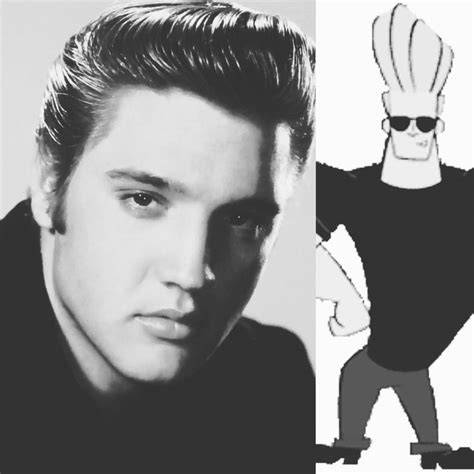
Johnny Bravo is a muscular, Elvis-inspired cartoon character with a larger-than-life ego. Created by animator Van Partible, the show ran on Cartoon Network from 1997 to 2004. Van Partible first created Johnny Bravo as a college thesis short titled Mess O’ Blues (1993), about an Elvis impersonator. His animation professor showed it to Hanna-Barbera, which led Van to pitch a Johnny Bravo short. The cartoon debuted in 1995 on Cartoon Network’s World Premiere Toons showcase. Thanks to its popularity, Cartoon Network commissioned a full series. After Season 1 (1997), the show took a year-long break. Johnny Bravo episodes are stand-alone comedic adventures, often featuring wacky scenarios and famous guest stars. A running theme is Johnny trying to woo a woman and getting comically rejected or beaten up.
The “Johnny Bravo Café” at Atlanta’s Turner Field, part of a Cartoon Network play area, is a testament to Johnny’s cultural reach. Johnny Bravo became a bona fide cartoon icon. As writer/director Butch Hartman noted, Johnny is now considered an “iconic” character, with his personality and catchphrases still widely recognized. Fans on social media often quote him or create memes of his flamboyant poses and lines. Johnny Bravo has spawned a variety of official merchandise. Cartoon Network licensed collectible toys, video games, apparel and more - collectors can find action figures and even a Funko Pop!
In the early 1990s, Ted Turner committed himself to building an animation empire. In 1991, Turner Entertainment purchased Hanna-Barbera, the animation house responsible for classic toons like Scooby-Doo, The Flintstones, Space Ghost, and countless others. And with the launch of Turner’s Cartoon Network in 1992, all of those classic cartoons would have a permanent home. That took care of the nostalgia crowd, but the network was also anxious to create unique, original content to get the younger generation hooked on this 24/7 world of animation.
On July 14, 1997, Cartoon Network debuted a show that would become a cornerstone of that move toward fresh content: Johnny Bravo. To celebrate the 20th anniversary of the muscle-bound greaser with the golden pompadour, here are 10 facts about Johnny Bravo.
1) Name Origin and Persona
Though it’s easy to assume that the name "Johnny Bravo" came from Greg Brady’s alter ego on The Brady Bunch, it’s actually a take on creator Van Partible’s full name, which is Efram Giovanni Bravo Partible.
2) Bravo’s Voice
BRAVO’S VOICE IS A MIX OF YOUNG AND OLD ELVIS. When Partible told the eventual voice of Johnny Bravo, Jeff Bennett, that he wanted the character to sound like Elvis, Bennett only had one question: Old or young? Bennett explained that they’re basically two unique voices, with a younger Elvis sounding much faster and more energetic, while the elder Presley would require Bennett to deepen and “slow it down.” Partible asked for something more in the middle, resulting in the signature Bravo voice. While Partible heard a lot of Elvis impersonators for the role, he said Bennett was the only one to go beyond imitation and become an actual character.
3) Female Support at Cartoon Network
JOHNNY BRAVO’S BIGGEST SUPPORTERS AT CARTOON NETWORK WERE WOMEN. After Partible’s initial pitch, Cartoon Network was going to pass on Johnny Bravo for not being “cartoony” enough. That is until three prominent women at the network-Ellen Cockrill, Janet Mazotti, and Julie Kane-Ritsch-fought for the show to get picked up. It may sound strange for the chauvinistic Bravo to have their support, but as Partible mentioned in his blog, “I think it's because they know Johnny Bravos in their lives and can relate. They also enjoy watching him get his comeuppance.”
4) Mess o’ Blues and Origin
While studying animation at Loyola Marymount University, Partible created a short animated film for his senior thesis project called Mess o’ Blues. The short focuses on a character not too far off from an Elvis impersonator, who looks like a much thinner Bravo with jet black hair and one of The King’s trademark white jumpsuits. The film was sent to Hanna-Barbera, which was on the lookout for new talent after the launch of Cartoon Network. After receiving acclaim from the studio, Partible was brought in to pitch a series based on the film. Partible expanded on the initial project, including a redesign and rebranding of the main character into Johnny Bravo. To this day, there’s been no official release of Mess o’ Blues, though some snippets of footage do exist.
5) Minimalist Design Inspired by Al Hirschfeld
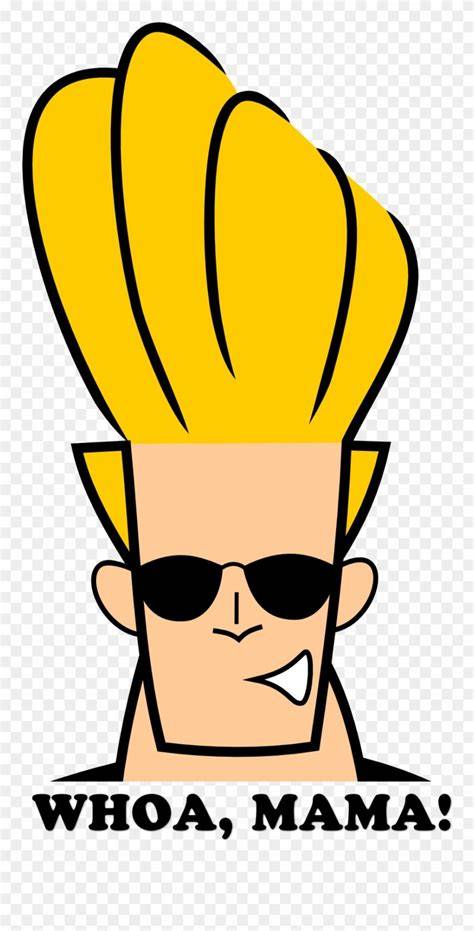
PARTIBLE BASED THE SHOW’S STYLE ON AL HIRSCHFELD ILLUSTRATIONS. One of the most striking things about Johnny Bravo-especially when compared to its contemporaries-is its minimalist character designs. The lines and extraneous details are kept to a minimum-so much so that Bravo himself often has a face that consists of large black circles for sunglasses and a few simple lines for a nose. In Bravo’s world, mouths seem to come and go as needed. This was all part of Partible’s vision, as he was inspired by the work of famed illustrator Al Hirschfeld, who was most famous for his caricatures of Broadway stars and big screen celebrities. In particular, Bravo’s head and trademark hair were a take on Hirschfeld’s caricature of actor Richard Davalos for an illustration he did in 1995 that looked back at Arthur Miller’s A View From the Bridge. The hairdo's vertical lift was the perfect complement to Bravo's faux-greaser panache.
6) On-the-Job Training for Partible
JOHNNY BRAVO WAS ON-THE-JOB TRAINING FOR PARTIBLE. When Cartoon Network accepted Partible’s pitch for Johnny Bravo, there was only one problem: Partible had never worked on a full-fledged TV show before. “My new producer, Larry Huber, told me that this was going to be a type of graduate school where I was going to learn how to make cartoons from the ground up in the studio system,” Partible wrote on his blog. The initial deal that Partible signed on for was a “step deal,” which he described as, “I was going to be under careful watch and evaluated after every step of production to see if they wanted to continue to go forward.” The experience turned out to be a blessing. At the time, Cartoon Network was looking to experiment, and Partible’s youth and inexperience were something the network was willing to gamble on. Looking to capture the unique style of upstart creators, the company let Partible do the cartoon his own way.
7) Joe Barbera’s Involvement
THE LEGENDARY JOE BARBERA WAS PART OF THE WRITERS’ ROOM. The goal for Hanna-Barbera during this time was to create new shows that still felt like the classic series the studio put out in the ’60s and ’70s. It’s pretty easy to achieve that when one half of the company’s namesake-Joe Barbera-agreed to take a hands-on approach to Johnny Bravo during the mid-’90s. Though he wasn’t a full-time member of the show’s staff, Partible described Barbera's role in his blog: “So, once a week, we would get a visit from Mr. B, pick his brain, and come up with jokes.” Barbera became a literal part of the show when he briefly appeared in the episode “Bravo Dooby Doo.”
8) Launch and Early Careers
THE SHOW WAS AN EARLY BREAK FOR SETH MACFARLANE AND BUTCH HARTMAN. MacFarlane was a writer and storyboard artist on Bravo during its first year, while Hartman performed the same duties but also directed 10 episodes of the show in 1997. MacFarlane and Hartman also worked on other Cartoon Network shows for Hanna-Barbera before going off to create their own series in the late ’90s and early 2000s.
9) Notable Guest Stars and Humor
In the episode “Johnny Bravo Meets Adam West,” the famed former Batman comes to Johnny's aid after Mamma Bravo goes missing. The episode was written by Hartman and MacFarlane, which is where the future Family Guy creator first met the man who would eventually become the mayor of Quahog. The experience on Bravo inspired MacFarlane to bring the actor aboard Family Guy years later. In an interview, MacFarlane noted the fun of working with West and the character’s self-aware humor.
10) Legacy and Expansion
There was talk of a Bravo movie starring The Rock in 2002, but plans fell through. The series helped launch the careers of several animators, including Seth MacFarlane and Butch Hartman. After the series ended in 2004, Johnny Bravo continued to appear in various media, including comics and video games. The show’s influence persists in how it blended celebrity culture, self-parody, and exaggerated masculinity into a distinctive 1990s aesthetic.
During its run, Johnny Bravo’s design and humor reflected a fusion of Elvis-pompadour charm, minimalist linework inspired by Al Hirschfeld, and a metatextual humor rooted in pop culture references. This combination helped the character achieve iconic status and left a lasting mark on Cartoon Network’s identity and the wider landscape of late-1990s animation.
| Aspect | Detail |
|---|---|
| Creator | Van Partible |
| Original short | Mess O’ Blues (1993) |
| Cartoon Network debut | World Premiere Toons (1995) |
| Series run | 1997-2004, 4 seasons, 67 episodes |