Millennials are firmly team side part, while Gen Z has vehemently declared that the middle part is more flattering. For those of us who sport side parts it's a tough pill to swallow learning that we nay be dating ourselves with our hair. But is it really so cut and dry? As it turns out, no. Just because parting your hair in the middle is more trendy right now doesn't mean that it's best for all faces.
Stylist Roman Sys told Glamour UK that a lot of factors should go into where one should part their hair. "I always take into account a client's personality and other facial features, like their eyes, nose, brow, and lips," Roman explained. So how can you tell which one looks better on you? It helps to know your natural part. The best way to figure this out is by combing back wet hair and then gently pushing hair forward from the crown of the head. Oftentimes, the way your hair naturally falls can guide your parting technique.
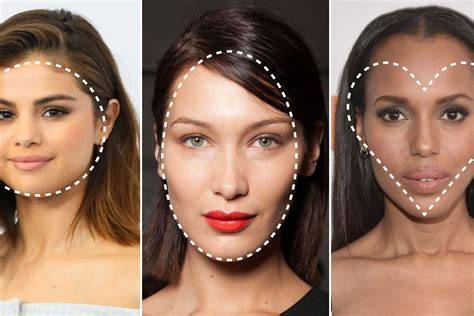
Stylist Mika Fowler told Byrdie that those with square-shaped faces do best with side parts. Those with heart-shaped faces, meanwhile, may find a deep side part can enhance their bone structure by making their angular features seem less harsh. This is because the different levels of volume create asymmetry that softens the overall look. The same effect works on diamond-shaped faces. Don't worry about appearing out of date with this look either. "I don't think a side parting is aging," stylist Luke Hersheson told Glamour UK. "A center parting is more undone and feels more grungy in a 90s way, but a side parting can look even cooler with connotations of an 80s supermodel."
So how do you style a side part to keep it fresh? Consider rocking the part in a low sleek bun, serving ballerina vibes, or with a loose pony. Despite what some Millennials say, there's a reason the middle part is so popular online these days. For one, the balanced 'do is particularly flattering on oval or oblong face shapes because it plays up individual facial features. This part is favored by Gen Z because it looks great in a slick bun or in hair pulled up with a claw clip. Moreover, because of its symmetry, you don't have to worry about one side of the head appearing to have much more hair than the other. Styled up or down, the middle part looks sophisticated and effortless.
Colorist Silvia Reis told InStyle there is one warning to consider before trying the part. Ultimately, though, there is no rulebook that says you have to stick to one part or the other so it's worth playing around with your hair to see what looks best for you. In the experimentation process, try taking some selfies to see how different parts look.
Practical guidelines to find your best part
To determine your natural part, comb back wet hair and gently push hair forward from the crown, letting the hair fall where it wants to. This natural fall often guides the most flattering parting technique. For balanced features, a middle part can emphasize symmetry and provide a polished, contemporary look. For sharper features like a heart or diamond shape, a deep side part can soften angles and create pleasing contrast.
When styling a side part, you can aim for a low sleek bun for a refined, professional vibe or a loose ponytail for a relaxed yet chic appearance. The middle part lends itself to sleek, pulled-back styling or loose, effortless texture, depending on the overall mood you want to convey. The key is to experiment with both options and observe how they interact with your facial proportions and personal style.
- Identify your natural part by parting your hair while it's wet and letting it fall as it dries.
- Compare how a middle part versus a side part highlights your eyes, brow line, and jaw shape.
- Test different depths of part (shallow, deep) to see how volume distribution changes your look.
- Try a few coordinated styles (bun, pony, loose hair) to assess versatility and longevity of the look.
For reference, the middle part is particularly flattering on oval or oblong faces due to balanced symmetry, and it remains a strong trend in contemporary styling. The side part, favored by many, can be more age-neutral and adaptable to various shapes, depending on depth and volume distribution. Remember, there is no universal rulebook; personal experimentation and selfies can guide you toward your most flattering option.
How to Find Your Natural Hair Parting - TheSalonGuy
In summary, the choice between a middle part and a side part should be guided by your face shape, personal style, and the specific features you want to highlight. Use your natural part as a baseline, then explore variations that enhance your overall look without sacrificing comfort or confidence.