Do you feel like changing your hair color? Permanent hair colors make it possible. In case you prefer changing your image in the privacy of your home, hair coloring should be as simple as possible. There should be no mess when applying the color and no drips while you allow the colorant to work. Last but not least, the result should be natural, brilliant and even.
Coloring your hair with foam works without muss or fuss! Coloring your hair yourself can be tricky. Using foam color makes changing your hair color pure pleasure. You can apply the foam like a shampoo. The foam feels light on your scalp, it smells pleasantly (since it contains no ammonia), it does not drip and stays where it is needed.
You should not mistake using a foam color treatment and using mousse to tint your hair. The pigment in the tinting mousse only attaches to the outside of the hair and coats it with a fine color film, which quickly starts disappearing from your hair. Tinting your hair with mousse will last no longer than 6 shampoos on the outside. The tinting mousse does almost nothing for gray hair. A real color treatment, even a foamy one, requires that you mix two ingredients. This is how you can tell the difference between coloring and tinting.
Different from a tinting mousse, the foam color penetrates the hair for as long as you leave it in your hair and colors it permanently. Don’t save in the wrong place. Always use an entire bottle of foam color. Do not save residual foam color for later. Be sure to adhere to the application time. The coloring process occurs in several steps. It takes a bleaching color (like pearl blonde) to lighten your hair. Make sure not to go too wild with your color changes. Do not wash your hair before coloring it. Dyed hair stays beautiful for a longer time if you use shampoo and rinses for color-treated hair.
How foam coloring differs from tinting and traditional dye
- Foam color penetrates the hair shaft for permanent color.
- Tinting mousse deposits a surface film and fades after several washes.
- Traditional dyes may require more careful handling and longer processing times.
Steps for safe and effective foam coloring
- Choose a foam color that matches your desired result and your natural base.
- Do not wash your hair immediately before coloring; natural oils can help protect the scalp.
- Mix the two components as directed to create a true color treatment, not just a tint.
- Apply the foam evenly, massaging it like a shampoo to ensure full coverage.
- Leave the color on for the recommended time, then rinse and condition with color-safe products.
- Avoid over-processing and follow up with color-safe shampoos to extend longevity.
Practical tips for best results
- Always use the entire bottle of foam color for even results.
- Color-treated hair benefits from color-safe cleansers and conditioners.
- Wearing gloves during application helps prevent staining on hands and nails.
- Test a strand first to preview the final shade and adjust expectations.
- If you have gray hair, consider professional guidance for coverage and shade balance.
When planning a color change, avoid drastic shifts in one go. A controlled, gradually lighter or darker transformation tends to yield more natural-looking results. If you are unsure about the level of lift needed, start with a shade that is two levels lighter or darker than your natural color and adjust in subsequent sessions.
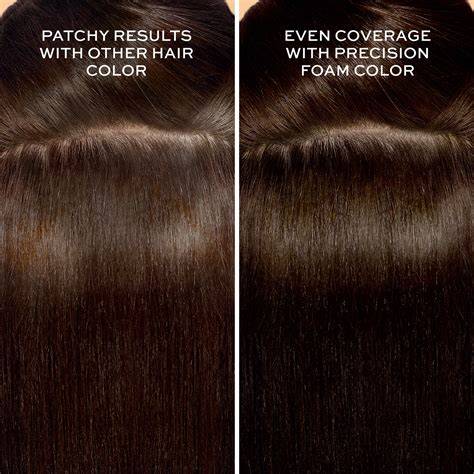
John Frieda Precision Foam Color (Colour) Review: Full Demo and Tips for Home Hair Coloring!
| Factor | Foam Color | Tinting Mousse |
|---|---|---|
| Penetration | Yes, permanent | Surface film |
| Longevity | Lasts through multiple washes | Up to ~6 shampoos |
| Gray coverage | Better coverage with proper processing | Limited impact |
| Application | Similar to shampoo, no drip | Surface tint alignment |