When summer rolls around, protective styles for natural hair are a must, and box braids never disappoint. Box-braid styles are timeless and beloved by celebrities like Zendaya, Rihanna and Zoë Kravitz for a reason. They keep natural hair protected, encourage hair growth, and give you a much-needed break from daily styling. “They can support hair growth by keeping your ends tucked away and reducing manipulation, as long as you maintain proper care and avoid excessive tension,” says Suzette Boozer, celebrity hairstylist and Dippity-Do curly-hair expert.
What exactly are box braids?
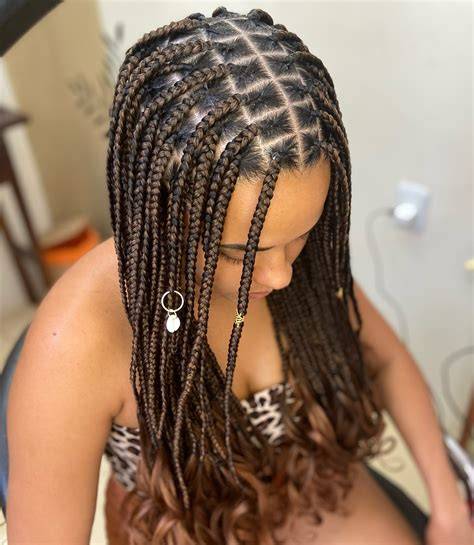
Box braids are most often installed with extensions and come in various lengths, sizes, and colors (as you’ll see ahead). When creating the style, synthetic hair is braided into box-shaped parts of hair, achieving a longer style that forms a protective barrier around our natural strands. Compared to loose natural hair, box-braid styles are a very low-maintenance hairstyle. They’re not going to frizz out immediately after getting wet (making them perfect for vacation) and mostly just require sleeping with a satin scarf or bonnet to help maintain shine and prevent breakage.
What to know before getting box braids
If you’re thinking of getting the style yourself, there are a couple of things to know, according to Ursula Stephen, celebrity hairstylist and global ambassador for Tresemmé. First, it’s best to treat and trim your hair prior. Natural hair is often blow-dried out beforehand to make the installation process easier for your stylist, so you can have your ends cut then. Speaking of stylists, Stephen recommends that you research yours beforehand and be conscious of the sensitive parts of your scalp during the braiding process. “If you have a thin or weak hairline, then you shouldn’t put excess tension on those areas,” she warns. The style of box braids involves extensions pulling on hair, making it better suited for thicker, coilier, and coarser curl types. To avoid hair damage, steer clear of this style if your hair is of a thinner texture, as the braiding hair might struggle to find a grip.
Braids can be traced back 5,000 years in African culture to 3500 BC. Braiding began in Africa with the Himba people of Namibia. In some African tribes, braided hairstyles were considered a unique way to distinguish each tribe from the others. Box braids, specifically, stem from Egypt in 3100 BC but gained newfound popularity in the 1990s.
How to choose the box-braid style that’s right for you
“Consider how you’d like to wear your braids. Smaller braids allow for more styling options and flexibility, while larger braids create a more uniform, stationary look,” says Boozer. “Think about your lifestyle and maintenance preferences when deciding.”
Types of box braids
Box braids come in various styles like micro, jumbo, and knotless. You can also add color by having dyed strands braided into the style. “Box braids are an excellent protective style suitable for any season,” says Boozer. “They require minimal daily styling, making it easy to just get up and go. They’re also a fun way to experiment with different colors without chemically processing your natural hair.”
How long do box braids last?
“Typically, box braids can last anywhere from four to eight weeks depending on how you care for them and your hair’s natural texture,” says Deisy Alfaro, Dippity-Do curly-hair expert. “After that point, the roots can loosen and buildup starts to affect the scalp, so it’s important not to stretch them beyond that window.”
Are box braids low-maintenance?
Yes, box braids are extremely low-maintenance. You can wash them, swim in them, and work out with limited frizz. This makes them perfect for vacations or wearing during the warmer months.
What helps box braids last longer?
Even though box-braid styles like a box-braid bob or even goddess-style box braids are meant to be low-maintenance, they still require some care. “You still need to hydrate and cleanse the scalp,” Alfaro says. “I recommend using the Dippity-Do Girls With Curls Curl Boost Spray on your scalp and braids a few times a week. It’s light, smells amazing, and adds moisture without buildup. A diluted shampoo or scalp cleanser can be used every two to three weeks, followed by a leave-in to keep the braids looking fresh.”
Once you have your box braids in, it’s easy to forget about your actual from-the-root hair, which, yes, still requires moisturizing. There are plenty of curly-hair products designed to soften the hair and reduce itching associated with keeping a style in for too long. “Products that have penetrating ingredients like coconut oil, jojoba oil, and olive oil are great to use while wearing these styles,” says Stephen. As for when to take them down, she recommends keeping them in for no more than two months.
What is the process like for getting box braids?
The hair is first washed thoroughly, deep conditioned, and detangled. “This part is key,” says Alfaro. “I always recommend using the Dippity-Do Girls With Curls Ultra-Hydrating Coconut Curl Styling Cream beforehand to soften and hydrate the hair.” She goes on to explain that the hair is sectioned into square parts, which is where the style gets its name. Synthetic or natural hair extensions are then added and braided into the hair. “The whole process can take several hours depending on length and thickness, but the results are so worth it,” she says.
Pros and cons of box braids
As with any hair decision, there are pros and cons that should be taken into account. While one pro is its protective nature, a downside is that installing box braids can be very time consuming. Boozer notes that “one of the biggest pros is versatility-you can wear them down, in a ponytail, half-up styles, or buns, unlike cornrows, which usually stay in one fixed look. On the downside, you must be gentle when styling and pay extra attention to your hairline to avoid tension and breakage.”
Is hair shedding normal after removing box braids? Yes, some hair shedding after removing box-braid styles is totally normal. Boozer explains, “On average, you naturally shed up to 100 strands a day, but when your hair is braided, you don’t see that daily shedding.” She continues, “When you take the braids out, you’ll notice the accumulated shed hair. However, excessive shedding can occur if the braids were too tight or handled roughly.”
Is it bad to wear box braids all the time? It’s not bad to wear box braids regularly, but giving your hair a break in between installs is important to keep the hair healthy. “Continuous tension can weaken your hairline over time,” says Alfaro. “I recommend a two-week break in between and focusing on scalp care and protein treatments in between.”
Box braid ideas for inspiration
Now that we have the basics out of the way, we’ve rounded up some of the coolest box-braid ideas for you to consider. The style options are endless, from knotless box braids and goddess braids to bob braids and box braids with beads. Here are some of the cutest box-braid hairstyles out there to give you some inspiration. Scroll on through for our favorites.
- Shiny Box Braids with mousse and hair oil for gloss
- Low Pony Box Braids wrapped into a seamless look
- Raindrop Box Braids with beads as statement accessories
- Boho Knotless Box Braids for a long, flowing look
- Green Box Braids for bold color
- Micro Box Braids for a minimalist, lasting style
- Box Braids With Pearls for a Pinterest-ready finish
- Lob Jumbo Box Braids with spiral curls at the ends
- Medium-Size Box Braids with side part like Zendaya
- Box Braids With Beads and colored ends for a playful vibe
Impressive variations include braided beehives, beaded buns, and box braids with cowrie shells. For practical care, sleep on a silk pillowcase or wear a silk scarf at night to prevent frizz. Bohemian box braids mix real braids and wavy hair for a wedding-ready look.
Alternative methods: crochet no-cornrow approaches
Some readers look for faster methods with less tension. The no-cornrow crochet method, also known as braidless or single-braid crochet, is one approach. The general premise is instead of braiding cornrows you braid an individual plait for each extension you want to add. Attach the added hair by pulling it under the base of the braid (loop first) using a latch hook, then tuck your own hair into the braid. This method can save time and reduce tension, especially when combined with a cornrow-singles pattern for maintenance.
Maintenance for crochet braids focuses on scalp care and a lighter touch with products to minimize buildup. A silk scarf at night and leave-in conditioners can help keep them looking fresh for about a month, depending on the method and wear.
What hair to buy and how much
Any brand of hair works, but practical guidance from enthusiasts and stylists helps. Five to seven packs of hair are typically needed, and you might want more. Options include FreeTress Medium Box Braids, FreeTress Small Box Braids, Havana Mambo Twists, and a crochet needle. The no-cornrow crochet method offers a faster path with less tension, especially for long or thin hair, though it requires practice to achieve a natural hairline around the face.
Quick tips: moisturize your hair before installing, use edge control at the base for a sleek look, and keep sizes consistent with the added braids for a uniform appearance.
NO CORNROWS CROCHET BRAIDS ONLY 1 HOUR
Table: quick care checklist for box braids
| Aspect | Recommendation |
|---|---|
| Before installation | Trim ends, deep cleanse, detangle, research stylist, avoid tight scalp areas |
| During wear | Moisturize scalp, wash scalp as needed, avoid heavy buildup, sleep on silk |
| Removal timing | No longer than 6-8 weeks for most textures |
| Post-removal care | Protein treatments, gentle cleansing, air-dry |
tags: #natural #hair #individual #braids