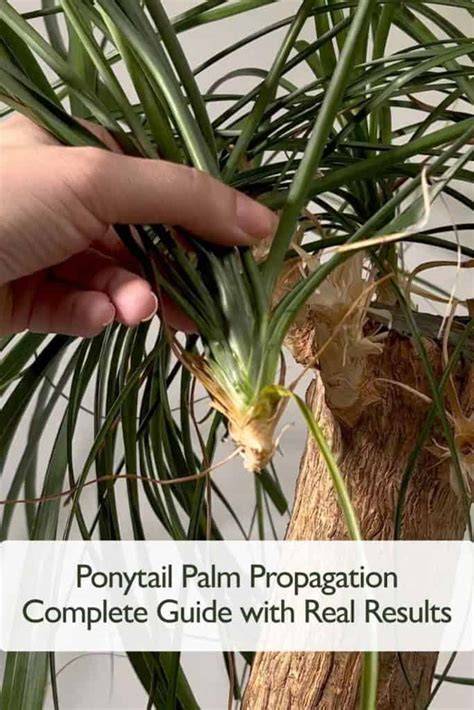
Beaucarnea recurvata, commonly called the ponytail palm, is a drought-adapted monocot with a swollen caudex that stores water and a single crown from which all growth originates. When the top breaks, the plant’s recovery hinges on understanding its biology and acting with patience, not force. This guide compiles practical steps for saving a damaged plant, propagating from pups, and maintaining health for future growth.
Understanding what happened and what can be saved
The ponytail palm has a monopodial growth habit, meaning it relies on a single apical crown for new leaves. When the crown is damaged or the top is broken, regeneration from the trunk itself is unlikely. The top portion may desiccate or rot if left intact, and any chance of regrowth from the broken stem is minimal. The most reliable path to rejuvenation is to focus on the base and any pups that may develop from the root crown or lower trunk.
In many cases, you can save the plant by removing the broken top cleanly, allowing the cut to callus, and then continuing care at reduced moisture while the base stabilizes. If pups are present, they can be propagated once they are large enough, with a careful, patient approach. If you observe rotting at the cut, discard the damaged section and reassess the plant’s overall health.
Repairing a broken top and caring for the base
- Cleanly trim away any jagged edges with a sterile knife to reduce infection risk. Seal the wound with nothing foreign-air exposure and drying out are natural parts of the process. Do not apply cinnamon or charcoal.
- Let the cut surface callus for several days in bright, indirect light before re-potting or rehydrating.
- Re-pot into a gritty, well-draining mix in a small to medium pot, ensuring the caudex sits at or just above soil level. Use a pot with drainage to prevent rot.
- Water cautiously after re-potting, delaying the first watering for 10-14 days to encourage wound healing. After that, water only when the top 2 inches of soil are completely dry and avoid wetting the caudex.
- Provide bright light (minimum 4+ hours of direct sun or equivalent bright indirect light). Rotate the pot to keep growth even.
- Maintain warm temperatures (ideally 70-85°F / 21-29°C) and avoid drafts. Do not allow the plant to sit in waterlogged soil.
Probing for pups and the best time to propagate
Pups are basal offsets that form at the base or on the lower trunk. They arise in response to environmental cues such as reduced watering, increased light, and seasonal temperature shifts. The most reliable method to propagate ponytail palm is to remove offsets that have their own roots, typically 4-6 inches tall or taller with visible white root tips.
Propagation timing and selection:
- Best time: late spring to early summer when soil temperatures exceed 70°F (21°C) and daylight is long.
- Selection: choose pups ≥4 inches tall, firm to the touch, with visible white or pale tan root tips. Avoid yellowing, soft, or shriveled offsets.
- Tools: use a clean, sharp stainless-steel knife or narrow hori-hori tool, sterilized in 70% isopropyl alcohol. Wear gloves to protect your skin from sap.
- Separation: gently remove the parent plant from its pot, expose the pup’s junction, and cut as close as possible to the pup’s basal plate while keeping its own plate intact. Do not tear.
- Curing: place separated pups upright on dry paper towels in bright, indirect light for 3-5 days to form a callus. Do not apply cinnamon or charcoal.
Potting and rooting of offsets
- Pot: use a 4-inch unglazed terracotta pot with a gritty, fast-draining mix (60% coarse perlite, 30% cactus/succulent soil, 10% pumice). Plant so the basal plate sits level with the soil surface.
- Watering schedule: wait 10-14 days before the first watering, then water deeply when the top 2 inches of soil are dry. Avoid overwatering in the first month to prevent rot.
- Soil and drainage: ensure excellent drainage and avoid heavy peat-based soils that retain moisture too long.
- Rooting expectations: visible white roots indicate establishment; expect 3-6 weeks for roots to begin forming, with full establishment taking longer. Some attempts may fail due to species biology or environmental mismatch.
Seed propagation as an alternative
Seed propagation is possible but slow and requires precise warm, humid conditions. Steps:
- Source fresh seeds (harvested within 6 months) for higher germination rates.
- Pre-soak seeds in room-temperature water for 24 hours; discard any that float (likely non-viable).
- Germination medium: sterile, soilless mix (50% fine coco coir, 30% coarse sand, 20% vermiculite).
- Bottom heat to 80-85°F (27-29°C) and 14 hours of bright indirect light daily. Use a propagation mat and a clear dome to maintain humidity above 80%.
- Germination window: 12-28 days. Transplant seedlings to individual 2-inch pots when the first true leaf reaches 1 inch, using the same gritty mix. Expect 6-12 months to reach 4 inches tall.
Common pitfalls and what to avoid
- Cutting the trunk or attempting to root a trunk segment is not reliable; the trunk does not produce new growth from meristematic tissue in such cases, and rotting is common.
- The plant’s growth point is the crown; severing it destroys the plant’s ability to photosynthesize effectively and recover.
- Air layering or leaf cuttings do not work on ponytail palm due to lack of nodes and meristematic tissue in leaves.
- Overwatering, poor drainage, and inappropriate soil are the major causes of root and trunk rot in attempts to propagate cuttings.
- Water quality matters: high sodium, fluoride, or chlorine can impede root development. Use filtered, rain, or distilled water for propagation.
Care guide after repair or propagation
- Light: provide strong light; outdoor sun is ideal if climate permits, otherwise bright indoor light with rotation.
- Water: water deeply only when the soil is dry to a depth of 2 inches. In summer, this may be every 2-3 weeks; in winter, every 4-6 weeks. Do not let the soil stay soggy.
- Temperature: maintain 65-85°F (18-29°C). Protect from cold drafts; temperatures in the 50s°F (10-15°C) can stress or kill the plant.
- Fertilization: hold fertilization for 8 weeks after propagation or repair; resume with a diluted balanced fertilizer every 4 weeks through summer only.
- Monitoring: check weekly for leaf tip browning (humidity or fluoride), yellowing lower leaves (overwatering), or stunted growth (low light or nutrients). Address issues promptly.
- Repotting: repot every 3-4 years as roots become root-bound, choosing a pot only one size larger and ensuring drainage.
Frequently asked questions
- Can I propagate ponytail palm from a broken trunk? No. A broken trunk lacks meristematic tissue and cannot generate new growth. Clean, callus, and monitor the parent plant for pups instead.
- How long does it take for a pup to root after separation? Visible white roots typically appear in 3-6 weeks; full root establishment for safe repotting takes 10-14 weeks.
- Why won’t my ponytail palm produce pups? Common reasons include insufficient light (needs 4+ hours direct sun), overwatering, or being root-bound in a container too large; age can also delay pup formation.
- Should I use rooting hormone on offsets? No. Offsets already have active meristems and proper vascular connections. Hormones are usually unnecessary.
- Can I grow ponytail palm from seed indoors successfully? Yes, with strict environmental control (bright light, consistent warmth, high humidity, and careful watering). Seed propagation is slower but viable.
Propagation is a patient, observant practice that respects the plant’s biology. A thriving parent plant can be more valuable than numerous struggling pups, and proper care after a break or during propagation improves long-term success rates.