To us, hair is one of the most fascinating parts of the human body. Did you know that hair grows on every surface of the body except the palms, lips and genitals. New hair is constantly being synthesized as it grows and sheds in a cyclical fashion and everyone can have their own unique style and growth patterns. It truly is amazing. And while our main focus here is hair loss and hair transplants, the science of hair itself is an incredible thing to study.
The hair follicle is really part of the “folliculo-sebaceous unit” and it’s so much more complex that we give it credit for. There are many elements of our hair that most people don’t even realize, for example, did you know that your hair will grow slightly quicker in warm climates as opposed to colder ones? Or that all of the hair shafts that you see on your head is actually already dead. The only living part of your hair is the follicle under the skin, but once the hair itself emerges from the skin, it is made up of dead cells.
When it comes to hair loss, our goal is to help you understand why your hair may be thinning or falling out and help determine a course of action to help restore your hair or prevent it from thinning further. And in order to do that we must first educate you on various aspects of your hair in general.
Thin hair vs fine hair: two different concepts
Did you know that thin hair is not the same as fine hair? Or that coarse hair is different than thick hair? It’s true. While these adjectives used to describe hair seem very similar, they actually have very different meanings.
Thin Hair vs. Fine Hair Thin hair and fine hair are often confused because the words thin and fine can sometimes be used interchangeably, but that’s not that case when it comes to your hair. When we’re talking about thin hair we’re talking about the density of the hairs and when we’re talking about fine hair, we’re talking about the diameter of the actual hair shaft itself.
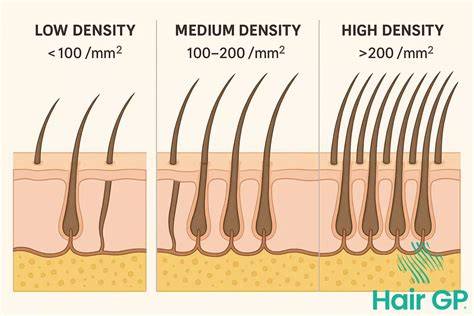
So, in the hair expert vocabulary, thin hair means that there are less follicles within the same area of your scalp. The follicles are more spread out on your scalp, which means that you have less hair per square inch, thus making it appear thinner and in some cases, the scalp may be visible through the hair. Simply put, thin hair is less hairs on your head.
Thin hair isn’t necessarily a bad thing, but it does present some challenges when it comes to hair styling. Because you have less hair per square inch on your head, you don’t have the same volume in your hair as a person with thicker hair. There are many styling products available that can help add volume to thin hair to give it the appearance of more volume and shape. Another important strategy for thin hair is find a hair style or a haircut that compliments the density of your hair and creates an illusion of thicker hair. If you notice your scalp showing through more when you have shorter hair, and you don’t like that sort of look, then a longer haircut may suit you better as it can hide some of those thinning spots.
Speaking of thinning, thin hair is not the same as thinning hair. Thinning hair is what we refer to when you’re starting to lose your hair. Thin hair has nothing to do with you losing hair, it’s referring to the baseline amount of hair you have starting in your youth, which is generally based on genetics.
Fine hair, unlike thin hair, has to do with the actual diameter of the individual strand of hair. A fine hair measures less than 60 microns, that’s 16 or more hairs per millimeter. Fine hair is most common in Caucasians but can also be found in Black/Afrocentric hair. Asian hair tends to be the thickest strands which is the reason it’s used more often to make human hair wigs. Hispanic hair can be a mixture of many different ethnicities so their locks are the least predictable in texture.
In the case of thin vellus hair on your body, like that on your nose where you may not even be able to see it, its fine texture is because it’s missing the medulla, the innermost part of the hair. Because this area of the hair shaft is missing, it makes the hair diameter smaller and visibly lighter, thus leading to fine, light hair. However, on the scalp, your hairs all have 3 parts: medulla, cortex, and cuticle and finer hair simply has less of each. The cuticle is the outermost layer and most easily damaged so fine hair can become brittle and break more easily so you’ll want to avoid traumatic hair processing and grooming like bleach, perms, and tight braids. You’ll also want to use gentle shampoos conditioned regularly to maintain its health. However, with some fine hair you will also want to avoid products that are heavy because they can weigh down the hair and make it look even thinner.
Thick hair vs coarse hair: two other dimensions
Just like thin hair vs fine hair, coarse hair vs thick hair has to do with the density of the hair vs the diameter of the hair. Thick hair means that you have more hair follicles per square inch while coarse hair refers to hair that has a wider diameter. Thick hair means that you have more hair on your head. It has nothing to do with the curl, feel, or diameter of your hair, but rather the actual amount of hair. This translates to more volume and can allow for various hairstyles to hold their shape a bit better than thin hair, but there are also downsides. Having more hair makes it harder to tame and can make some hairstyles look too big and voluminous, so choosing a hairstyle that fits your specific type of hair may be equally important with thick hair as with thin.
Coarse hair measures 80 microns or greater, or less than 12 hairs per millimeter. Because of its more robust size, coarse hair can generally tolerate more trauma than fine hair and for every hair on your head there’s more “oomph” or more total hair volume. Coarse hair does not necessarily mean that your hair is going to feel rough or have a dull appearance, it specifically has to do with the diameter of the hair shaft.
Why Understanding Hair Density is Important Knowing what type of hair you have, whether its thin, thick, coarse, or fine, is important in understanding what types of haircuts and hairstyles will best fit you and what grooming practices your hair will tolerate. Not everyone is the same, so using the same product as someone else may not give the best results but knowing your hair type will allow you to make more informed decisions about your hair. Understanding the density and texture of your hair can also help you to know what sort of products you may need to use to help keep your hair healthy, manageable and looking it’s best. Many hair products are designed with certain types of hair in mind, so knowing your hair anatomy will make it easier to choose which products will work best.
In addition to being able to better maintain your hair, understanding hair density and texture can help you when it comes to hair thinning as well. Someone with thin hair may notice thinning areas much quicker if the scalp becomes more visible compared to someone with very thick hair. Similarly with coarse hair, they may notice when the hairs start to feel softer if they are “miniaturizing” like with Male Pattern Baldness. Regardless the density or texture, once our hair follicles die off there’s no way to bring them back.
Self-tests and real-world guidance
The simplest framework distinguishes strand diameter and density to guide styling and care. Fine hair measures less than 60 microns across, while coarse hair sits above 80 microns. Density refers to how many hairs grow on your head; the average person has about 100,000 strands, though this varies by natural hair color. Fine + Dense vs. Fine + Low Density vs. Coarse + Dense vs. Coarse + Low Density outline how your hair might behave and what products will work best.
Layered cuts tend to work best for fine or thin hair, creating movement and the illusion of volume without sacrificing length. Blunt cuts at chin or shoulder length can also make fine hair look fuller. For thinning hair due to various causes, a combination of approaches-careful styling, targeted treatments, and addressing underlying issues-tends to yield the best outcomes. Minoxidil, nutrition and supplements, low-level laser therapy (LLLT), and PRP are among evidence-backed options that may help depending on the case.
Fine hair tends to get oily faster, so a lightweight volumizing shampoo focused at roots, conditioner applied from mid-lengths to ends, and avoidance of heavy products are common recommendations. Drying techniques matter too: microfiber towels or soft T-shirts minimize breakage, and heat protection is essential when using styling tools. Gentle handling, limited brushing, and avoiding heavy serums help maintain volume and reduce damage in fine hair.
For thick or coarse hair, volume is easier to achieve but requires strategies to prevent a look that is too bulky. The emphasis shifts toward managing density and determining how to shape styles that work with a higher number of follicles per square inch. The same cautions about trauma apply, yet thick and coarse hair may tolerate more aggressive styling than fine hair, with the right approach.
Practical takeaways
- Distinguish between strand diameter (fine vs coarse) and density (low vs high) to tailor products and cuts.
- Use lightweight products for fine hair to avoid weighing it down; opt for layered cuts to create volume.
- Address thinning with a multi-faceted plan: nutrition, medical treatments if appropriate, and scalp health.
- Avoid excessive heat and harsh chemical processing to preserve hair integrity, especially for fine hair.
- Remember that hair density can change with age, hormonal shifts, and nutrition, while strand diameter remains relatively constant for many people.
Hair Density and Diameter ✨ know the Difference
Evidence-based treatments and routine considerations
Minoxidil is the most widely studied topical treatment for hair loss. Nutrition and supplements: Correcting deficiencies in iron, vitamin D, or biotin can help slow shedding. Low-level laser therapy (LLLT): Devices like iRESTORE laser caps use clinical-grade light energy to stimulate follicles at the scalp level. PRP (platelet-rich plasma): An in-office treatment where your own blood platelets are injected into the scalp to encourage growth. Scalp health basics: Keeping your scalp clean, balanced, and free from buildup supports healthier growth overall. The best results usually come from combining more than one approach.
If your hair is naturally fine, the right daily routine can make a big difference in how full and healthy it looks. Fine hair tends to get oily faster than coarse hair because oil travels down the strand more quickly. Washing every other day works well for most people. Use a lightweight, volumizing shampoo and focus it on your roots where oil builds up most. Skip heavy 2-in-1 formulas. Conditioner is still important, but placement matters. Apply it only from the mid-lengths to the ends of your hair.
How you dry your hair matters more than you might think. Rough towel-drying can cause breakage, especially with fine strands. Instead, gently squeeze out excess water with a microfiber towel or a soft t-shirt. When blow-drying, flip your head upside down and aim the heat at the roots. A few product swaps can change everything. Volumizing mousse or a root-lifting spray applied to damp hair creates body that lasts all day. Avoid heavy serums and oils, which can make fine hair look greasy within hours. If you use a flat iron or curling wand, always apply a light heat protectant first.
Fine hair is more vulnerable to heat damage because each strand is thinner. Some well-meaning habits actually work against fine hair. Brushing too often can strip away volume and stimulate extra oil production at the scalp. Over-conditioning, especially with thick masks or oil treatments, can leave hair limp and lifeless. The difference between fine hair and thin hair might seem small on the surface, but it changes almost everything about how you care for your hair. Fine hair is a texture you're born with. Thin hair, or low density, describes how much hair you actually have. Once you understand which category you fall into, you can stop guessing and start making choices that actually work.
If your hair has always been soft and lightweight, the right routine and a few smart product choices can give you the volume and body you want. You don't have to figure it all out at once. Start with the self-tests in this guide to understand where you stand. From there, you can build a routine or a treatment plan that fits your hair and your life. Fine hair refers to the width of each individual strand. Thin hair refers to how many strands you have overall, also called density. You can have fine hair that's very dense, or coarse hair with low density.
The simplest test is to think about whether your hair has changed. If it's always felt soft and lightweight, you likely have naturally fine hair. But if your ponytail feels smaller than it did a few years ago, or your part line has gotten wider, you may be experiencing thinning. It depends on the cause. If thinning is driven by nutritional deficiencies, stress, or hormonal shifts, restoring density is often possible with the right treatment. However, if follicles have been inactive for a long time, regrowth becomes harder. As you age, hair follicles gradually shrink and produce finer strands with each growth cycle. Hormonal changes, especially during and after menopause, can speed this process up. Layered cuts tend to work best. They create movement and the illusion of volume without removing too much length. Blunt cuts at chin or shoulder length can also make fine hair look fuller.
Yes. Unlike strand diameter, which stays mostly the same throughout your life, hair density can shift. Fine hair isn't more likely to fall out than coarse hair. However, because each strand is thinner, even a small amount of shedding becomes more noticeable. Several options have solid evidence behind them. Minoxidil is the most widely studied topical treatment. Low-level laser therapy devices like iRESTORE are FDA-cleared and offer a non-drug approach. PRP injections can stimulate regrowth in a clinical setting. And correcting nutritional gaps in iron, vitamin D, or biotin often helps reduce shedding. Disclaimer: The iRESTORE blog is for informational purposes only and is not intended to replace professional medical advice or treatment.