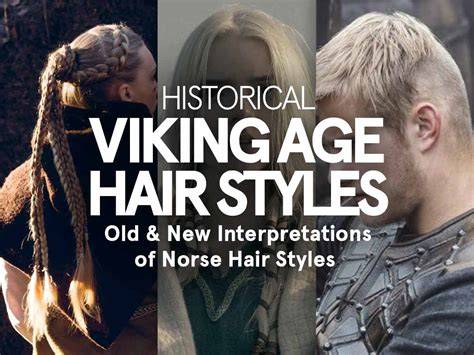
As modern Viking culture surges, and TV shows such as Vikings bring the Viking look into popular culture, Viking inspired men’s hairstyles have been making a comeback. But how historically accurate are the Viking haircuts that we are seeing today ? Did Nordic hairstyles really include long hair, undercuts, braids and man buns? The short answer is actually yes! Read on to find out more about how the historical haircuts favoured by the Vikings, and for 35 ideas for modern Viking men’s haircuts.
Historical foundations: long hair, beards, braids and grooming
The most classic Viking look is long hair (with beard naturally). Let it grow naturally and don’t worry too much about hairstyle. Go for a classic, rugged look. But do worry about haircare, the Vikings were known for their attention to hygiene and most carried small combs with them to keep their hair free from dirt and grime.
Braids are a quintessential part of the Viking look, and the Vikings would often add braids to their hair and beards. Accentuate your long Viking hairstyle by choosing a few small chunks to plait into long thin braids. When you want to pull your hair back off your face, do like the girls do and pull it back into a ponytail. But this is not a ponytail like your girlfriend, who may spend time slicking it back to perfection.
If you want to pull your long hair off your face, but also want to show off the length of your Viking hairstyle at the back, pull it back into a half ponytail, with the top half of your hair tied back, and the bottom half left free. Don’t pull it back too severely, but rather keep it lose. Usually when we talk about a Viking ponytail, we are talking about a high ponytail at the top of the head, but a low ponytail at the base of the skull also makes a great Viking hairstyle.
As an alternative, instead of pulling the top half of your hair back into a ponytail, pull it back into a classic Viking bun, which looks great in profile. This works especially well with shorter hair (that you might still be growing) that is not yet flowing down your back. Of course, you might simply want to pull it all back, lifting the hair up off your neck as well as away from your face, especially during the summer months. Again, a bun makes a great alternative to a ponytail if you’re looking for a Nordic hairstyle.
Don’t try and make your bun neat. If your hair is thick and difficult to pull back, separate it out and pull it back twice. Use half your hair to create a top bun, and then pull the bottom half of your hair back into a lower bun. For a different approach to pulling your hair back, try a braid, which was a very traditional hairstyle for the Vikings. Start at the very top of your head, and pull all of your hair in as it goes down your back. This is a great way to maintain body and texture while keeping your hair under control. Just like the half pony and the half bun, there is also the half braid.
Braids are an extremely versatile hair styling tool that can be used to control your hair while giving character. You can use braids to give yourself the undercut Viking hairstyle, without having to shave off any of your hair. Use multiple braids on one or both sides of your head to pull the hair on the sides close to your temples. If you are looking to do something dramatic and different with your long hair, combine side braids with double buns, with some of the side hair feeding into your top bun, and the rest into your lower bun. Basically, if you have a long Viking hairstyle you can do almost anything with braids. To find your unique traditional hairstyle by taking the time to experiment with what works for the shape of your face and the thickness of your hair. One braid on top or off to the side, two braids on top. Multiple braids across the hair. A few distinctive braids just near the ears.
Undercuts, fades and top styling: evolving yet authentic
While most classic Vikings hairstyles involve long locks, if you have very thick hair, this can quickly become heavy and unmanageable. Shaving one side will leave your head lighter and your locks easier to tame, plus the shaved section makes for an eye-catching contrast. If you still have too much hair with a temple shave, or you are looking for a more even look, then go for an undercut, with shaved back and sides and long hair on top.
For a big visual impact, sweep the hair that you are growing on top of your undercut all to one side, keeping one eye clear and free while maintaining drama on the other side. If you want to show off the distinction between your long hair and your shaved sides in your undercut, pull your hair back into a loose ponytail. This is also a good way to keep it out of your eyes. Just like with long hair, you have a lot of options for pulling back the long section of your undercut, and the braid is always a great Viking hairstyle choice.
Or you can channel Bjorn from Vikings by maintaining a very close cropped undercut and then styling your central hair section into multiple braids which you then pull back into a ponytail. When you need to keep your hair out of your face, but still want to maintain your Viking hairstyle credentials, pull it back into a classic top knot for a traditional hairstyle. Not a fan of the severity of the top not knot but still want to keep your hair out of your face? Simply slick back your hair - there are lots of products available to help you keep your hair in place.
Another way to keep your hair back off your face while maintaining a distinctively Viking hairstyle is to pull it back in rows, just like Ivar the Boneless in Vikings. Looking for a Viking hairstyle that is a bit trendier than an undercut? Try a low tapered fade, which transitions from longer hair on top to short and shaved near the ears, with a consistent gradient. Another way to keep the hair off your neck while maintaining the Viking hairstyle character at the front is to have short hair at the back with a long fringe that you sweep forward, reducing the size of your forehead and bringing attention to your eyes.
There is actually some pretty good evidence that Vikings were fans of the mohawk look. That is shaved sides with a noticeably longer strip running down the middle of the head. Update the look by giving your hair some height and body. A mohawk can also be a good intermediary look when you are still growing your hair and it is at that awkward chin length stage. No need to cut the hair that you are painstakingly growing into a long Viking hairstyle.
For something a bit different, give yourself a mohawk mullet. To do this, don’t just grow your mohawk hair on top, but make sure it extends all the way down to the base of your neck. Also grow the hair at the base of your neck long so that it extends down your back. If you want an authentic Viking hairstyle, but don’t want to do anything too flashy, try a faux hawk, which scholars also think is a historical haircut and Viking hairstyle. No need to shave your head down, but do keep your hair on top longer, and use some styling products to bring the hair at the front and centre up and forward.
Another way to play around with your mullet is start with an undercut, but then keep the hair on top of your head relatively short, and only let the hair on the back of your head grow, creating a kind of ponytail look. You can then braid or dread the ponytail area to keep it under control. Long hair and undercuts require that you either push your hair back or part it. You can make your hair part a feature of your Viking hairstyle by braiding the hair along the edge of the part. We aren’t all blessed with the ability to grow Viking worthy locks, and the same was true of our Viking ancestors. If your hair is starting to become patchy, think about shaving it off. If you prefer to keep your hair short, but the full shave doesn’t appeal, then go for a crew cut that is a bit longer at the top and shorter on the sides. Another Viking hairstyle at is a bit different is to partner a fairly ‘normal’ short haircut with a longer section that grows as a kind of ponytail. The longer the better. While we make think of dreads as more Rastafari than Viking hairstyle, they were definitely known in the Viking world. You can cover your whole head, or just choose one or a few sections to dread. These are a stylish alternative to braids, though they are more permanent.
Context and authenticity: what do we know about Viking hair today?
Making definitive conclusions about how our Viking ancestors styled their hair can be quite challenging, as we simply weren’t there to see them. While Viking hairstyles changed throughout the period, and depended on region and class, there are some consistent features when it comes to Viking haircuts. First, beards were definitely a thing! But this is a topic in and of itself, so check out our guide on Viking beards to learn more. Long hair was also a very common Viking hairstyle, though undercuts also seem to have been popular and shaved heads were not unknown. Braids and ponytails were used to keep the hair off the face when working or fighting, and these quickly became fashionable as well as functional. We know that the Vikings took care of their hair and would never have let it become a tangled mess. This is apparent in the fact that small combs were among the items that men carried with them at all times. They used them to keep their hair, both on their head and their beard, in check.
A story about the behaviour of Odin in the wake of the death of his son Balder is also revealing. According to the story, Odin was in such a state of grief that he did not wash or comb his hair. The English cleric John of Wallingford also complained of the Vikings’ heathen practice of combing their hair regularly, taking a bath every Saturday and changing their clothes frequently. He describes these as heathen practices designed to seduce good English women. While in many contemporary images Vikings are shown using hats and helms, covering their traditional hairstyle, some images of Viking hairstyles do survive, and they show Nordic hairstyles with long flowing beards, and long flowing hair, often accentuated with what look like braids. The details are difficult to make out in most of the surviving pictographic sources, but the theme is pretty clear. According to the contemporary deacon Leo, living at the end of the 10th century, one Viking prince had a clean-shaven head with some hair that fell to the side. According to an Arabic observer Ibn Fadlan, many Vikings also had saffron yellow hair.