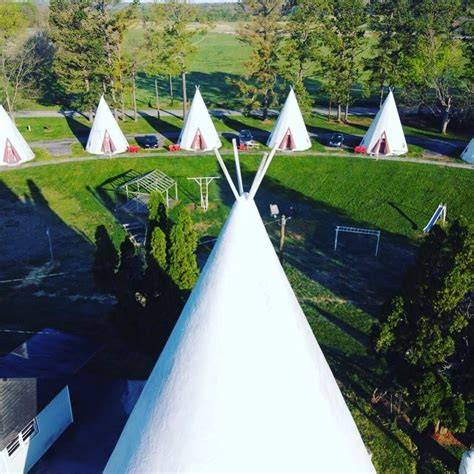
Wigwam Village refers to a collection of motels built in the United States from the 1930s to the 1950s, renowned for their distinctive teepee- or wigwam-shaped guest units and their place in the romance of early automobile travel along historic highways.
Origins and design philosophy
In 1933, Frank Redford began developing the Wigwam Village concept after being inspired by a teepee-shaped lunch counter he saw in Long Beach, California. Redford opened Wigwam Village No. 2 in Cave City, Kentucky, in 1937, expanding from No. 1 to create a memorable roadside experience anchored by a semicircular arrangement of sleeping units around a central office and communal spaces. Redford patented the building construction in 1936 and again in 1957 when the first patent expired, signaling a blend of novelty architecture with semi-permanent, durable materials.
The core idea was to lure travelers with a whimsical, highly visible icon along major highways. Each sleeping unit was designed to be more than just a room; the teepees were arranged to face a central grassy area with fire pits and playgrounds, encouraging social interaction among guests in a pre-digital era. Redford’s approach combined hospitality with spectacle, turning a motel stay into a miniature tourist attraction.
Physical characteristics of the wigwams
Each unit at Wigwam Village No. 2 measures approximately 20 feet across at the base and stands about 15 wigwams in total, with the later expansions adding larger central structures and amenities. The original wigwams are made with steel and wood framing, covered in stucco, giving them a rugged, durable appearance while preserving the cone-like silhouette that defined the concept. The interior spaces include private bathrooms, air conditioning, and original hickory furnishings, echoing a blend of practical comfort and retro design.
The spread of Wigwam Villages
The Wigwam Village chain expanded to seven locations between 1936 and the 1950s, with several notable sites along Route 66 and major highways. Wigwam Village No. 3 was in New Orleans, No. 4 in Orlando, and No. 5 in Birmingham, among others, with No. 6 located in Holbrook, Arizona. Over time, only a subset of these original villages survive, preserving a snapshot of mid-20th-century American roadside culture.
Holbrook and Cave City: surviving examples
In Holbrook, Arizona, Wigwam Village No. 6 remains one of the three surviving locations. Its teepees are slightly taller and narrower compared to No. 2, and the site includes a large central office, a gift shop, and interconnected amenities. The Holbrook property has experienced periods of decline, but efforts by owners and preservationists have aimed to restore the look and feel of the original village while offering modern comforts to guests.
In Cave City, Kentucky, Wigwam Village No. 2 continues to attract visitors to Mammoth Cave National Park and the surrounding region. The motel originally included a gas station, lunch counter, and a central office framed by a semicircular arrangement of 15 teepees. Today, the property offers private bathrooms, air conditioning, and modern conveniences, while maintaining original historic features and a nostalgic atmosphere.
What happened to the others?
Some Wigwam Villages closed or transformed their facilities as traffic patterns shifted and highway travel evolved. For example, the No. 2 site in Cave City became a lasting testament to the era, while others, such as No. 7, faced periods of deterioration before restoration efforts by new owners, like the Patel family in 2002, who renewed interest in the Route 66 heritage and maintained the historic ambiance.
Legacy, cultural context, and preservation
Redford’s concept sits at an intersection of Americana, commercial architecture, and cultural storytelling. While the wigwam motif represents a romanticized Westward journey and the rise of automobile tourism, it also raises discussions about cultural representation and appropriation, given the use of Native American imagery in a non-traditional, commercial context. Modern preservation efforts emphasize contextualization and heritage interpretation to balance nostalgia with sensitivity to cultural histories.
Today, the Wigwam Villages exemplify how roadside architecture can become a tangible memory of a bygone era. Visitors encounter not only stylized lodging but also a sense of community and historical curiosity-an invitation to explore Route 66, mammoth parks nearby, and the broader story of mid-20th-century American travel culture.
Guest experience and amenities
Each wigwam offers essential comfort features such as private bathrooms, air conditioning, and in some cases televisions and modern furnishings. The surrounding grounds often include fire pits, picnic areas, and opportunities to explore vintage cars parked on site, enhancing the retro ambiance. For groups and travelers, the properties can accommodate multiple teepees and provide services like group reservations and guest concessions, preserving the social aspect of a historic motel stay.
Notable architectural and cultural details
Redford’s design intentionally arranged the wigwams around a central communal space with a grassy bowl, reinforcing a sense of community among guests. The semi-circular layout, the distinctive white exteriors with red accents, and the towering teepee silhouettes contributed to a recognizable roadside landscape that many travelers remember from Route 66 and other long-distance trips.
Imagery and storytelling through architecture
The Wigwam Village phenomenon illustrates how architecture can function as a narrative device, turning ordinary lodging into a landmark. The juxtaposition of modern amenities with whimsical exterior forms invites travelers to pause, photograph, and reminisce about road trips, family adventures, and the golden age of American highway travel.