Everyone who has hair, brushes their hair, though you may never have given much thought to the kind of brush you use. Using the right hair brush for your hair and your styling needs can make a difference in your hair’s health and appearance. The appropriate brush for someone with long, curly hair will be drastically different than the best brush for fine or thinning hair. Some brushes, like the round or vented kind, are best for styling, while others work to detangle, and some may even remedy static and frizz. Here we’ll cover different types of brushes and what they can do for your hair.
Understanding hair types and brushing goals
There are so many different kinds of hairbrushes and combs available, it can be overwhelming to know which one is right for you. Depending on the type of hair you have, you may want to use a specialized brush. Detangler brushes are good for all hair types - even the thickest, curliest hair - and they can be used on both wet and dry hair. They minimize damage from brushing knotted hair, and their thin flexible bristles make it easier to painlessly get knots out of kids’ hair.
The original WetBrush is an affordable option. Its fine, soft bristles are strong enough to work through the toughest knots, and soft enough not to cause damage to wet hair. The American Academy of Dermatology Association warns against brushing wet hair because it’s more prone to breakage. However, if you have very textured or curly hair, brushing when wet is a good idea. They typically have heat-resistant bristles that won’t melt or break when blow-drying hair. A shower hairbrush is a wet hairbrush with vents for fast drying. Its flexible design and soft bristles are perfect for sopping wet hair. Many come with a hooked bottom for easy hanging off your shower caddy.
Cushion brushes have soft rubber bases and stiff wire or plastic bristles. The stiff bristles are effective at stimulating the scalp and are good for brushing out dandruff or buildup from hair styling products, and possibly for stimulating hair growth. Thermal brushes are round or paddle brushes with a barrel made of a material that conducts heat, such as ceramic, tourmaline, or titanium. This can speed up drying. These are generally used by hair stylists, or people who frequently use a blow-dryer.
Tiny boar bristle brushes are popular because of their ability to redistribute the natural, healthy oils in the scalp, which enhances hair health and creates smooth, shiny locks. Every type of hair can benefit from a boar bristle brush, but a 100-percent boar bristle brush with soft bristles is a good choice for people with fine, thinning, or aging hair. Nylon bristle brushes are made from a synthetic material that reduces static and effectively detangles thick hair. Some brushes combine nylon bristles with boars’ hair bristles to both reduce static and detangle while also getting the health benefits and natural shine that boars’ head bristles offer.
Curved brushes are ergonomically designed to fit the shape of a human head. Most are made of lightweight plastic and contain vents, which make them a good choice for travel, the gym, or anytime you want to dry your hair quickly. Natural bristle brushes are preferred by vegans or anyone who wants the benefits of a boar bristle brush without animal products; some brushes combine other natural fibers, like agave, with synthetics to achieve a bristle that looks and feels like boar bristle. Mixed bristle brushes combine the shine-enhancing effects of boar bristles with the scalp stimulation and easy detangling of nylon or wire bristles. This combination can be most effective for those with long or thick hair.
Finding the right brush for long thick hair
Paddle brushes enable them to cover a lot of ground quickly while smoothing hair. They’re a great choice for people with long, straight hair. The wide base of paddle brushes allows you to brush through a large section of hair at once, helping to remove knots and redistribute oils. For very long or thick hair, a paddle brush with a mix of boar bristles and nylon pins can be particularly effective, combining detangling with oil distribution.
A vented brush is the best choice for quickly blow drying soaking-wet hair because the vents allow hot air to flow through. The vents help reach all layers of hair, while a smoothing brush (a paddle brush with soft boar or nylon bristles) helps create sleek styles and eliminates bumps when pulling hair back into a ponytail or bun. If your hair is prone to static, a rubber-pad paddle brush can be helpful, and some metal or ionic brushes claim to reduce static and frizz by adding negative ions into hair.
For thick, long hair, detangling starts at the ends and works upward to minimize breakage. A loose, flexible brush with detangling bristles can ease knots without pulling. If your hair is very knotted, a dedicated detangling brush with flexible bristles that bend with the hair can prevent damage. Brushing distributes oil from the scalp down the hair shaft, conditions dryer ends, and helps remove loose hairs from your head, which is why you’ll often find some hairs in your brush after brushing.
Round brushes are good for blow drying and creating loose waves; their circular shape allows you to curl hair under for volume and curl depending on the brush size. A cooling or vented round brush can help maintain shape while letting air pass through. Teasing brushes and rat-tail brushes can add volume at the crown for those seeking more lift, especially in fine or limp hair. For those preferring smoother, straighter styles, a straightening brush can be used as a hybrid between a hot iron and a paddle brush, heating up to straighten and smooth hair with less damage than traditional irons.
Practical recommendations for long thick hair
- For detangling: choose a detangler brush with flexible bristles that bend with knots.
- For distributing oils and reducing frizz: consider a boar bristle brush or a mixed bristle brush with nylon and boar bristles.
- For quick drying: use a vented brush or thermal brush with a heat-conductive barrel like ceramic or tourmaline.
- For styling and volume: a large paddle brush or a round vented brush works well when blow-drying and adding waves.
- For gentle daily use on delicate or thinning hair: opt for a soft boar bristle brush or soft natural fiber brush.
FAQ: Thick hair and brushing nuances
- How do you define thick hair? Thick hair can be described by density or strand coarseness. It’s the collective density of your hair follicles per square inch, not just the diameter of individual strands.
- What’s the best brush for thick hair? It depends on your preference and whether you brush wet or dry. Wet brushing benefits from flexible metal or plastic bristles; dry brushing can use wood bristles that are non-static.
- How do you brush super thick hair? Start at the ends to detangle, then move to the mid-shaft, and finally brush from roots to ends. For curly hair, begin brushing above the tangle to minimize breakage and use gentle tension.
How brushing supports hair health
Brushing distributes oil from the scalp down the hair shaft, helping condition dry ends, stimulating the scalp, and potentially aiding hair growth. It also helps remove loose hairs from your head, which is why it’s normal for hair to be found in your brush. The right brush can reduce breakage, minimize static, and enhance shine, especially for long, thick hair.
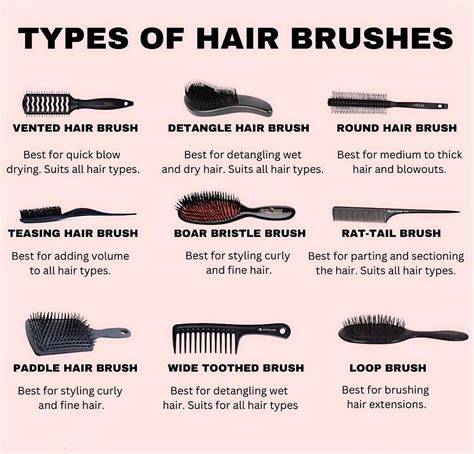
Every Woman Thinks She's Using The Right Brush (Until Now)
Table: Quick brush choices by hair goal
| Goal | Recommended Brush Type | Why |
|---|---|---|
| Detangling wet or dry | Detangler brush | Flexible bristles; minimizes breakage |
| Distribute oils, reduce frizz | Boar bristle or mixed bristle | Distributes natural oils; adds shine |
| Quick drying | Vented or thermal brush | Heat flow through vents; speeds up drying |
| Styling and volume | Paddle or round vented brush | Smooths large sections; creates waves or lift |
| Gentle on thinning hair | Soft boar bristle or natural fiber | Prevents tugging; preserves length |