It’s said a woman’s hair is their crowning glory. Sooner or later, that crown will start to gray. You now face a decision. Banish gray hair with dye, or rock a silver mane? Whichever you pick, know the facts about your gray strands to keep your hair looking and feeling its best.
Your hair follicles have pigment cells that make melanin, a chemical that gives your hair its color. As you age, these cells start to die. Without pigment, new hair strands grow in lighter and take on various shades of gray, silver, and eventually white. Once a follicle stops making melanin, it won’t make colored strands again.
You might blame your stressful job or your unruly teens for your grays. But it’s mostly your genes that dictate how early and how quickly it happens. So if either of your parents had a full head of gray hair in their 30s, there’s a good chance you will, too.
On average, white people start to gray in their mid-30s. Asians start in their late 30s. And African Americans usually don’t see color changes until their mid-40s.
Some people go gray 10 or more years earlier than the average person does. It’s premature if you’re gray before: 20 if you’re white, 25 if you’re Asian, 30 if you’re African American.
They could. These conditions include lack of vitamin B12, certain rare inherited tumor conditions, thyroid disease, vitiligo, a condition that destroys pigment-making cells in the scalp. Alopecia areata causes patches of hair (usually ones with color) to fall out. This can look like sudden graying because the hair that’s left is gray or white. When your hair regrows, it could be gray, white, or your normal color.
Not directly. But it can cause a condition that causes your hair to shed about 3 times faster than normal. It’s possible that when your hair grows back, it’s gray instead of your original color.
Lighting up affects your body from head to toe. That includes the hair on your head. One study showed that smokers are 2 1/2 times more likely to gray before age 30 than nonsmokers. It also can make silver gray look yellow.
There’s an old wives’ tale that says if you pluck a gray, three will grow back. That doesn’t happen. Still, don’t pluck. You’re just delaying the inevitable -- another gray strand will replace it. Besides, pulling hair out can damage follicles so much, they no longer grow hair. This can make your mane look thin over time.
Gray hair is thinner than hair with natural color because its cuticle is thinner. Your hair needs that natural protection from water, ultraviolet rays from the sun, humidity, chemicals, and heat styling. Without that barrier, your hair loses water. So your gray will feel dry, fragile, and coarse. African American hair tends to be more prone to damage, compared to that of Asians and whites.
Moisture treatment and hair oils can fight dull, dry grays. Anti-frizz products can help, too. Heat and light from lamps or the sun can “bleach” gray hair and make it look yellow. Ask your stylist how to prevent this. A purple-toned shampoo can help keep your tresses a vibrant silver.
Black people’s hair usually is thinner, drier, and breaks more easily, compared to hair of people of other races. So comb and otherwise treat it gently, especially if you use chemicals to relax your hair. Add moisture with a light conditioner that penetrates your hair shafts, instead of lanolin or other oily treatments that simply coat the strands.
If you’re sporting just a few gray hairs, you can hide them if you get creative. Wear a pretty headband. Or switch up your hairstyle -- part it where there is less gray. If you have long hair, wear an up-do to hide gray roots.
You can do it yourself with a box from the drugstore. Look for products designed for gray hair. Permanent dye will better cover stubborn roots than semi-permanent color. If you can afford it, opt for a color treatment at your local salon. If some of your grays won’t take in the color, try using a lighter shade that will blend in with the grays.
If you worry about the damage from chemical dyes, consider using natural henna. It can add red, brown, or black sheen to any textures of hair. Powdered pigments from the leaves of the henna plant can work well to camouflage your gray roots.
If you’re ready to ditch the dye, you can go gray gracefully while it grows out. Ask your stylist how much gray you actually have. If it’s a lot, you can go lighter through highlights to minimize grow-out. Or, you can switch from a permanent color to less opaque demi color, which can make your gray strands mimic highlights and blend in better with the rest of your hair.
Get a great cut with lots of style and texture, and get a trim every 6-8 weeks. Women who are 100% gray often wear their hair short. But consider long layers. Transitioning to a gray hair color, like any change, can be intimidating. But there’s a lot of good that can come out of embracing your natural hair color. Not only can gray hair colors be gorgeous (silver strands are trending for a reason), but they also tend to require less upkeep. Once your gray grows in completely, you can say goodbye to the salon appointments and at-home touch-ups.
Of course, making this transition, especially if you’ve been coloring your graying hair, is easier said than done. No one wants to see harsh lines of demarcation while their roots start to grow, but there are ways to make the process smoother.
Practical steps for a smooth transition
- Understanding your gray goals is key to choosing the right approach and routine for you. Whether you want to go straight to silver or opt for a slower approach with a salt-and-pepper blend, clarity is key. Once you know your vision, every choice-from the shampoos you use to whether you blend your grays with highlights or lowlights-becomes that much simpler.
- If you’re not sure you’re ready to commit to gray hair permanently, take it for a test drive with a temporary silver hair color. These formulas are designed to wash out in about a day (or with your next shampoo), so you can try out the look without any lasting commitment.
- If you’re ready to take the plunge and go gray, the first step is, unsurprisingly, to stop coloring your roots. To avoid a harsh line of demarcation as your roots grow in, you can visit the salon and have your colorist use the root smudging technique to blend your natural gray roots with the rest of your hair.
- With the right at-home hair coloring kit, transitioning to gray hair is a lot easier than you’d think. All you need to do is dye your strands with an all-over gray hair color that closely matches your natural shade of gray. If a deep silver feels a little too intimidating, try a lighter shade to blend.
Next: how to optimize your gray transition in variations of hair color and maintenance.
Gray blending: natural look with low maintenance
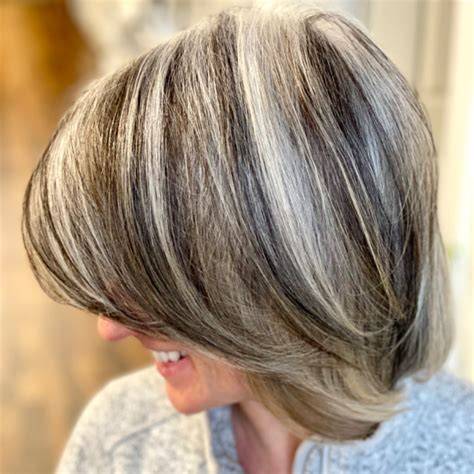
Gray blending is a coloring technique that seamlessly blends your gray strands with your natural hair tone. Made by using a combination of highlights and lowlights, it gives you a softer line of demarcation when your roots grow out and it gives you a subtle dimension throughout.
The difference between gray blending and other coloring techniques is all in the amount of coverage you get. This process just enhances your natural color while still keeping some of that gray in rather than just hiding them completely.
There are a couple of ways to go about gray blending and depending on how much gray you want to blend, prices may vary. A gloss can be around $150 while doing mini highlights can cost about $200. Check your salon for its pricing before booking that appointment.
The two biggest benefits to gray blending are its natural-looking coverage and how low maintenance upkeep can be. Since the technique works with your natural color and grays, it requires fewer touch-ups compared to other coloring methods, which saves money in the long run.
For those that want to fully embrace their gray but are in an awkward in-between stage, you can do this and then just let it grow. If you are full gray but feel your color is a little dull, painting on a couple of highlights will be the perfect way to go. Overall, it’s a noncommittal way of taking care of the grays while keeping it dimensional and damage-free.
Opting for a gray blending gloss or a semi-permanent single process treatment is far less damaging to your hair than other coloring techniques. It’s a good way of dabbling with hair color without having to commit.
When it comes to the best color to blend gray hair, it’s not a matter of what shade works best but rather how natural your hair color is. Gray blending works for anyone, whether you’re naturally blonde or brunette; it can be done on any hair. If you’ve had permanent hair color in the past, it’ll be tough to achieve a soft, gray blending until that old color is completely grown out.
Techniques for gray blending may differ based on hair shade. For brunettes or redheads, highlights first before using a demi-permanent color help maintain the most natural look. For blondes, highlights to blend away the gray are recommended.
The color application oscillates between highlights and lowlights to give your color dimension and a seamless blend for your grays. Lowlights add darker tones, while highlights add lighter tones to create a multi-tonal effect that mixes in the strands of gray for a more subtle appearance.
Gray blending can be done in a couple of ways and which treatment to opt for depends on how much gray you want in your hair and how often you want to come in for touch-ups. If you want a fair amount of coverage while still keeping some gray between strands, opt forHighlights with a gloss to provide a seamless transition. A simple gloss can work well for finer gray hair, while a gloss with subtle highlights provides a natural highlighted look without brassiness.
How long do gray blending results last? It depends on hair type and lifestyle, but generally about three months, as gray blending is usually done using a gloss that washes out in two to three months or with baby lights that require maintenance every three months or so.
Aftercare is crucial. Use a color-safe shampoo to keep the gray blending shade looking its best and avoid products that reverse the highlighting. A purple shampoo can help keep silver tones vibrant. Avoid heat styling as much as possible, and use nourishing leave-in treatments to keep hair healthy. This approach makes the transition to gray hair graceful and flexible as the hair fiber fades over time.
Care routines and product picks for gray hair
As you age, your hair’s appearance goes through changes in color, thickness, and shine. Upgrade your routine with products designed for gray hair. A dedicated Silver Care system-shampoo and conditioner-offers deep hydration and strengthens silver and gray hair for a brighter, silkier look. Deep conditioning remains central to any gray hair routine, using nourishing masks to neutralize brass and maintain cool tones.
Minimizing damage helps keep gray hair shiny and healthy-looking. Look for formulas that reduce breakage and protect against heat styling. If you heat style, a bond-repair oil-serum can protect against high temperatures while smoothing and adding shine.
No dye doesn’t necessarily mean no maintenance. Transition length matters: growing out a few inches is faster than long locks. Be patient, and tailor expectations to your hair’s growth rate, which varies individually.
For a visible growth line, consider hairstyles that conceal regrowth or use accessories to create a chic two-tone look while you transition. If you don’t want to wait, a haircut can instantly remove dyed sections and give you a uniform gray mane. Short crops or structured bobs are popular choices for fully gray looks.
With a solid plan, going gray can mean less upkeep over time and a celebration of natural texture. The right cut and styling can maximize the beauty of gray hair, with trends often favoring silver shades for their soft, luminous effect on complexions.

Images and videos for deeper understanding
✨ Grey Blending Secret: The “Soft Coverage” Method That Stops Harsh Lines
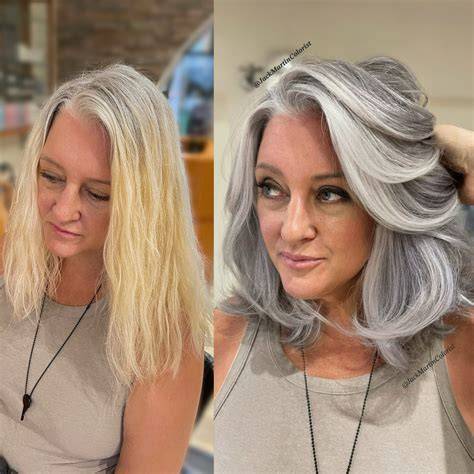
Table: quick reference for gray transition options
| Method | Description | Typical cost |
|---|---|---|
| Full all-over gray dye | Uniform gray color, roots grow in same shade | Varies by salon |
| Gray blending (gloss + highlights) | Multi-tonal, natural look with some gray | ~$150-$200 |
| Gloss or demi-permanent blend | Soft transition, less damage | Depends on product |
| No-dye camouflage (headbands, updos) | Temporary concealment | Low |