To take a look back at Blair Waldorf’s hair history is to see it spectacularly evolve and become more awesome as the '80s progressed (or awesomely awful if we're going by non-'80s standards).
Origins and early looks
Season One (1979-1980) By non-'80s standards, this is one Blair's best hairdos.
Season Five (1983-1984) This was a season where we saw a more dramatic change in Blair's hairstyle.
Season Six (1984-1985) Before Wicked's Elphaba, it was Blair Warner who defied gravity...
Blair managed to channel Melanie Griffith in Working Girl three whole years before that film was released for her 'Blair means business' look.
But hold up, season seven also saw a slight deflation of the hair.
Originally published on Substack 6/3-6/4/2021
[This profile contains discussion of eating disorders, abuse, and sexual assault.]
When I arranged the order of these profiles, I knew that Blair Waldorf’s would go last. She wouldn’t have it any other way. Not only is Blair the show’s most beloved character, but she’s also its most fashion conscious. The daughter of a designer, Blair speaks in fashion references and metaphors. “Fashion is the most powerful art there is,” she tells Dan Humphrey in season four. “It’s movement, design, and architecture all in one.”
Why is Blair so adored by viewers? I think the answer lies in her duality: she is both aspirational and relatable, perfect and flawed. She is rich, witty, beautiful, smart, thin; she has a bevy of handsome love interests. She is also deeply insecure, often jealous or scheming or cruel. She can be racist and classist and misogynist.
Her central conflict-and certainly the focus of her costume design-is this war between her “good” or “light” or “sparkly” side and her “bad” or “dark” side. Light-and-dark dualism is, of course, not unique to this show; many English metaphors enforce the racist idea of lightness or whiteness as good and darkness or blackness as bad.
The good, the bad, and the wardrobe as narrative
Blair’s “good” side is highly controlled: “a very meticulous, thought-out way of being,” as head costume designer Eric Daman puts it. She buttons her ruffled white blouses to the hilt, tops with them with tight bows and pearl necklaces and regal headbands or capes-all ways that she asserts her power and status. She is always “appropriate” for the occasion, whether it be a brunch or a masked ball or a wedding. And yet, underneath, in private, she favors sheer robes and slips and lingerie sets; for Blair, her “bad” side always means her sexuality-a loss of control.
We first see Blair in a black dress with long lace sleeves and a black bow headband, black stockings and garters, and jet earrings. The dress is an Eleanor Waldorf original: “Tell me if you’re going to wear one of my designs,” Eleanor says to Blair, “so we can at least get it properly fitted.” This line hints at the strained mother-daughter relationship fueling Blair’s insecurities, especially about her body.
Blair often chooses a black dress-usually paired with something sparkly-for formal occasions. The influence, I think, is her idol, Audrey Hepburn. Audrey’s iconic look is the black dress with sparkly accessories from Breakfast at Tiffany’s, and Blair embodies that sense of elegance, grace, and sophistication.
Blair pulls her boyfriend, Nate Archibald, into her bedroom; she wants them to have sex for the first time before he finds out Serena is back. The moment reveals Blair’s tension between control and desire, a recurring thread in her style evolution.
Iconic uniforms and the Blair Waldorf look
On the Met steps, Blair’s uniform becomes a symbol: a ruffled white blouse, navy blazer and crossover tie, white tights, and a yellow headband, all with the junior class’s standard navy kilt. As queen of Constance Billard School for Girls, Blair favors preppy pieces with a regal air: the high-necked blouse like an Elizabethan ruff, the headband like a crown. Her minions mimic elements of her look-headbands, white blouses, white knee-high socks or stockings-forming a royal court of style.
That evening, Blair and Serena reconcile over martinis, then Blair leaves to finish what she started with Nate. In her bedroom, she surprises him in a pink baby-doll slip with black trim and black stockings-revealing the other side of Blair Waldorf, the one underneath buttoned-up blouses and ties, the one who wants to be sexual and sexy. The encounter foreshadows how she uses fashion to navigate power, intimacy, and control.
In a later dinner scene, Blair’s wardrobe moves toward more conservative silhouettes as she pursues Yale admission. The dress choices-high-necklines, structured tailoring, and subdued color palettes-mirror her determination to balance elegance with ambition. Yet the “bad” Blair emerges again in moments of rebellion, like her dance with Chuck Bass at the Victrola, where a cream silk slip becomes a form of release from perfectionism.
Bulimia, control, and the fashion-forward psyche
Thanksgiving episodes reveal Blair’s struggle with bulimia, tying her body image to her need for control. A flashback to prior Thanksgiving shows Blair bingeing and purging, underscoring how she uses fashion and appearances to regulate chaos in her life. This complexity adds depth to Blair’s iconic aesthetic: a meticulously curated exterior that masks a volatile inner world.
Throughout the series, Blair’s bulimia recurs in the narrative when convenient, highlighting how her eating disorder intersects with her desire for control-over her body, her life, and her social status. The wardrobe choices during these episodes-ranging from prim, conservative silhouettes to moments of sensual, piercingly elegant gowns-map that conflict between restraint and release.
Blair Waldorf's hair as a character in itself
The headband, the crown-like accessory, and the precise hairstyles are inseparable from Blair’s persona. The headbands function as a modern crown, signaling authority and poise, while the hairlines and buns reinforce discipline and control. Over the seasons, Blair’s hairstyles evolve with the narrative arcs, from structured updos to softer waves during personal moments of vulnerability, always maintaining that unmistakable “Blair” silhouette.
Influence and legacy in modern fashion and pop culture
The Blair Waldorf look has inspired countless tributes and recreations in fashion, beauty, and styling communities. The combination of preppy uniforms, regal headbands, pearls, and tailored silhouettes creates a template for timeless upper‑class chic. The cultural resonance extends beyond Gossip Girl, shaping how audiences perceive power dressing, female ambition, and the aesthetics of control and refinement.
Across interviews and retrospectives, the correlation between Blair’s fashion philosophy and her character’s narrative-where fashion is both armor and expression-remains a central thread in understanding why the Blair Waldorf hairstyle and wardrobe feel iconic to this day.
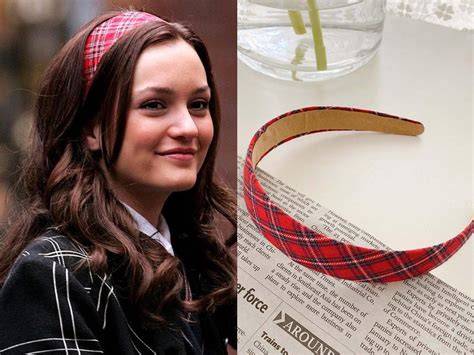
Blair Waldorf's Headband Lookbook - Gossip Girl Season 1
As for hairstyle evolution, Blair’s look has become a reference point for formal events, high-fashion interpretations, and celebratory outfits-often captured in re-creations of the classic white blouse with navy blazer and characteristic headband, paired with pearl accessories that signal refined, almost royal, elegance.
In summary, the Blair Waldorf hairstyle endures as an emblem of controlled sophistication, power-dressed femininity, and a nuanced narrative of ambition, vulnerability, and personal style.