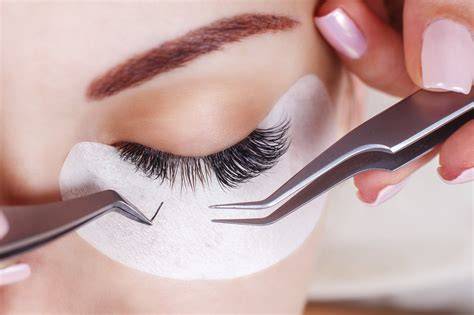
Large, luscious eyelashes are all the rage. We see celebrities sporting them on every red carpet, and even non-movie stars have begun wearing them daily. But did you know they pose serious health risks to your eyes? As the false eyelash trend becomes more and more popular, ophthalmologists are seeing a rise in patients with problems related to the trend. Many people have false eyelashes attached to their eyes at “eyelash bars,” many of which are not regulated or licensed in any way. These eyelash extensions are held to the eye with glue or sewn on, and this can cause irritation or allergic reactions. Glue can sometimes contain formaldehyde, which specifically can result in burning, stinging, swelling, and a rash upon contact or even up to a week later. They are also usually affixed at places that may not be very hygienic. Bacteria and fungus can get trapped under the glue and lead to infection, which causes swelling, redness, and a lot of pain around your eyes. The lashes themselves can even irritate the cornea, and when the glue thickens, it can fall off and scratch the cornea. These eyelash extensions can also seriously damage your natural eyelashes. In some cases, the weight of the glue and the false lashes can damage the hair follicle making it difficult to grow back your natural eyelashes. Temporary false eyelashes can also cause similar complications, and when people pull off their false lashes at the end of the night, they take many of their real eyelashes with them.
Eyelashes are necessary to keep dirt and bacteria away from the eye, and when they are damaged, your eye is at risk for infection. Unfortunately, when women experience hair loss from false eyelashes, the progressive thinning only perpetuates the cycle and they become convinced to continue using false eyelashes. In turn, these false eyelashes can trap the same dirt and bacteria that natural eyelashes are intended to protect your eyes from. Treat your eyelashes well and stay away from harmful faux lashes.
Usually, the quickest ways to stop you in your tracks involve eye safety and emergency steps. If something gets into your eye, you should wash your hands and face thoroughly, flush your eyes with water, and try blinking it loose. The pink part inside the eyelid, the cornea, is the thin, clear front surface of the eye. It is called a corneal abrasion when there is a scratch on its surface. The cornea is made up of five thin layers that allow light to filter into the eye. If you can’t make it to a doctor right away or don’t think a doctor’s visit is necessary, there are a few ways that you can treat a corneal abrasion at home.
Corneal abrasions are frequently caused by getting a foreign object trapped beneath the eyelid, such as a grain of sand or an eyelash. They can also be caused by rubbing your eyes too hard, wearing dirty contact lenses, or poking your eye with a pointed object like a mascara wand or a pencil. Chronic dry eye can also lead to corneal abrasions. You may feel irritation if a foreign object is still stuck on your cornea even if it hasn’t scratched the cornea. Corneal abrasions will often cause sustained pain or a gritty feeling in the eye, and severe cases can cause photophobia, a sensitivity to light. In most cases, corneal abrasions heal on their own over time if you take proper care.
To begin, avoid touching your eye with your fingers. Rinse your eye with clean water, using an eyecup or a small, sanitized glass held against the bone beneath your eye socket. If you wear contacts, remove them and use prescription glasses until the abrasion has healed. Use lubricating eye drops to keep your eye moist, and rest your eyes as much as possible for a few days. Do not towel dry your eye after showers to prevent fibers from contacting the eye. If you experience pain, over-the-counter pain medication can help, and doctors may use numbing eye drops to facilitate an examination. In some cases, a blue light with a slit lamp is used to assess the damage. If infection is suspected, a swab for cultures may be taken. For more severe abrasions, an antibiotic ointment or a bandage lens may be prescribed to protect the cornea and aid healing.
Sometimes eyelashes themselves can fall into your eye. Eyelashes, the short hairs that grow at the end of your eyelid, help protect the eyes from dust and debris, and the glands at the base of your lashes help lubricate the eyes when you blink. An eyelash in the eye can cause irritation or itching under the eyelid, and you may tear up or feel fluttery, gritty, or sharp and stinging sensations. If an eyelash is in your eye, wash your face and hands, flush your eyes with water, and try blinking to loosen it. If you can see the eyelash but it won’t come out, rinse again or use a clean cotton swab to lift the eyelash off the surface of the eye, being careful to avoid touching the eyeball.
Rubbing your eyes is a common reflex, but it can cause further damage such as corneal scratches. Do not rub or press on the eye, and avoid using sharp objects like tweezers to remove an eyelash. If the eyelash does not come out with gentle techniques, seek professional help from an ophthalmologist or optometrist. Repeated attempts to remove an eyelash can scratch the cornea, potentially leading to infection or other complications. If eyelashes are frequently falling into the eye, consult a professional to address potential lid misdirection or other eyelid conditions such as entropion or ectropion, which may require surgical correction.
In summary, eyelashes play a protective role, but under certain circumstances they can cause corneal abrasions or other eye injuries. False eyelash extensions can contribute to irritation, infection, and permanent eyelash damage if not applied and maintained properly. The safest approach is to minimize use of unregulated eyelash services, maintain good hygiene, and seek prompt medical care if you experience persistent pain, redness, tearing, or vision changes.
What to do if you suspect a corneal abrasion or eyelash-related eye injury
DO contact your optometrist immediately. Not only can a corneal abrasion impact your vision, it can also make your eye more susceptible to infection and other vision complications. For minor abrasions, non-preserved lubricating drops can keep your eye moist and comfortable so it can heal on its own. For more extreme cases, optometrists may use a “bandage lens,” a special silicone contact lens designed to protect the eye, provide pain relief, and promote healing. Once your eye doctor has examined your eye and prescribed a treatment plan, follow through with care and attend follow-up appointments. In some cases, corneal abrasions don’t heal properly, which can lead to repeat occurrences and other complications that can impact your vision and comfort.
Eyelashes, the short hairs that grow at the end of your eyelid, are meant to protect your eyes from dust and debris. The glands at the base of your lashes also help lubricate your eyes when you blink. Occasionally, an eyelash may fall into your eye and become stuck for a minute or two, causing irritation or itching. If you have an eyelash in your eye, try to stay calm and follow the steps above. Most of the time, an eyelash can simply and easily be removed without further complications, but if problems persist, seek professional care.