Cradle cap care is a gentle guide for newborn and infant dry scalp. If you’ve noticed flaky skin on your newborn’s scalp, little yellowish patches behind their ears, or dry spots near their eyebrows, you’re not alone. That dry, flaky condition is called cradle cap, and it’s a common skin concern in newborns and infants. While it can look a little alarming, the good news is-it’s totally normal, and there’s a gentle, effective way to manage it. Let’s walk through what cradle cap is, how to care for it at home, which ingredients are recommended, and the best products for keeping your baby’s delicate scalp clean, soothed, and flake-free.
What is cradle cap?
Cradle cap, also known as infantile seborrheic dermatitis, is a non-contagious skin condition that appears as thick, crusty, or scaly patches on a baby’s scalp. It can also show up on the eyebrows, behind the ears, or around the nose and is most common in babies under 6 months old. Even though it might look uncomfortable, newborn cradle cap usually doesn’t bother babies at all. The exact cause isn’t known, but it’s likely linked to excess oil production from baby’s developing skin glands and a natural reaction to mama’s hormones still circulating through their little system.
Cradle cap often clears up on its own, but many parents prefer to help it along with something like a cradle cap shampoo and a few gentle, consistent steps at home. Here’s how to treat infant cradle cap using a safe and gentle routine with a cradle cap care bundle:
How to treat cradle cap gently at home
- Step 1: Cleanse with cradle cap shampoo Start with a warm bath and a gentle lather using a cradle cap shampoo. Made just for delicate newborn skin, this gentle gel helps loosen flakes and soothe dry spots-without stripping away all that natural baby softness. It’s fragrance-free and made with calming plant-based ingredients that love your little one’s scalp as much as you do. Lather a small amount onto baby’s scalp using your fingertips or a soft silicone scrubber. Use slow, gentle circles to lift flakes and re-hydrate dry or scaly patches.
- Step 2: Rinse and pat dry After massaging, rinse thoroughly and gently pat your baby’s head dry with a soft towel. Avoid rubbing or picking at any remaining flakes, as those will lift more easily over time with consistent care.
- Step 3: Moisturize with a gentle ointment Once baby’s scalp is dry, apply a small amount of All Over Ointment (AOO) to any dry or flaky patches. AOO is a fan-favorite multi-use balm made with colloidal oatmeal, calendula, jojoba, and beeswax to lock in moisture and calm irritation. You can use it daily (even between washes) as part of your cradle cap self-care routine.
Repeat this process 2-3 times a week. You don’t need to overdo it; gradual care helps reduce flakes and keeps the scalp calm and nourished.
Is it really cradle cap-or something else?
If you’re struggling to tell the difference between dry scalp and cradle cap, here are a few signs to look for: flaky, scaly, or crusty patches on the scalp, yellowish or greasy areas, and a baby who seems unfazed (no itching or discomfort). If the area is red, oozing, spreading quickly, or the baby seems irritated, check with your pediatrician to rule out eczema, psoriasis, or infection.
Tips for long-term scalp care
Once the flakes have cleared, you can continue a cradle cap care routine to help prevent future dryness or buildup. Some babies experience recurring cradle cap throughout infancy, and that’s totally normal. Here are simple tips for keeping baby’s scalp balanced:
- Don’t overwash: 2-3 washes per week is enough
- Keep baths warm-not hot to avoid drying the skin
- Moisturize regularly with All Over Ointment, even between washes
- Brush gently with a soft silicone scrubber or baby hairbrush as needed
- Be patient-it can take a few weeks for cradle cap to fully clear
Cradle cap might look a little funky, but it’s nothing to worry about. With a simple, soothing routine and clean products made for baby’s delicate skin, you can help those flakes gently fade away, and give your little one some extra love and comfort along the way. Tubby Todd offers a cradle cap bundle that provides a safe, calming shampoo, a soft scrubber, and the All Over Ointment in one easy-to-use set-a tiny scalp care kit for new parents.
What cradle cap looks like and where else it can appear
You’ll notice patches of scaly skin on your baby’s scalp. When you touch the scales, they may feel fragile or waxy. This scaly skin doesn’t cause pain or discomfort for most babies. Cradle cap can appear on the eyebrows, behind the ears, or in facial folds, and in the diaper area in some cases. It isn’t contagious, and most cases resolve on their own with gentle care.
What causes cradle cap?
Researchers don’t fully understand why babies get cradle cap, but it’s likely due to a combination of factors. Hormones from the mother can cause oil glands to be overactive, leading to excess oil that traps dead skin cells. A yeast called Malassezia may also play a role. Importantly, cradle cap is not caused by anything you did or didn’t do, and it’s not a sign of poor hygiene.
Care advice for cradle cap
The following home-care tips can help manage cradle cap: shampoo with a mild, baby-friendly anti-dandruff option 2-3 times per week, gentle scalp massage, and careful washing to prevent crusts from hardening. If thick crusts are present, applying a tiny amount of baby oil before shampooing can soften them. Do not use olive oil, which may encourage yeast growth. In cases of persistent redness or irritation, consult a pediatrician for guidance on medicated or cortisone treatments as advised.
Product choices and guidance
When selecting a cradle cap shampoo, look for pediatrician-approved ingredients, gentle formulas safe for baby eyes, and soothing additives like oats, shea butter, glycerin, or natural oils. Avoid harsh ingredients such as salicylic acid, tar, or selenium sulfide. Options include medicated shampoos with pyrithione zinc, and milder options with calendula, chamomile, or vitamin E. A broad approach involves pairing shampoos with masks or sprays to loosen scales and moisturize the scalp, and using a soft brush to lift flakes.
Experts emphasize that consistency matters more than aggressive scrubbing. Regular cleansing and gentle exfoliation help manage cradle cap without irritating the scalp. For most babies, cradle cap will gradually clear within 6 to 12 months, but care routines can help it resolve sooner.
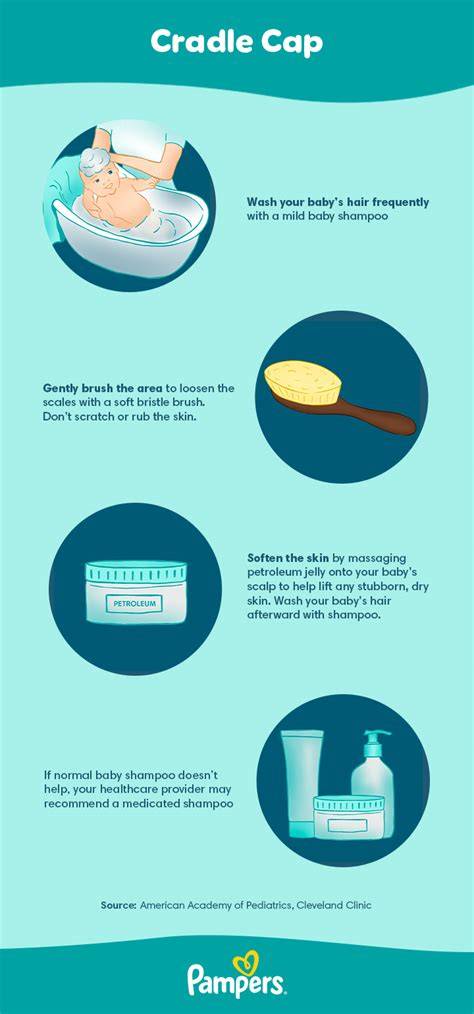
Cradle cap is a harmless condition where greasy, yellow, or white scales form on a baby’s scalp. It usually appears in the first weeks of life and can extend to the eyebrows or behind the ears. The recommended approach is a combination of gentle cleansing, moisturizing, and patience.
Cradle Cap, Causes, Signs and Symptoms, Diagnosis and Treatment.
Cradle cap is not contagious, and babies can attend daycare or playdates while receiving proper care. If symptoms worsen or persist beyond 12 months, or if discharge or significant redness occurs, seek medical advice promptly.
Notes from pediatricians
A Doctor’s Note on Cradle Cap: “Cradle cap is a typical newborn scalp condition that is very common and involves a mix of oil production, dead skin cells, and yeast building up on the newborn scalp. Most babies will experience mild or moderate cases; it’s rarely serious.” In more severe cases, a crusty mass may cover most of the scalp and extend to the face or neck. If that’s what you’re seeing, consult your pediatrician for guidance on appropriate treatments and products.
Quick reference for parents
- Use a mild cradle cap shampoo 2-3 times per week; for newborns under 2 years, daily use is not typically necessary.
- Gently massage the scalp with fingertips or a soft brush to lift flakes.
- Apply a gentle moisturizer to dry patches as needed.
- Avoid harsh scrubbing or picking at crusts.
- Consult a pediatrician for persistent or worsening symptoms or for medicated options if advised.