Deion Sanders’ wet Jheri curl glistened in the photo for his 1990 Topps trading card, projecting an aura of flair and confidence that defined him. That Jheri curl turned into a short S-curl showcased in his 1994 “Must Be the Money” music video, a song from his Prime Time album. As his career proceeded, he aged out of those greasier, processed hairdos and selected natural, more conventional short stylings. When the current NFL season started, a new Sanders graced our televisions, one with hair. A few weeks ago, a hilarious video surfaced on the internet, wherein Sanders addressed the matter. “I’m back,” he joyously proclaims. “Money, money is something. Money is a blessing. Everybody buying booty.”
Sanders left “squad shaved-head” and integrated “team hair plugs,” becoming the most prominent black man to publicly acknowledge having undergone hair transplant surgery. Maybe Jamie Foxx will come clean soon? No one naturally has a receding, then proceeding, hairline. As a shaved brotha, I wondered how I should regard Sanders: Is he a defector, one who rightfully receives criticism after deserting a group? I probably never would have considered the defector angle had I not seen one of the funnier moments from HBO’s Curb Your Enthusiasm. Lead character Larry David, in one episode, searches for a chef to head the restaurant he is opening. David, whose baldness is integral to his identity, perks up when a bald chef applicant approaches him. They immediately strike up a conversation about their mutual baldness and how they dislike guys who hide from it by wearing toupees or getting hair plugs. David hires this chef, but when he later randomly sees him in the grocery store, the chef is wearing a toupee. The sitcom, nearly every episode, mines for comic fodder how baldness causes David turmoil.
Bald jokes would hit with much less force if he were black. Baldness is easier for black men, largely because bald high-status black men vaulted the shaved head into the realm of sexy and cool. The leader, Michael Jordan, turned it into such a fashion statement that some with hair shave it off to improve their appearance. This can change, however, if bald high-status black men start buying hair. If they choose hair plugs, the ambassador ranks would dry up, potentially meaning that the shaved head will fall into disrepute. This is the case that Sanders is a defector. When prompted to play the word association game, most would choose adjectives such as confident or cocky to describe Sanders. We all appreciated his greatness partly because he told us.
America tends to bloody the self-esteem out of black men, but Prime Time wore an armor of swagger. Insecurity, though, necessarily precedes getting hair plugs, and I never really thought of Deion as insecure. So maybe Deion isn’t a trailblazer because him buying hair plugs will coax others to as well. I’m unsure how healthy nudging people to undergo cosmetic surgery is anyway. But rather he is a trailblazer in openly speaking about an insecurity, knowing people will mock him for getting plugs all while still being an obviously confident man. He has chosen to deal with his insecurity this way. Brando Simeo Starkey is an associate editor at Andscape and the author of In Defense of Uncle Tom: Why Blacks Must Police Racial Loyalty.
Deion Sanders' Hair Transplant Journey
Introduction: Deion Sanders - An Icon On and Off the Field
Coach Deion Sanders, famously known as 'Prime Time,' is one of the greatest athletes in history, excelling in both professional football and baseball. His versatility and unparalleled athleticism not only earned him numerous accolades but also positioned him as a transformative figure in the realm of sports. As an athlete, Deion Sanders showcased a level of versatility that was unparalleled in his era. He was a standout in both football and baseball, achieving a rare feat by playing both professional sports at the highest level simultaneously. But his story doesn’t end there. His significance extends far beyond his remarkable achievements as an athlete because he’s giving back to his community now as an incredible coach.
Deion Sanders’ Early Life
When Was Deion Sanders Born? Born on August 9, 1967, in Fort Myers, Florida, Sanders made an indelible mark in professional sports, particularly in football and baseball. Where Was Deion Sanders Born? Born in Fort Myers, Florida, Sanders became an iconic figure with his flashy style, incredible speed, and undeniable talent. Where Did Deion Sanders Go To High School? He attended North Fort Myers High School in Florida, where he was a standout athlete in football, baseball, and basketball. His speed, agility, and natural athleticism were apparent from a young age, and he quickly became one of the most talked-about high school athletes in the state. In football, Sanders played as a quarterback, cornerback, and punt returner, showcasing his versatility and dynamic playmaking ability. On the baseball field, he demonstrated his skills as a hitter and base runner, earning recognition as a top prospect. Basketball was another arena where Deion excelled, though he eventually chose to focus more on football and baseball. Despite his success on the field, Sanders faced challenges growing up. Raised by his mother, Connie Knight, and his stepfather, Willie Knight, in a tough neighborhood, he was determined to avoid the pitfalls that trapped many of his peers. Deion credited his stepfather with keeping him on the right path and inspiring his work ethic. In fact, Sanders was so dedicated to his craft that he was known to practice intensely in multiple sports, even after school hours.
Deion’s Baseball Career & MLB Teams
Deion Sanders had an extraordinary career as a two-sport athlete, and his baseball journey is just as impressive as his legendary football exploits. Known for his lightning speed and exceptional athleticism, Deion played Major League Baseball (MLB) for several teams over nine seasons. His ability to juggle both sports at the highest level made him one of the most iconic dual athletes in history. In baseball, Sanders was an outfielder and played for several Major League Baseball (MLB) teams, including the New York Yankees, Atlanta Braves, Cincinnati Reds, and others. Sanders became the only athlete in history to participate in both the Super Bowl and the World Series, a testament to his exceptional athletic prowess. Deion began his MLB career with the New York Yankees in 1989, but his time with the Yankees was brief. He showed flashes of brilliance but was traded to the Atlanta Braves in 1991, a move that would solidify his presence in baseball. With the Braves, Deion became a key part of the team, helping them reach the World Series in 1992. During that season, he posted a remarkable .304 batting average and stole 26 bases, showcasing his speed and power on the field. One of Deion’s most memorable baseball moments came during the 1992 postseason, where he made history by playing in both a World Series game with the Braves and an NFL game with the Atlanta Falcons in the same week. In addition to the Yankees and Braves, Deion also played for other MLB teams, including the Cincinnati Reds and the San Francisco Giants. His career batting average of .263, along with 186 stolen bases, highlights his prowess as a solid baseball player. Though he is often celebrated for his football career, Deion's contributions to baseball left an indelible mark on the sport. His charisma, talent, and unique approach to professional sports continue to inspire generations of athletes who seek to excel in multiple arenas.
Deion’s Football Career & NFL Teams
Deion Sanders, often referred to as "Prime Time," is regarded as one of the greatest cornerbacks in NFL history. His football career, marked by incredible athleticism, charisma, and a flair for the dramatic, began when he was drafted fifth overall by the Atlanta Falcons in 1989. Right from the start, Deion showcased his remarkable speed and instincts on the field, quickly establishing himself as a formidable defensive player. His electrifying style of play, combined with his flashy personality, captured the attention of fans and media alike. In football, Sanders was a cornerback and return specialist known for his exceptional speed, agility, and playmaking ability. His illustrious NFL career spanned from 1989 to 2005, during which he played for multiple teams, including the Atlanta Falcons, San Francisco 49ers, Dallas Cowboys, Washington Redskins, and Baltimore Ravens. He dominated the NFL, playing for teams like the Dallas Cowboys, San Francisco 49ers, and Atlanta Falcons, while also shining in Major League Baseball with the Atlanta Braves and Cincinnati Reds.
Beyond his individual accolades, Deion Sanders made a lasting impact on the game through his vibrant personality and larger-than-life persona. He brought a sense of entertainment and excitement to the NFL, often celebrating big plays with style and flair. His ability to perform under pressure, combined with his talent, made him a fan favorite and a cultural icon in the world of sports. Deion's contributions to football have left an indelible mark, inspiring countless athletes to embrace their individuality while striving for excellence on the field. Sanders' impact in football was not merely statistical; it was felt in the way he revolutionized the cornerback position. His ability to shut down opposing receivers, coupled with his electrifying returns, set a new standard for defensive play. His showmanship on the field, characterized by flashy plays and iconic celebrations, made him a fan favorite and contributed to the entertainment value of the sport.
How Many Superbowl Rings Does Deion Sanders Have?
Deion Sanders has two Super Bowl rings. He won his first Super Bowl with the San Francisco 49ers in Super Bowl XXIX (1995) and his second with the Dallas Cowboys in Super Bowl XXX (1996). Sanders is one of the few players to win back-to-back Super Bowls with different teams. What Was Deion Sanders’ Playing Weight? Deion Sanders' playing weight during his football career was around 198 pounds (90 kg). This weight, combined with his exceptional speed and athleticism, made him one of the most versatile and dynamic players in both the NFL and MLB. When Did Deion Sanders Retire? Deion Sanders retired from professional football in 2005. He had a legendary career in the NFL, playing as a cornerback, punt returner, and sometimes even wide receiver. Sanders initially retired in 2001 after playing for the Washington Redskins, but he made a comeback in 2004 to play for the Baltimore Ravens for two more seasons before his final retirement in 2005.
Deion’s Accolades
Deion Sanders’ career accolades reflect his status as one of the most electrifying athletes in professional sports history. Throughout his tenure in the NFL, he was recognized for his outstanding performance on the field, earning eight Pro Bowl selections. These Pro Bowls highlight his consistent ability to perform at an elite level and his reputation as one of the top cornerbacks in the league. One of Deion’s most significant achievements came in 1994 when he was awarded the NFL Defensive Player of the Year. This honor recognized not only his defensive prowess but also his ability to change the game through his playmaking skills. Sanders was known for his knack for making crucial interceptions and returning them for touchdowns, often shifting the momentum of a game in an instant. His dynamic presence on the field earned him the nickname "Prime Time," a moniker that perfectly encapsulated his ability to shine in critical moments. In addition to his accolades in the NFL, Sanders also made a significant impact in college football. He was inducted into the College Football Hall of Fame in 2011, honoring his stellar college career at Florida State University, where he was a consensus All-American and a key player in the Seminoles' rise to prominence. This recognition serves as a testament to his skill development and competitiveness that began long before he stepped onto the professional stage. Beyond individual accolades, Deion's contributions to winning teams are notable as well. He played a vital role in securing three Super Bowl championships-one with the San Francisco 49ers and two with the Dallas Cowboys. His performance in Super Bowl XXIX, where he had an interception and a fumble recovery, showcased his ability to rise to the occasion during the biggest games. In recognition of his remarkable career, Deion Sanders was inducted into the Pro Football Hall of Fame in 2011, solidifying his legacy as one of the greatest players in the history of the sport. His accolades and achievements have not only defined his career but have also inspired future generations of athletes to strive for greatness on and off the field.
Deion Sanders has helped normalize the conversation around hair restoration by being open about his own hair transplant journey. As a high-profile athlete and coach, his transparency shows that even confident, successful public figures choose to address hair loss without embarrassment. By speaking candidly about the procedure and his results, he reinforces that hair transplants are a personal, medical decision rather than something to hide. His example helps reduce stigma and sends the message that investing in your hair, even as a celebrity, is completely acceptable.
Deion’s Coaching Career
Beyond his achievements as a player, Deion Sanders' influence extended into coaching, where he continues to wow the sports world. His coaching career includes roles in both football and baseball, with notable positions such as the head football coach at the historically black college Jackson State University. Sanders took on the challenge of coaching at Jackson State in 2020, and under his leadership, the team experienced a remarkable turnaround. His commitment to developing not just athletes but well-rounded individuals was evident in the team's success both on and off the field. Sanders' presence brought attention and excitement to Jackson State football, underscoring his ability to inspire and motivate young athletes. At Jackson State, Sanders immediately made waves by revitalizing the football program. He brought with him a high-profile coaching style, utilizing his extensive network and celebrity to attract top talent and raise the visibility of the school. Under his leadership, the team experienced a dramatic improvement, both in terms of on-field performance and national recognition. Sanders’ approach focused not only on athletic success but also on molding his players into well-rounded individuals, emphasizing education, personal development, and community responsibility.
One of the most remarkable aspects of Deion’s coaching career has been his ability to recruit top-tier talent to Jackson State. In a historic move, he landed the top overall recruit in the country, Travis Hunter, marking a major milestone for the program and for HBCUs. This move demonstrated Sanders’ influence and his ability to shift the narrative around where elite players choose to play. His success at Jackson State set the stage for further opportunities, with many speculating that Sanders could soon move to coach at larger, more traditional football powerhouses, further expanding his legacy in the coaching world. In 2023, Deion accepted the head coaching position at the University of Colorado, continuing his rise in the coaching ranks. His success at Jackson State and his commitment to player development have made him a highly sought-after coach at the collegiate level, where his leadership and charisma continue to inspire young athletes.
As a sports icon, Deion Sanders transcends the boundaries of his playing days and coaching career. His charismatic personality, unparalleled skills, and pioneering approach to the game have solidified his place in the annals of sports history. Sanders' influence is not confined to the football field or baseball diamond; he has become a cultural icon, synonymous with excellence, flair, and a relentless pursuit of greatness. Off the field, Sanders has also made his mark as a television personality and commentator. His insightful analyses and engaging commentary further showcase the depth of his knowledge and understanding of the sports world. Sanders' media presence has allowed him to connect with fans on a different level, continuing to shape his legacy beyond his playing and coaching days.
Deion Answers Your Top 10 Questions
In an exclusive and engaging interview, RESTORE® hair had the privilege of sitting down with the legendary Deion Sanders to delve into his experiences and seek valuable advice for young men facing the challenges of male pattern baldness, and sports. The conversation not only shed light on his personal journey with RESTORE but also brought out the charismatic and fun side of the sports icon. What advice would you give to young athletes aspiring to reach the same level of success as you? “First and foremost, I don’t want them to be the second anything, I want them to be the first of everything. I don't want you to aspire to the same success, I want you to aspire to have more success. Learn from the blueprint I’ve given you and the mistakes I’ve made, and hopefully you don't have to take a left where I should have stayed right. Go down your path, not mine.” How did you develop your iconic touchdown dance? “Truthfully, MC Hammer had a song called Good to Go. He was in an all white, classic video, it was called the buck dance. I believe it originated out of New Orleans, Louisiana. If you see that video, you can see kinda where I get that dance, but it really started with MC Hammer, who arguably is one of the best entertainers to ever live. Some of his other top favorite artists, he goes on to say are, “Lil Wayne in rap, MC Hammer in his time for what he brought to the table, Michael Jackson for certain, and James Brown. That’s my Mount Rushmore.” What’s the most embarrassing fashion trend you've ever followed? “I never followed anybody, I’ve always been a leader. Let me see - trying to think of the most embarras...
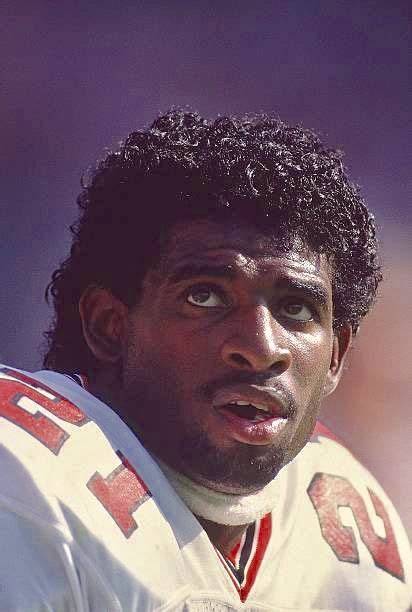
Deion Sanders Tries to Poach Members of the Bald Brotherhood | The Rich Eisen Show | 12/17/18
In addition to the wealth of information above, a concise data table summarizes key milestones in Deion Sanders’ career across football and baseball, including teams, years, and notable achievements.
| Aspect | Highlights |
|---|---|
| NFL Teams | Falcons, 49ers, Cowboys, Redskins, Ravens |
| MLB Teams | Yankees, Braves, Reds, Giants |
| Super Bowls | XXIX (49ers), XXX (Cowboys) |
| Coaching | Jackson State University, University of Colorado |