Ear drops are liquid medications that you put inside your ear canal. You can buy some kinds of ear drops over the counter. Others require a prescription from a healthcare provider. You should consult a healthcare provider before using ear drops. Additionally, you should avoid using ear drops at all if you think you could have a ruptured eardrum. Symptoms of a ruptured eardrum include ear pain, hearing loss, ringing in your ears, ear drainage and vertigo.
Why would someone need to use ear drops?
You may need to use ear drops if you have certain ear conditions, such as: Inner ear infection (otitis media). Outer ear infection, or swimmer’s ear (otitis externa). Ear pain. Earwax blockage from a cerumen (wax) impaction. Itchy ears with or without eczema. Ear drainage. Ear fullness.
What are the different types of ear drops?
There are several different types of ear drops. The one that’s right for you depends on a few factors, including your symptoms and what type of ear condition you have.
Ear drops for ear infections
If you have an ear infection, your healthcare provider may recommend antifungal or antibiotic ear drops. Active ingredients in these ear drops often include:
- Acetic acid.
- Aluminum acetate.
- Ciprofloxacin.
- Ofloxacin.
- Tobramycin.
- Gentamicin.
- Clotrimazole.
- Fluconazole.
- Miconazole.
Can I get antibiotic ear drops over the counter? No, antibiotic ear drops aren’t available over the counter. These medications require a prescription from a healthcare provider. You can purchase some antifungal ear drops over the counter. But you should ask your healthcare provider before using this type of treatment.
Swimmer’s ear drops
Swimmer’s ear is an infection of your outer ear. Bacteria usually cause it, but fungi (more than one fungus) can cause it as well. People with swimmer’s ear may also develop pain, itching and swelling. A dry ear is unlikely to become infected, so be sure to dry your ears thoroughly after swimming or bathing. Antifungal or antibiotic ear drops can treat the infection. Topical steroid ear drops can help relieve inflammation and itching. To treat swimmer’s ear, your healthcare provider may recommend ear drops that contain: Acetic acid. Ciprofloxacin. Cortisporin®. Dexamethasone. Alcohol or vinegar. You can also buy over-the-counter (OTC) ear drops to help dry out your ears quicker. These ear drops typically contain isopropyl alcohol or glycerin. If your symptoms worsen after using OTC swimmer’s ear drops, let your healthcare provider know.
Ear drops for pain
Over-the-counter pain relievers, like acetaminophen and ibuprofen, are usually the most effective defense against ear pain. But you can also purchase pain relief ear drops over the counter. These ear drops contain homeopathic ingredients. Homeopathic remedies come from the philosophy that “like cures like.” It’s the belief that a substance that causes symptoms in a healthy person can cure the same symptoms in an ill person. Over-the-counter ear drops for pain may contain these homeopathic ingredients: Belladonna (Atropa belladonna). Wolfsbane (Aconitum napellus). Ferrum phosphoricum. Consult a healthcare provider before trying homeopathic remedies.
Earwax removal drops
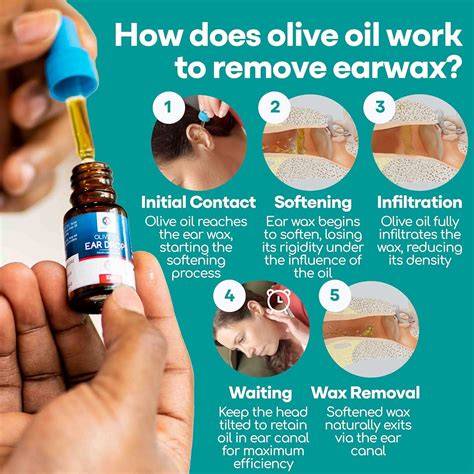
If you have earwax buildup, certain ear drops can soften and loosen your earwax for easier removal. There are three types of softening drops for earwax: water-based, non-water-based and oil-based. If you have impacted earwax, a healthcare provider may recommend ear drops containing: Once the medication has time to work, you’ll gently rinse your ear canals with warm water. Some products come with an ear syringe to make this step easier. Be sure to follow the instructions on the product packaging. You should talk to your healthcare provider before using earwax removal drops.
Ear drops for itchy ears
If you have itchy ears without an infection, then corticosteroid ear drops can help ease your symptoms. If you have an infection, you’ll also need antifungal or antibiotic ear drops.
Clinical notes: diagnosis, treatment, and procedures
Your healthcare professional can see if you have earwax blockage by looking in your ear. A special tool called an otoscope lights and magnifies your inner ear, offering a closer look. Treatment may involve removing excess wax with a small, curved tool called a curet or with suction techniques. Another method flushes the wax with a syringe full of warm water and saline or diluted hydrogen peroxide. Your healthcare professional may recommend medicated ear drops to help soften the wax, such as carbamide peroxide. Because these drops can irritate the delicate skin of the eardrum and ear canal, use them only as directed. If earwax buildup keeps happening, you may need healthcare checkups once or twice a year for regular cleaning. Your healthcare professional also may recommend that you use earwax-softening agents, such as saline, mineral oil or olive oil.
The safest way to clear your ears of excess wax is to see your healthcare professional. If you're prone to earwax blockage, your healthcare professional can show you safe ways to lessen wax buildup. For example, your healthcare professional may show you how to use ear drops or other earwax-softening agents. Don't use ear drops if you have an ear infection unless a healthcare professional recommends it. Don’t try to dig it out. Never try to dig out excessive or hardened earwax with items such as a paper clip, a cotton swab or a hairpin. You may push the wax farther into your ear and cause serious damage to the lining of your ear canal or eardrum.
Alternative medicine and safety
Some people try to remove earwax themselves using a technique called ear candling, also called ear coning. This involves lighting one end of a hollow, cone-shaped candle and placing the other unlit end into the ear. Ear candling isn't a recommended treatment for earwax blockage. Research has found that ear candling doesn't work. It also may burn or damage the ear. Essential oils - such as tea tree oil or garlic oil - also are not proven treatments for earwax blockage. There is no data that shows they are safe for earwax removal or that they work. Talk to your healthcare professional before trying any alternative remedies for removing earwax.
Preparing for your appointment
You're likely to start by seeing your healthcare professional. In some rare cases, your healthcare professional may refer you to a doctor with special training in ear disorders, called an ear, nose and throat specialist. As you prepare for your appointment, it's a good idea to write a list of questions.
- Questions about earwax buildup or blockage
- Symptoms such as hearing loss, pain, drainage
- Appropriate treatment options and safety considerations
Notes and references include Mayo Clinic guidance and Otolaryngology guidelines on cerumen impaction. The information is for educational purposes and should be used in consultation with a healthcare professional. Do not perform self-treatment in cases of suspected perforated eardrum or ongoing symptoms that worsen.