The terms taper and fade are often used interchangeably in conversation, but they describe different techniques. A taper is a cut where the hair gradually decreases in length from the top of the sides and back down to the hairline. The hair shortens progressively as it approaches the ears and neckline. A classic taper does not go down to the skin - it ends at a short but visible length. A fade is a type of taper that blends the hair down to the skin (or very close to it) at some point - the temples, the sides, or the neckline. The distinguishing characteristic of a fade versus a taper is that the fade ends at bare skin or near-zero. A taper fade combines both characteristics: the graduated blending method of a taper with the skin or near-skin finish of a fade.
Fade technique and guard-blending mechanics are central to CADMEN's hands-on barbering program. A taper and a fade differ in how short the hair gets at the bottom of the sides and neckline. A taper: the hair is cut progressively shorter as it moves down toward the hairline, but the hair at the very bottom (the hairline itself) still has visible length. A taper typically ends at a guard 0.5 or guard 1 at the lowest point - short but not skin. The appearance is a clean, neat graduation without bare skin visible. A taper is often described as a "natural finish" because the hairline remains visible without a stark skin-to-hair contrast.
A fade: the blending continues to bare skin at some point. A skin fade ends with the clipper against the scalp with no guard, producing an area of bare skin that gradually transitions to longer hair above it. A mid-fade produces skin at the mid-ear level; a low fade produces skin close to the natural hairline. The key distinction: a taper ends short but hairy; a fade ends at skin. A "taper fade" is the technique where the blending method of a taper (progressive shortening) reaches the skin at its endpoint - combining both characteristics. When someone asks for "a fade," they are almost always requesting a taper fade (blending down to skin).
The distinction between low, mid, and high taper fades is the height on the head where the skin becomes visible. Low taper fade: the skin begins appearing at or slightly above the natural hairline - right around the ear and along the neckline. Above that, the hair transitions quickly from very short to the longer length on top. The overall effect is a clean finish with minimal bare skin visible when looking at the full hairstyle. This is the most conservative of the fade options and is often preferred in professional or formal settings. Mid taper fade: the skin line begins at approximately mid-ear height - partway up the sides. From this line, the graduation continues upward into the bulk of the haircut. More skin is visible than in a low fade, and the contrast between the short sides and longer top is more pronounced. High taper fade: the fade begins at or above temple level. The bare skin section covers most of the sides, and the contrast between the top section and the sides is extreme. High fades are associated with maximum contrast and are common in contemporary barbershop styles. They require more frequent maintenance to keep the sides clean.
The choice between these three variations depends on the overall haircut style, the client's preference for contrast, and the maintenance frequency they can commit to. A taper fade's maintenance timeline depends on how tight the fade is and how fast the client's hair grows. Average hair growth is approximately half an inch per month. At that rate: a high skin fade starts looking grown-out at 1 to 2 weeks. The high contrast between the skin section and the longer top begins to blur as the sides grow, and the precision of the fade line becomes unclear. A mid-fade can hold its appearance for 2 to 3 weeks before the contrast becomes noticeably blurred. The skin section fills in with visible stubble and the clean graduation line between the short and longer sections softens. A low taper fade holds the longest - often 3 to 4 weeks. Because the initial contrast is lower and the graduation is less dramatic, normal hair growth does not disturb the overall shape as visibly as it does with a high fade. These timelines vary by individual. Men who grow hair faster than average need more frequent visits regardless of fade height. The practical benchmark: the cut is "done" when it requires concentration or specific styling to look intentional. For high fades, that point comes in 1 to 2 weeks. For low tapers, it can be 4 weeks or longer.
Tapers and fades are common cuts that many request at barbershops. Lots of people, even barbers, use these names interchangeably. Understanding the differences between these cuts is the key to communicating with your barber and getting the look you want. We’ll explain the main differences between the taper vs. fade.
Taper vs Fade: Core Differences
A tapered cut changes the hair’s length more gradually than a fade. Tapers aren’t as dramatic as fades, are evenly cut, and typically leave hair longer on the top and sides compared to a fade. The best cut for you depends on your face shape, style, and the look you want. A taper is a cut that leaves your hair long at the top and short on the sides. Hair gradually gets shorter as you move down the back and sides of your head. Your hairline has the shortest part of your hair. Tapers are great if you want a classic look that doesn’t leave your hair too short. This cut also gives you room to try different styles as your hair grows out. Lots of hairstyles also incorporate a taper, so you may end up with one without asking.
A low taper is a cut that starts to get short above the ears. This cut gives your hairline a clean look without cutting off too much length. It’s also a great choice if you don’t want to expose your scalp. A high taper shortens hair a couple inches above the ears. The cut creates more contrast than a low taper. A taper or a fade can include a tapered neckline. Your neckline’s cut adds even more personality to your hair. You can get a design, disconnect, or a classic neckline shape. A tapered neckline will look the most natural when it grows out. A skin taper is when the scalp is visible because hair is shaved close to the skin. You can get a skin taper with other cuts and other tapers. For example, you can get a high taper that tapers into the skin. It’s a practical cut to keep hair off your face when the weather warms up.
A fade is a cut that also has hair go from long to short, but normally goes very short towards the bottom and fades into the skin. A typical fade gradually changes hair length all around your head. The change from long to short looks more dramatic with a fade than with a taper. Fades are also incorporated into many other haircuts. A low fade looks similar to a low taper since they both start above the hairline. The major difference is that a fade abruptly changes hair lengths. Drop fades are perfect when you want to steer away from the classic fade. A drop fade is a fade that drops below the ears and follows the shape of your head. This cut requires some maintenance to keep up the contrast as it grows out. A skin fade is also known as a bald fade. Like the skin taper, the skin fade shaves hair close to the skin, stopping before the natural hair line. You can get a skin fade while keeping the top of your hair long enough for a quiff or a pompadour. Undercut fades feature a blurry fade that’s normally cut high above your ears. This style looks especially great with long hair since you can show off the length differences. Faux hawks and mohawks differ based on the length of hair left on the sides of the head. A mohawk has fully shaved sides while a faux hawk keeps some hair on the sides. A faux hawk fade will definitely stand out because of its subtle height and length contrast. The high fade gives a fresh take to any style. A high fade starts a couple of inches above the ear and gets shorter as you go down. It also gives your barber lots of room to add designs.
A taper fade is a barber term that popped up when people started to mix up tapers and fades. This isn’t a specific haircut or style. Comb overs were previously a practical style people used to cover up thinning hair. Today, a comb over is a fashionable cut that’s flattering for everyone. There are lots of variations you can try that have different lengths and shapes. Tapers and fades are both great styles to get for your next haircut. Start looking through photos to see what you’d like to try. Once you’ve narrowed down a few looks, find a local barber to get their opinion. The temple fade haircut has short sides and a long top. The hair is tapered from the scalp to 1 cm (0.4 in) in length from the edge of the hairline up 2 cm (0.8 in).
Practical Considerations and Maintenance
The practical maintenance timeline for a taper fade depends on how tight the fade is and how fast hair grows. A skin fade ends with bare skin and requires frequent upkeep to stay crisp, whereas a low taper fade may last longer between visits. Maintenance intervals commonly range from 1 to 4 weeks depending on fade height and personal growth rate. To keep a fade looking sharp between visits, wash hair regularly and use light styling products. A trimmed neckline helps preserve the intended shape as it grows out.
Choosing between fade vs taper fade often comes down to hair type and lifestyle. If you have thick hair and want easier management, a fade might be ideal for a sharp, dramatic look. If you prefer a classic, versatile silhouette, a taper fade could be the better choice. Your barber will tailor the cut to your face shape, hair type, and daily routine, ensuring the style complements your features.
Face Shape and Hair Type: Quick Guidelines
Round face: a mid fade or high fade helps add height and elongate the face. Oval face: most fade types work well. Square face: a low taper fade can soften strong angles. Long face: avoid high fades; a low or mid fade adds width and proportion. Straight hair: works with all fade types. Curly hair: a mid or high fade helps control volume on the sides. Thick hair: a high fade can reduce bulk and weight. Thin hair: a low fade keeps more coverage on the sides.
Practical Tips for Getting the Look
When asking for a fade, specify the starting point (low, mid, high), whether you want skin exposure, and the level of contrast with the top. For a taper fade, mention the desired taper length, whether you prefer a natural hairline, and if you want any neckline designs. If you’re unsure, bring photos of examples and discuss with your barber to tailor the cut to your head shape and lifestyle.
Decorative Variations and Popular Combinations
Popular fade pairings include textured crop with mid fade, messy quiff with low taper fade, buzz cut with high fade, and curly top with a taper fade. Temple fade, burst fade, drop fade, and skin fade are all variations that can add unique character to the cut. Undercut fades blend a sharp disconnect with a long top, offering a modern, high-contrast option. Faux hawk fades provide a subtle height difference while maintaining a recognizable shape.
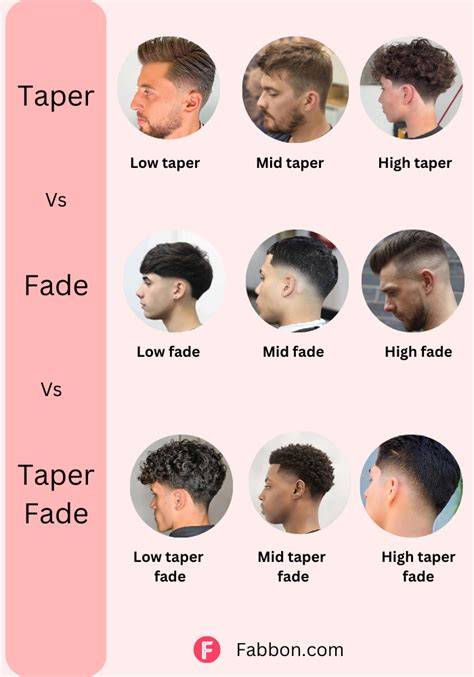
Barber Breakdown: Tapers vs. Fades, What’s the Difference
Remember, a taper fade blends the gradual shortening of a taper with the skin-close finish of a fade, creating a versatile option that suits many styles while offering a clean edge and adaptable length. Start by reviewing examples, consult with a skilled barber, and choose a cut that aligns with your face shape, hair type, and maintenance goals.