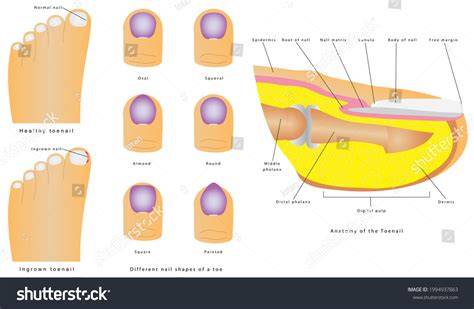
An ingrown toenail is incurvation or impingement of a nail border into its adjacent nail fold. This article compiles the essential information about treating ingrown toenails, including indications, procedures, aftercare, and self-care strategies, using the material provided in the draft.
What is an ingrown toenail and why it matters
An ingrown toenail occurs when a nail edge grows into the surrounding soft tissue, causing redness, swelling, pain, and often infection. Symptoms can worsen with tight footwear, and improper nail trimming is a common cause. Early management focuses on relieving pressure and preventing infection.
Be aware that several related conditions can mimic ingrown toenails, such as trauma, gout, paronychia, or cellulitis. Correct diagnosis relies on inspecting whether the periungual tissues extend over the lateral part of the nail.
Indications and contraindications for treatment
- Indications for treating an ingrown toenail include inflammation and/or infection around the nail border, persistent pain, and evidence that the nail fold extends over the nail edge.
- Contraindications to treating an ingrown toenail are not explicitly listed in the draft; the emphasis is on assessing the extent of inflammation or infection to tailor the intervention.
Complications to watch for
- Nail fold hyperkeratosis, edema, or erythema
- Infection and nail regrowth issues
- Inclusion cysts
Equipment and preparation for treatment
Proper equipment includes cleansing solutions (povidone-iodine or chlorhexidine), needles (21- and 25-gauge), a 10-mL syringe, local anesthetic (eg, 1% lidocaine), a tourniquet, dressings and wound closures, sharp instruments (nail splitter, scissors, or #11 scalpel), forceps, wound closure strips, gauze, antiseptics (silver nitrate sticks, phenol or sodium hydroxide solutions), antibiotic ointment without neomycin, and sterile gloves. Positioning is usually with the patient supine or seated and the affected leg straight and well-supported.
Step-by-step: treating an ingrown toenail
Several procedures can be used, ranging from splinting and isolating the nail fold to removing part of the nail or the entire nail. The choice depends on the degree of inflammation, infection, and pain.
- Cleanse the site with povidone-iodine or chlorhexidine.
- Perform a digital block to fully anesthetize the toe.
- Apply a tourniquet at the base of the toe to control bleeding.
- Determine the extent of treatment based on inflammation or infection.
- If inflammation is minimal, consider splinting the nail or removing only a nail spicule.
- If inflammation is more extensive or there is infection or severe pain, remove part of the nail.
Splinting the nail
Elevate the lateral border of the nail with forceps or a hemostat. Insert a cotton pledget (mild inflammation), wound closure strip (moderate), or a 1-cm strip from a surgical drain under the lateral nail edge. Insert wound closure strips and drain material obliquely under the nail corner until the corner is elevated and under the entire length of the nail. Secure a tape closure around the toe.
Removing a nail spicule
If necessary, elevate the spicule with forceps. Use a nail splitter or sharp-pointed scissors to cut longitudinally between the spicule and the nail plate, avoiding damage to the germinal matrix under the cuticle. Twist the spicule out with forceps or a hemostat. Clean debris from the nail fold. Control bleeding with silver nitrate. Drain abscesses and irrigate as needed.
Removing all or part of the main part of the toenail
Elevate the lateral 3-4 mm of the affected margin, cut the nail lengthwise to separate the elevated segment, including under the cuticle. Grab the segment and twist it away from the nail bed to free it from the nail fold and cuticle. Avoid damaging the germinal matrix. Retract the nail fold and cleanse the dermis of debris. Apply silver nitrate to control bleeding. Consider chemical cautery (10% sodium hydroxide or phenol) to permanently inhibit regrowth on the exposed nail bed, if available.
Aftercare
Dress with antibiotic ointment and a nonadherent dressing. For splinted nails, daily wound care and dressing replacement are needed, with removal of the splint once inflammation resolves. If part of the nail or spicule was removed, soak the toe 2-3 times daily, redress, and avoid harsh chemicals. Reinspect in 2-3 days for infection signs, sooner for high-risk patients (diabetes, neuropathy, peripheral vascular disease). If unresolved, refer to a podiatrist. Wear less constricting shoes and trim nails straight across.
Warnings, common errors, and tips
- Cut to the base of the nail to prevent residual nails and recurrent spicules.
- Always use a tourniquet to ensure a clear operative field.
- Monitor for osteomyelitis in patients with recurrent ingrown toenails or circulatory issues.
Tips include using a sharp-pointed scissors if a nail splitter is unavailable, applying pressure to minimize nail bed injury, and recognizing that ingrown toenails result from edge growth into the skin, causing pain and potential infection. Early self-care emphasizes soaking, straight-across trimming, and avoiding trimming too short.
Self-care and home management
Most ingrown toenails can be treated at home with soaking, gentle lifting of the nail edge, and applying cotton or floss under the edge to guide growth above the skin. Use petroleum jelly on the tender area and wear open-toed or loose-fitting shoes. Pain relief can be achieved with nonprescription medications. If infection is suspected or symptoms persist, seek professional care.
Preparing for and contacting a professional
Prepare questions for your healthcare provider about temporary vs. long-term conditions, treatment options, expected results, and nail care during healing. If diabetes or poor circulation is present, discuss special considerations and follow-up plans. Follow-up care and appointment adherence are essential for safety and recovery.
Care instructions after treatment
Most ingrown toenails can be treated at home; however, professional intervention may be needed for persistent or severe cases. Follow your clinician’s instructions regarding wound care, medications, and activity restrictions. If prescribed antibiotics, complete the course even if symptoms improve.