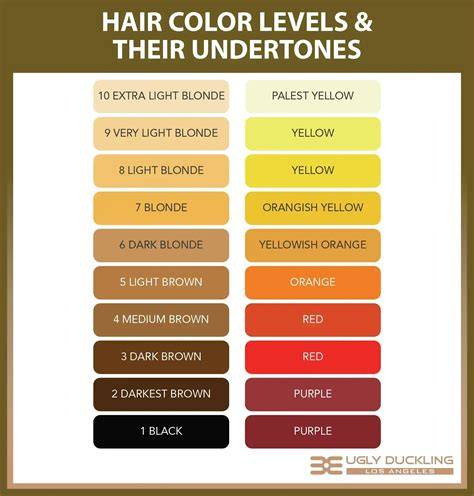
The perfect hair color can brighten up your complexion and liven up any look. When dyeing your hair, it's important to remember that color does not lift color. Previously colored hair cannot be made lighter by simply applying a lighter shade. The color used before will only muddy the color you have now. It is possible to darken hair that already has color, but if you're trying to match the color on the box, your current color will impact the outcome. If you have color-treated hair and want to move to a lighter shade, it's best to visit a professional for the proper lightening treatment.
Start with your natural level. Consider undertones. Factor in gray coverage. Decide on maintenance. Check hair health. Compromised or very porous hair may grab color differently. Going darker or lighter than your natural hair color offers an immediate update to your hairstyle.
The first "Golden Rule" of color choice is to stay within two levels of your natural or base color. This applies to both lighter and darker shades. Hair color is divided into ten different levels. These levels are used to describe how dark or light your hair color is. Level 10 is the lightest blond, level 9 is light blond, level 8 is medium blond, level 7 is dark blond, level 6 is light brown, level 5 is medium brown, level 4 is dark brown, level 3 is darkest brown, level 2 is black-brown, and level 1 is black.
It might sound counterintuitive, but knowing your skin tone is the second "Golden Rule" of hair color. Your skin tone determines what colors are most flattering in clothing, jewelry, and especially hair. You've probably heard people say, "I am a summer" or "I am a winter" when talking about the colors that make them feel their best. What they're really referring to is the tone of their skin. Skin tones come in two basic types: warm and cool. Ash and burgundy hair color tones are better suited for those with cool skin tones, while gold, copper, mahogany, and auburn hair colors complement those with warm skin tones.
To determine your skin tone, look at the skin on the inside of your wrist. Those with warm skin tones have veins with a slightly green tint. If your skin is a cool tone, your veins will be a bluish color. Warm-toned skin is more likely to tan, while cool-toned skin is more prone to burn. It's been said that the eyes are the window to the soul. And when it comes to choosing the right hair color, the eyes are also the third "Golden Rule." Eye color, hair color, and skin tone work together to create a look that is naturally you. Light skin with blue eyes tends to look great in hair that is blonde or lighter brown with blonde highlights. Medium skin with hazel eyes pairs well with darker blonde or copper tones. Also, medium skin with green eyes tends to look beautiful with red hair. Dark skin with brown eyes looks fabulous with deep brown or black with copper or brown highlights.
Always do a patch test 48 hours before coloring and review product instructions. Apply to dry, unwashed hair unless otherwise directed. Protect hair from UV and heat with leave-in products; limit hot tool use where possible. Think about your natural level, undertone, desired maintenance, and whether you need gray coverage. Color does not lift color. Choose a permanent color labeled for 100% gray coverage, apply at the roots first, and follow timing precisely. Yes. Always patch test 48 hours before coloring to check for sensitivity.
What’s the secret to foolproof hair color? Our experts share a few beauty industry secrets to help you achieve your most amazing color ever. Ask yourself an important question: do you want to see noticeable roots in a few weeks? It’s the easiest way to choose between permanent and demi-permanent color. Here we explain the difference. Either route you take, you’ll notice roots after 4 to 6 weeks, but demi permanent color softly fades and gives you some wiggle room in between touchups. Permanent color requires more of a commitment. Apply color to your roots first. Hair that’s been previously colored is porous and soaks up color easily, but new growth requires more processing time. Leave color on your roots for the full time and only process ends for half the required time. Do the math. Your color is a result of your hair’s condition, color history, and the new hair color applied. One reason why the same shade looks different on everyone!
If your hair isn’t in great condition, that healthy, glossy color won’t last long. Call your friend and ask her to come over and help you color the back of your head so that you don’t miss a spot. If your natural hair color seems to be a distant memory, use your brows as a guide. For the best color match, stick within two shades lighter or darker than your natural color. Note: platinum blonde hair paired with super dark eyebrows isn’t a combo most of us can pull off, neither is dark hair with barely-there brows.
Apply petroleum jelly to your hairline - it prevents color from staining skin. Bonus: dab a little onto your cuticles to soften them! Discover your skin tone. Cool skin tones look best in cool hair colors, while warm skin tones look best in warm hair colors. Not sure about your undertone? Consider highlights. Have you always wanted to go blonde, but you’ve never been ready to commit? Lighten your overall look by adding a few face-framing highlights or a DIY ombré (check our glossary!).
If your hair is naturally dark, using a high-lift blonde for the first time will result in golden, not platinum highlights. Be the guardian of time. Over-processing hair is a common color mistake that ends in color not being what you expected! Check in with your color a few times. This is especially important when bleaching. Use foils. Not for your hair, but for your glasses! Wrap some foil around the temples of your glasses so you can wear them while you color. Predict the future. The best way to see your end results is to do a strand test on different strands of hair for different lengths of time. When time’s up, wipe the strands clean with a damp paper towel. Stained fingers? Cut a lemon in half and squeeze the juice into a small bowl. Soak fingertips for 30 minutes.
- Begin with your natural level and consider undertones for a harmonious result.
- For gray coverage, choose a permanent color labeled for 100% gray coverage and follow timing exactly.
- Do patch tests 48 hours ahead to ensure there is no sensitivity.
- Prefer a strand test to predict your end result before full application.
In summary, the outcome of your hair color depends on your natural level, undertone, color history, and current hair condition. Keeping within two levels of your natural color minimizes unpredictable results and helps you achieve a cohesive, flattering look.