Scalp cooling technology can help chemotherapy patients to minimise or prevent hair loss. Of course, when faced with a cancer diagnosis there is a pantheon of challenges and questions that engulf you, and on that long horrendous list, from the outside at least, hair may just not seem that important. But we know that hair loss is constantly cited as one of the top three greatest concerns for people facing chemotherapy, so much so that an estimated 12% of people refuse chemotherapy treatment outright due to the fear of losing their hair. Scalp cooling is the only clinically proven method to manage hair loss during chemotherapy through both hair retention and then later, faster hair regrowth for patients going through cancer treatment.
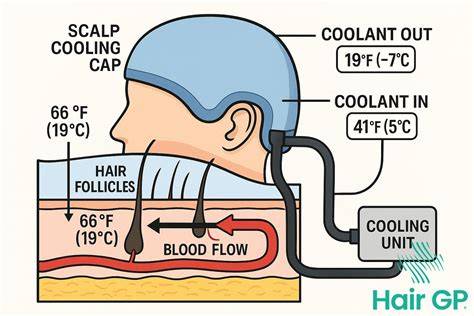
Chemotherapy works by targeting all rapidly dividing cells, and hair cells are the second-fastest-dividing cells in the body - the reason why many chemotherapy drugs cause hair loss. This cooling process is usually undertaken using a machine-based cooling system such as the Paxman Scalp Cooling System, a compact refrigeration unit, which circulates liquid coolant at low pressure through a special cooling cap worn by the patient.
It is common to hear people talking about cold caps freezing their follicles, but this is a myth! Scalp cooling absolutely does not freeze your scalp. The optimum scalp cooling temperature for hair retention is between 18 and 22 degrees Celsius - significantly above zero! The coolant in the system operates at a temperature between -4 & -1 degrees Celsius, reducing the scalp temperature to this optimum level.
IS SCALP COOLING SUITABLE FOR ALL HAIRSTYLES? Anyone can cold cap - women and men, and whatever kind of hair - there is no evidence to show that scalp cooling is more or less effective for different genders, ethnicities or with different hair types.
This is another myth that does the rounds. There is absolutely no requirement to cut your hair before you start scalp cooling. The only time that cutting the hair before scalp cooling maybe helpful is if you have very long thick hair - but only to alleviate some of the weight at the scalp. Your hair will be much easier to look after if it is in good condition, so a good trim to get rid of split ends and dry, damaged hair is a good idea to make the hair more manageable. Hair care during cold capping is important - the more manageable the better, particularly as it is easy for long or over-processed hair to become tangled.
DO ALL HOSPITALS IN THE UK OFFER SCALP COOLING? 99% of NHS and private hospitals in the UK have Paxman scalp cooling systems. If you think you are eligible for scalp cooling always ask - unfortunately it is not always offered.
If you have type 1 or type 2 hair use a spray bottle to dampen your hair. There is no specific quantity of water used, just enough to be able to slick the hair back. A small amount of conditioner should then be smoothed over the hair surface. For those with type 3 and 4 hair you need to really wet the hair. Curly hair is generally a lot more porous and therefore will need a lot more water making the spray bottle a more difficult way of wetting the hair. You may choose to run your hair under a tap or shower so that it is wet enough to reduce the hair volume and allow a good cap fit. Conditioner should again then be smoothed over the hair surface.
The first 15 minutes can be tough as the cold can be very intense, but your body will acclimatise. The large majority of people find that they soon feel numb rather than very cold and that scalp cooling is completely manageable. Distractions can really help during the first 15 minutes, and making sure that your forehead is protected from direct contact with the cap can make the cap much more bearable.
Shedding for many people is the most dreaded part of scalp cooling. Hair loss can be distressing, messy, and tiresome and for many it strikes fear into their hearts that scalp cool isn’t working. Shedding is a normal part of scalp cooling too. It begins for everyone between days 14 and 21 after your first treatment. This does not mean that scalp cooling has failed. People are often terrified to brush their hair, and there has been some advice around in the past that you should avoid brushing your hair during cold capping, but exactly the opposite is true. We would recommend brushing your hair every day, ideally once in the morning and once in the evening, and definitely before washing your hair. No more than twice a week, but probably no less than once every 10 days. Wash day can strike fear in to people using scalp cooling, as washing your hair will really release those shed hairs, leaving a shower drain that is hard to look at, but this is exactly why it’s so important.
10 things to know about hair loss during chemotherapyHere are our top ten things to know about hair loss during chemotherapy, followed by a list of links to some helpful information about hair loss, wigs and cold capping. The big question for a lot of people embarking on chemotherapy is “will my hair fall out?”, and (depending upon your chemotherapy regime) the answer is often “probably”.
A good cap fit is crucial to achieving the best possible scalp cooling outcome. In the UK usually the nurses or clinical staff on the chemo ward do cap fitting, but in the US the patient has their own cap and often takes responsibility for the fitting.
Scalp cooling will add extra time on to treatment day. Everyone needs a 30-minute pre-infusion cooling time or 45 minutes if you have very thick type 3 or 4 hair. This pre-infusion cooling time ensures that your scalp reaches 18-22 degrees before the chemo drugs are infused into your system. This can often be done while other pre-med drugs are being administered, or you are being prepped for the chemo.
Everyone’s tolerance to the cold is different, but scalp cooling should in no way be painful! People tend to report that the first 10-15 minutes are the most uncomfortable. This is due to the scalp being rapidly reduced in temperature from 37°C to somewhere between 18°C and 22°C. It is worth taking some pain relief in advance to take the edge off. Something that works as a distraction is also a good idea, whether it is, meditation, a book or magazine, music, a film or series on your phone or tablet (don’t forget the headphones), or a friend or family member to chat to you. It will help make those first 10- 15 minutes, which can be tough, a little easier. Also, don’t forget to protect that forehead!
Hair care is really important throughout the treatment process, from the first chemo sessions all the way through to a couple of months after your final one. Many people understandably become very anxious about even touching their hair, but it is really important to maintain daily hair care. Keeping your hair manageable is the key. Washing and brushing are often associated with hair shedding. We would recommend washing your hair no more than a couple of times a week in lukewarm water - but it is important that you rinse out the conditioner from the day of your treatment within 24 hours. It seems counter intuitive but leaving the conditioner in can make your hair less easy to manage. Try to use colour-, perfume- and sulphate-free products as your scalp and skin can be very sensitive during chemo. When you are washing your hair don’t ever pile it on the top of your head and rub - that’s a one way ticket to some serious knotting. Brush your hair EVERY DAY with a detangling brush. This is one that people are often petrified of, but it is so important to remove any strands that are being shed, because it is so easy for those strands to get tangled up in your hair and become clumps or matts that are near impossible to brush out. Start by brushing from the ends of the hair and then slowly move up the hair, holding the hair below the root to support it the whole time. Hair products are up to you. We would recommend avoiding anything that will create build up and be difficult to wash out. Also be aware that products that you used pre chemo could still cause you to have a reaction as your skin may have heightened sensitivity due to chemo - patch test first. Try to avoid heat styling. Really it is about using your common sense and figure out what works for you.
We would always suggest beginning scalp cooling when you begin your chemo, but there have been cases where people have not started scalp cooling until a couple of sessions in, and although they had no hair at all to begin with, they saw hair growth by the end of their treatment. It is always worth speaking to your doctor or nurse. It is recommended that a paper theatre cap is used under the silicone cap in scenarios where there is little or no hair present as this will prevent direct contact between your scalp and the cold cap. It’s common to see regrowth occurring while shedding is happening at the same time. Is this normal?
There are side effects that are associated with scalp cooling but these are all transient or temporary as they will stop when scalp cooling is stopped and the cap removed. The most common side effects reported in scalp cooling studies are headaches, nausea and dizziness. Historically there have been concerns about the safety of scalp cooling due to the potential of scalp metastases. The natural incidence of scalp metastases in women with breast cancer is approximately 1 in 4000, which has been shown to be about the same as patients who received scalp cooling and those who didn’t.
I’VE BEEN COLD CAPPING BUT HAVE LOST MORE HAIR THAN I WANTED TO. There is no need to stop scalp cooling due to hair loss, unless you want to. It is important that you protect any areas of bare scalp from direct contact with the cold cap. Even if you are disappointed by the amount of hair you retain, you should seriously consider continuing to scalp cool. www.coldcap.com is a good place to start!
Scalp cooling is supported by extensive clinical data and practical guidelines. The Paxman System and the Amma Portable Scalp Cooling System require a prescription from a doctor before use, and insurance coverage varies by country and plan. The Rapunzel Project and other charities provide information and access options to help patients navigate costs and availability. Overall, Paxman has been pioneering scalp cooling for over a quarter of a century, with multi-country use and ongoing research into efficacy and safety. The system works by cooling the scalp, which causes blood vessels to constrict, reducing chemotherapy delivery to hair follicles and thereby helping to preserve hair during treatment.
The technology’s efficacy is influenced by chemotherapy regimens, with taxane-based regimens showing higher retention rates, and anthracycline regimens still offering benefits from scalp cooling. Clinical trials and FDA clearances have demonstrated clinically meaningful reductions in hair loss for many patients, though results vary. If you’re considering scalp cooling, discuss all factors with your medical team-your regimen, potential side effects, costs, and personal preferences matter. Some patients report a sense of control and satisfaction regardless of hair retention levels, which can contribute positively to overall well-being during treatment.
For more information and practical guidance, consult reputable patient resources and speak with your oncology team about availability and funding options at your treatment center.