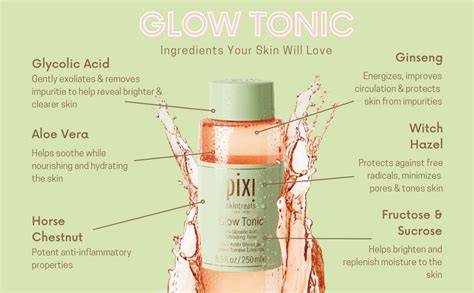
Water is the most common cosmetic ingredient of all. You'll usually see it at the top of ingredient lists, meaning that it makes up the largest part of the product. Glycolic Acid is arguably the most famous alpha hydroxy acid (AHA) with tons of research backing its benefits. It is found naturally in sugar cane but the form used in skincare is usually synthetic for purity and stability. Glycolic acid removes the top layer of dead skin cells to allow newer and fresher ones to emerge. AHAs work by breaking down the structural “glue” that holds old skin cells in place. When that buildup is gone, your skin can renew itself more efficiently. Research also shows glycolic acid stimulates collagen production, helping to firm and thicken the skin over time. This is one of its biggest advantages over other AHAs. Overall, glycolic acid helps with:
Fun fact: Glycolic acid boosts skin hydration by helping it produce molecules that increase hyaluronic acid naturally. To work best, glycolic acid products should have a pH between 3-4 (that’s where exfoliation is most effective but still gentle on skin). The pH and concentration of a product are key to its effectiveness: It is normal to feel a slight stinging sensation when using glycolic acid. This usually fades as your skin adjusts. Because glycolic acid has the smallest molecular size in the AHA family, it can penetrate deeper, which enhances its effectiveness but also makes it more likely to irritate sensitive skin. If your skin is very sensitive or prone to rosacea, glycolic acid may be too strong; in that case, try milder options like lactic acid or a PHA instead. Recent studies suggest glycolic acid might even help protect against UV damage. But don’t skip sunscreen! Freshly exfoliated skin is more sensitive to the sun.
Glycolic acid is a skincare superstar. It smooths, brightens, hydrates, and firms the skin. Sodium Hydroxide is also known as lye or caustic soda. It is used to adjust the pH of products; many ingredients require a specific pH to be effective. In small amounts, sodium hydroxide is considered safe to use. However, large amounts may cause chemical burns due to its high alkaline. Your skin has a natural pH and acid mantle. This acid mantle helps prevent harmful bacteria from breaking through. The acid mantle also helps keep your skin hydrated. “Alkaline” refers to a high pH level. A low pH level would be considered acidic. Though this ingredient works well with most skin types, some people with sensitive skin may experience a reaction such as allergic rashes, closed comedones, or itchiness.
Glycerin (or glycerol) is a compound naturally found in your skin. It's a powerhouse humectant that pulls water into the stratum corneum. Your skin makes glycerin on its own and shuttles it to your outermost layer of skin via aquaporin-3. Aquaporin-3 is essential for normal skin hydration, elasticity, and repair. Glycerin is non-irritating, plays well with almost every ingredient, and works across all skin types. Typical use is anywhere between 3-10% but can go up to 79% in some leave-on products. Just know very high concentrations (>40%) can feel tacky in low humidity.
Aloe Barbadensis Leaf Juice is the filtered, stabilized liquid pressed from the inner gel of the aloe vera leaf. In cosmetics, it shows up as either soothing active or a water-replacement base. The polysaccharides bind water at the skin surface for a light, non-greasy hydration boost. One of the polysaccharides, glycomannan, is linked to fibroblast stimulation and collagen synthesis. This ingredient is also calming with anti-inflammatory and mild antimicrobial activity, making it a great pick for sensitive, irritated, or post-sun skin. Realistic expectations matter though; the solid evidence is mostly limited to hydration, soothing, and wound support. Deeper claims about anti-aging or sun protection are not well backed, and science reviews note it does not prevent radiation-induced skin injury. Because it plays well with almost everything, it's commonly used as a base alongside other actives like niacinamide or vitamin C. Typical usage concentrations range from 0.5% to 90%+ (where it replaces water as the main base). The safety for this ingredient is well-established as well. Overall, this is a great supporting ingredient for those who want a boost in hydration.
Hamamelis Virginiana Water is made by distilling parts of the witch hazel plant. You can also call this ingredient "witch hazel water." The name refers to the distillation product used in cosmetics. Witch hazel water is an astringent, anti-inflammatory antioxidant, and antibacterial ingredient. It contains tannins, which have a drying effect by constricting proteins and minimizing the appearance of pores. Both the tannins and fragrance found in witch hazel may be skin-sensitizing. Witch hazel water gets anti-inflammatory and antibacterial properties from its catechin and gallic acid content. Indigenous groups have used witch hazel to help treat inflammation in North America for centuries.
Hexylene Glycol is a multitasker ingredient that works as a solvent, humectant, emulsifier, viscosity reducer, and preservative booster. It dissolves both water- and oil-soluble ingredients to stabilize tricky actives and make products spread more easily. As a humectant, it pulls water into the skin, though it's a relatively minor moisturizing ingredient compared to glycerin. It can act as a mild penetration enhancer. Typical use levels are 0.1-10% depending on role. Patch tests on eczema patients showed no significant increase in irritation versus control, though the potential for irritation rises at higher concentrations.
Fructose is fruit/plant sugar and a humectant that helps draw moisture from the air to your skin. Glucose is a simple sugar (monosaccharide) and a humectant/skin conditioning agent. Sugars are natural components of the skin's natural moisturizing factor (NMF), so the stratum corneum is accustomed to them. Glucose is hydrophilic, and the skin barrier is designed to limit hydrophilic penetration, so penetration is slow and most action occurs on the surface. Gram-to-gram, glucose is not as efficient as glycerin for hydration. Glucose is typically derived from corn or other starch sources in skincare. Sucrose is a natural sugar found in fruits, vegetables, and nuts, and in skincare acts as a humectant and mild exfoliant. It is hydrophilic and helps hydrate the skin. Studies show sugars may worsen acne-prone skin due to disruption of the skin's natural biome, so consulting a professional is advised if you have concerns. In some products like body scrubs, sucrose is used as a gentle exfoliant. The term 'sucrose' comes from the French word for sugar, 'sucre'.
Urea (carbamide) is a humectant that hydrates the skin and provides exfoliation in higher concentrations. It helps draw moisture from the air and deep within the skin. Urea is an effective moisturizer for dry skin conditions, and in higher concentrations (>10%) it has stronger keratolytic activity. In medicine, urea can increase the potency of other ingredients. Urea is highly soluble in water and well-studied, particularly for eczema. Patch testing and clinical trials show varying levels of efficacy and potential irritation at higher concentrations. Urea's keratolytic and penetration-enhancing properties can trigger stinging, burning, and redness. As always, individual skin response varies, so consult a dermatologist if unsure.
Ginseng root is a well-loved ingredient in Asian skincare for hydration, irritation relief, and improved evenness of skin tone. It improves blood circulation and oxygen delivery to the skin, supporting overall skin health. It has antioxidant and anti-inflammatory properties and may help reduce hyperpigmentation by inhibiting tyrosinase. Different types of ginseng are used in skincare; Panax ginseng is commonly listed and red or fermented ginseng may offer enhanced anti-aging effects due to higher ginsenosides content. All forms are generally listed as "Panax ginseng" in ingredient lists. Ginseng acts as a powerhouse ingredient supporting hydration, radiance, and resilience.
Ethylhexylglycerin is created from glycerin and is a multitasker ingredient. The CIR Expert Panel found minimal skin absorption or sensitization, though a small number of allergic dermatitis cases have been published since 2002. Patch testing is advised if unsure. Disodium EDTA is a chelating agent that binds metal ions and can counteract hard water effects. It can also act as a mild penetration enhancer, which can be beneficial for actives but may increase irritation for sensitive skin. Clinical patch testing showed no significant skin irritation at typical use concentrations. Biotin (Vitamin B7) supports metabolism and can nourish skin, hair, and nails when taken orally; topical evidence is limited. Panthenol (pro-vitamin B5) hydrates, soothes, and protects skin, with anti-inflammatory properties and potential to reduce irritation caused by other ingredients.
A helper ingredient that usually comes with PEG-40 Hydrogenated Castor Oil acts as a surfactant and oil solubilizer. It helps solubilize fragrances into water-based formulas. The combination is a mild emulsifier and slip agent that improves product texture and spread. Fragrance is the generic term for scented components added to cosmetics for a pleasant fragrance, but it is the number one cause of cosmetic contact allergies, and sensitivity varies widely. The caramel in cosmetics is the same sugar-derived colorant used in kitchens. Water in cosmetics is usually purified and deionized as a main solvent. Aloe vera is highly researched and known for hydration, soothing, and wound healing properties, though the evidence is mixed for anti-aging or sun protection. Glycolic acid remains the standout AHA for smoothing, brightening, hydrating, and firming the skin, while maintaining caution for sensitive skin and sun exposure.
The Pixi Glow Tonic formula combines these actives to deliver a soothing, hydrating, and exfoliating experience. Aloe soothes and hydrates; glycolic acid exfoliates dead skin cells; witch hazel tones and tightens; ginseng supports radiance and circulation; and other humectants and stabilizers enhance texture and skin compatibility. This balance aims to reveal healthier-looking skin while maintaining skin comfort during and after use.
Acids 101: AlphaHydroxy Acids (AHAs) | Dr. Shereene Idriss
Table: Key ingredients and their roles in Pixi Glow Tonic
| Ingredient | Role | Typical Use Level |
|---|---|---|
| Glycolic Acid | Exfoliant, collagen stimulation | 3-10% (varies by product) |
| Aloe Barbadensis Leaf Juice | Hydration, soothing, wound support | 0.5%-90%+ |
| Witch Hazel Water | Astringent, anti-inflammatory, antibacterial | Variable |
| Glycerin | Humectant, hydration | 3-10% |
| Hexylene Glycol | Solvent, humectant, penetration enhancer | 0.1-10% |
In summary, glycolic acid-based toners like Pixi Glow Tonic offer noticeable benefits for smoothing, brightness, and hydration, but they should be used with attention to skin type, pH, and sun protection. If sensitive, consider milder AHAs or PHAs and patch-test new formulations. Always follow with sunscreen during daytime use, as exfoliation can increase sun sensitivity.
tags: #pixi #glow #tonic #exfoliating #toner