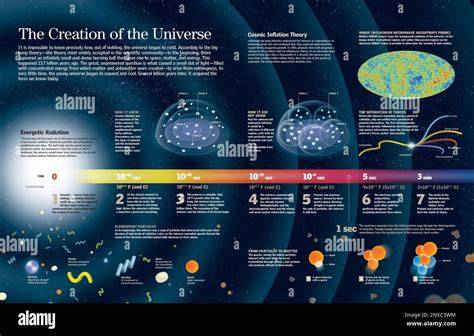
Physicists have long struggled to explain why the universe started out with conditions suitable for life to evolve. Why do the physical laws and constants take the very specific values that allow stars, planets and ultimately life to develop? A common answer is that we live in an infinite multiverse of universes, so we shouldn’t be surprised that at least one universe has turned out as ours. The latter option is supported by a branch of science called information physics, which suggests that space-time and matter are not fundamental phenomena. Instead, the physical reality is fundamentally made up of bits of information, from which our experience of space-time emerges. By comparison, temperature “emerges” from the collective movement of atoms. This leads to the extraordinary possibility that our entire universe might in fact be a computer simulation.
The idea is not that new. In 1989, the legendary physicist, John Archibald Wheeler, suggested that the universe is fundamentally mathematical and it can be seen as emerging from information. In 2003, philosopher Nick Bostrom from Oxford University in the UK formulated his simulation hypothesis. This argues that it is actually highly probable that we live in a simulation. Any virtual reality world will be based on information processing. That means everything is ultimately digitised or pixelated down to a minimum size that cannot be subdivided further: bits. This appears to mimic our reality according to the theory of quantum mechanics, which rules the world of atoms and particles. It states there is a smallest, discrete unit of energy, length and time. Similarly, elementary particles, which make up all the visible matter in the universe, are the smallest units of matter. The laws of physics that govern everything in the universe also resemble computer code lines that a simulation would follow in the execution of the program.
Another curiosity in physics supporting the simulation hypothesis is the maximum speed limit in our universe, which is the speed of light. In a virtual reality, this limit would correspond to the speed limit of the processor, or the processing power limit. We know that an overloaded processor slows down computer processing in a simulation. Perhaps the most supportive evidence of the simulation hypothesis comes from quantum mechanics. This suggests nature isn’t “real”: particles in determined states, such as specific locations, don’t seem to exist unless you actually observe or measure them. Instead, they are in a mix of different states simultaneously. This could, however, also be explained by the fact that within a virtual reality code, all “locations” (points) should be roughly equally far from a central processor. It is reasonable to assume that a simulated universe would contain a lot of information bits everywhere around us. These information bits represent the code itself. Hence, detecting these information bits will prove the simulation hypothesis.
The recently proposed mass-energy-information (M/E/I) equivalence principle - suggesting mass can be expressed as energy or information, or vice versa - states that information bits must have a small mass. I have postulated that information is in fact a fifth form of matter in the universe. I’ve even calculated the expected information content per elementary particle. These studies led to the publication, in 2022, of an experimental protocol to test these predictions. I have predicted the exact range of expected frequencies of the resulting photons based on information physics.
There are other approaches too. The late physicist John Barrow has argued that a simulation would build up minor computational errors which the programmer would need to fix in order to keep it going. He suggested we might experience such fixing as contradictory experimental results appearing suddenly, such as the constants of nature changing. The nature of our reality is one of the greatest mysteries out there. It might seem obvious that the world around us is real. All we can rely on to explore reality is the information that we receive through our senses. Every object we see as solid is in reality made up of atoms, and those atoms are mostly empty space that is anything but solid.
In 1999’s The Matrix, Keanu Reeves played Neo, a hacker who learns that the world he knows is actually a computer simulation, with humans kept unconscious while machines use their bodies for energy. Fiction and philosophy have both delivered scenarios where the truth of reality bears no resemblance to our sensory experience of it. And with the development of computing, the concept of reality being a digital simulation has come to the fore. The idea that our reality could be virtual was termed the ‘simulation hypothesis’ by English philosopher Prof Nick Bostrom, based at the University of Oxford, in the paper Are You Living in a Computer Simulation, published in 2003.
Philosopher Prof David Chalmers of New York University argues that this isn’t the right way to view the simulation hypothesis. Because the circuitry and data in the computer the simulation runs on are real, he argues that simulated life is just as authentic as any other - just constructed from computer chips and circuits rather than neurons. However, there is one problem with such simulations - energy. He concludes that there is not enough energy in the observable Universe to simulate a full universe to absolute detail. To simulate the Earth, he suggests that it would be necessary to convert the entire stellar mass of a globular cluster into energy. And while in principle the low-resolution version is attainable, it might easily take millions of years to simulate a single second of Earth time.
Of course, there’s no reason why a computer simulation should have billions of humans fully replicated, or include stars that are more than points of light in the sky. Central character Truman Burbank, played by Jim Carrey, leads an apparently normal life, but in fact lives on a vast sound stage, with actors filling in for everyone he encounters. So, it could be the Universe is a simulation, focused solely on the only person that you can be sure is a truly conscious being - you. There would be no need to simulate the Universe, or even the Earth. Vazza admits this possibility but suggests that even this approach would collapse as soon as scientific experiments were undertaken to look at the Universe in more detail. For example, if they were to look at something through a microscope, the simulation would have to include that new level of detail. He commented, “Although one can be not interested in physical details, still we are constantly relying on processes that happen on incredibly smaller scales (from atomic reactions to electromagnetic wave transmissions to light propagation, for instance). Arguably, though, this would only be an issue if the single individual simulated were a scientist, interested in looking at the smaller details of the Universe around them.
Most people who could be the possible central subject of a simulation are not scientists. A Truman Show simulation remains a real possibility - but if that is the case, I wonder if I should even be writing this article. Let’s put aside the energy problems for now, assuming that some future civilisation has found a way to run a simulation sophisticated enough to simulate the reality of several billion people. There are two potential problems with this argument. One is that there are other reasons simulations might not be built than Bostrom’s two possibilities - there is a huge assumption, for example, that such a huge simulation is technically possible. As we have seen, this may not be the case.
The original gambler’s fallacy is a natural feeling that probability should influence events. For example, if we toss a fair coin and it comes up ten heads in a row, we feel a tails should be more likely to even things out. But the coin has no memory. For the inverse fallacy, imagine you walk into a casino. The first person you come across is winning time after time. A cosmologist friend comments to you, “The casino must be very busy.” Asked why, she says that because winning so often is very unlikely, there must be lots of other people playing. This too is a fallacy because you can’t deduce anything about the population as a whole from one individual.
If statistics can’t help, is there a way to distinguish between being in a simulated universe and a physical reality? There are certainly potential ‘glitches in the Matrix’ where our understanding of the Universe doesn’t fully fit together. There have even been some suggestions that the finite speed of light could be a limitation of a simulation’s processing speed. Similarly, the fact that our Universe is made up of a collection of elementary particles could be a sign that our reality is ‘pixelated’. I asked Nick Bostrom for suggestions. He replied, “There are clearly possible observations that would show that we are in a simulation. For example, the simulators could make a ‘window’ pop up in front of you with the text ‘YOU ARE LIVING IN A COMPUTER SIMULATION.
Prof Melvin Vopson of the University of Portsmouth’s physics department disagrees, suggesting that you can somehow detect the disappearance of the information contained in particles when they annihilate, which could give away that we are in a simulation. Outside of energy limitations, there has been at least one attempt to use mathematics to disprove our potential simulated nature. The authors argue that because there are aspects of the Universe that we can observe but that can’t be settled by an algorithm, we can’t be in a simulation. For example, it may be possible to see the behaviour of a black hole that isn’t describable mathematically. However, this argument is purely theoretical: we don’t know if any existing scientific observations are not computable. To be a scientific hypothesis, there needs to be a mechanism to gather evidence for that hypothesis, even if it is, as yet, outside our technological grasp. It seems likely that, by this measure, the simulation hypothesis is not science.
You may never have a scientific method to determine whether your reality is anything more than processes within a computer program. Here’s what you’ll learn when you read this story:Many philosophers and scientists have pondered if we live in a simulated universe, and University of Portsmouth scientist Melvin Vopson believes he has evidence. Using his previously formulated Second Law of Infodynamics, Vopson claims that the decrease of entropy in information systems over time could prove that the universe has a built-in “data optimization and compression,” which speaks to its digital nature. While these claims warrant investigation, they’re far from a discovery themselves, and would likely need rigorous proof for the scientific community at large to seriously consider this theory.
In the 1999 film The Matrix, Thomas Anderson (a.k.a. Neo) discovers a truth to end all truths-the universe is a simulation. While this premise provides fantastic sci-fi fodder (and explains how Neo can learn kung-fu in about five seconds), the idea isn’t quite as carefully relegated to the fiction section as one might expect. University of Portsmouth scientist Melvin Vopson, who studies the possibility that the universe might indeed be a digital facsimile, leans into the cinematic comparison. While he is just one among many who’ve contemplated the idea, Vopson claims to have one thing that those before him lacked: evidence. “In physics, there are laws that govern everything that happens in the universe, for example how objects move, how energy flows, and so on. Everything is based on the laws of physics,” Vopson said back in 2022. “One of the most powerful laws is the second law of thermodynamics, which establishes that entropy-a measure of disorder in an isolated system - can only increase or stay the same, but it will never decrease.”
Based on this famous law, Vopson expected that entropy in information systems-which his previous research defined as a “fifth state of matter”-should similarly increase over time. But it doesn’t. Instead, it remains constant, or even decreases to a minimum value at equilibrium. This is in direct contrast to the second law of thermodynamics, which inspired Vopson to adopt the Second Law of Information Dynamics (or Infodynamics).“We know the universe is expanding without the loss or gain of heat, which requires the total entropy of the universe to be constant,” Vopson wrote in The Conversation. “However we also know from thermodynamics that entropy is always rising. I argue this shows that there must be another entropy-information entropy-to balance the increase.”
Vopson argues that this law plays a role in atomic physics (electron arrangement), cosmology (see above), and biological systems. This last one is where Vopson makes a big claim: contrary to Charles Darwin’s idea that mutations occur randomly, mutations actually occur so that information entropy is minimized. Vopson analyzed the constantly-mutating SARS-CoV-2 (a.k.a. COVID-19) virus, and his paper on that investigation shows a “unique correlation between the information and the dynamics of the genetic mutations.” What this all adds up to, in Vospon’s estimation, is that the Second Law of Infodynamics could also be used to prove that we live in a simulation. “A super complex universe like ours, if it were a simulation, would require a built-in data optimization and compression in order to reduce the computational power and the data storage requirements to run the simulation,” Vopson wrote in The Conversation. “This is exactly what we are observing all around us, including in digital data, biological systems, mathematical symmetries and the entire universe.”
All of these claims require significant further testing and verification before even being considered plausible, and as IFLScience notes, there are as many research papers refuting our digital existence as there are promoting its scientific inevitability. It’s possible that Vopson’s Second Law of Infodynamics could lead to some interesting discoveries, but the question first pondered by Plato remains unanswered.
Observational Angles and Practical Tests
There have been discussions about observable fingerprints that might reveal a simulated substrate, such as potential glitches in the fabric of physics or energy constraints that imply a finite computational resource. Some argue that quantum randomness, if truly fundamental, would argue against a deterministic computer program; others suggest that what we perceive as randomness could itself be a product of underlying information processing limits. The debate remains open, with proponents and skeptics alike proposing thought experiments, laboratory tests, and cosmological observations to probe the hypothesis further.
Regardless of whether the simulation hypothesis is ultimately testable in a conventional scientific sense, the discussion already reshapes how we think about information, computation, and the nature of reality. It challenges us to distinguish between what is empirically verifiable and what remains a philosophical or theoretical possibility, while inviting interdisciplinary collaboration across physics, computer science, philosophy, and information theory.
| Concept | Claim | Implication |
|---|---|---|
| Information as fundament | Reality emerges from information bits | Space-time is a derived, not fundamental, phenomenon |
| Maximum speed limit | Speed of light reflects processor limits | Computational constraints shape physical laws |
| Quantum states | Particles exist in superpositions until measured | Consistency with a simulated framework |
| Entropy and Infodynamics | Information entropy balances physical entropy | Possible signature of a digital universe |
Key Voices in the Debate
Nick Bostrom argues that it is highly probable we live in a simulation, given certain independence assumptions and technological trajectories. David Chalmers contends that simulated life is authentic because the circuitry underpinning it is real. Melvin Vopson introduces a Second Law of Infodynamics, claiming that information entropy governs the evolution and compression in the universe, which could be evidence of a digital substrate. John Barrow adds the idea that tiny computational glitches could accumulate, potentially manifesting as unexpected shifts in constants of nature.