After spending more than half a decade as a barber, I’ve learned that many trends and hairstyles are cyclical. Some options disappear for great lengths before returning bigger and better than ever, but other men’s hairstyles seem to have this enduring quality that never goes out of fashion. For me, I was always a fan of the taper fade - a straightforward men’s haircut that sees the sideburns and nape gradually faded to below a 0 blade. In my opinion, this style of cut is more versatile and complementary than the traditional skin fade or buzz cut, in that it is more easily adapted to suit the shape of the client’s head.
When I was barbering, giving a taper fade allowed me to focus purely on the nape and sideburns, without worrying too much about exposing the occipital bone that naturally protrudes from the back of the head. It also enabled me to make sure the lineup, particularly at the back, was extra sharp. Working in a barbershop like The Chopspot that specialised in fades, that minuscule detail was an important finishing touch to any haircut and I still find myself judging the quality of a taper fade haircut by how crispy those edges are. Nowadays, the popular men’s hairstyle, which is often referred to as a temple fade, is best characterised by its versatile nature and low-maintenance properties.
If you’re looking for some inspiration, I’ve rounded up a list of the best taper fade haircuts for men, based on my many years as a hairstylist and barber. From low taper to high, bushy curls to short edges, this is my expert guide to sorting the perfect taper fade haircut for you.
What is a Taper Fade Haircut?
A taper refers to the gradual transition of hair length from top to bottom, usually only noticeable on the sideburns and neckline. Put two and two together and the taper fade involves gradually fading the hair from longer to shorter towards the bottom of the head. The hair on the sides and back is cut shorter with clippers, while the hair on top is left longer, resulting in a clean and sharp look that’s both versatile and very modern. The great thing about taper fades is that they can be customised to suit different preferences and face shapes. You can even combine them with other styles like a side part, quiff, or pompadour. Plus, there are different types of fades to choose from, such as low, mid, high, or even skin fades where the hair is shaved down to the skin.
Taper vs Fade: What’s the Difference?
With a fade, all the hair around your head is cut at the same length. But with a taper fade, only the hair on the sides of your head (over the ears and neckline) is cut shorter, gradually fading from longer hair on top. To me, the real benefit of a taper fade is that it’s super versatile. You can choose to go all the way down to skin level or keep it longer on top. The classic taper is a bit different from the taper fade. With a classic taper, the hair is kept at a similar length around the sides, gradually getting a little shorter towards the ears. But with a taper fade, the change is more gradual as you move down to the ears and neckline.
Low Taper Fade vs High Taper Fade
When it comes to taper fades, you can go for a low taper fade or high taper fade. A low taper involves cutting the hair at the bottom of your head, around the neckline. Meanwhile, a high taper means cutting the hair above your ears. The choice between the two ultimately comes down to personal style and preference.
How to Ask Your Barber for a Taper Fade: be precise about how short you want the lowest point and what you want left on top. If you just ask for a “taper fade,” you’re leaving a lot of creative control in the barber’s hands, and while that can be a good thing, it can also result in sharper edges than you planned. The other piece of advice is simple: bring photos. Not one photo from the front, either. Bring a side profile and a back shot if you can. The difference between a good taper fade and one you regret is usually hidden around the ears and neckline.
How Long Does a Taper Fade Last?
A taper fade will generally look its sharpest for the first two weeks, but a good one should still grow out neatly after that. Low taper fades usually last the longest because the blend sits closer to the natural hairline. Mid and high taper fades show regrowth faster, particularly around the sideburns and neckline, so you’ll want a clean-up every two to three weeks if you want to keep the edges looking crisp. If you’re trying to stretch the haircut out, keep the neckline tidy and avoid overloading the top with wet-look product. A small amount of matte paste or styling cream is usually enough. The main benefit of a taper fade is that it should look clean with minimal effort.
How to Choose the Right Taper Fade Haircut
Before you pick a photo and march into the barbershop with blind confidence, it helps to know where the taper starts. Low, mid and high taper fades are all built around the same idea, but the blend point changes the entire feel of the haircut.
- Type of taper fade Where it starts Best for Maintenance
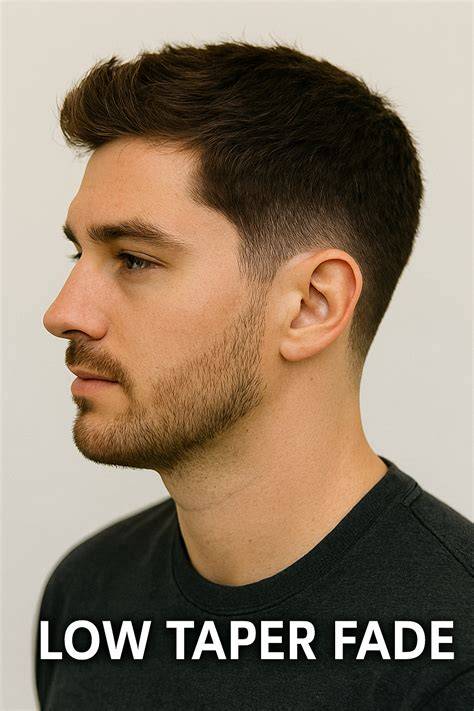
- Low taper fade Around the sideburns and neckline, close to the natural hairline. Most men, especially if you want something neat, subtle and office-friendly. Low maintenance; usually grows out the cleanest.
- Mid taper fade Around the middle of the sides, usually above the ear but below the temple. Guys who want a sharper shape without the full commitment of a high fade. Moderate maintenance; expect a clean-up every few weeks.
- High taper fade Higher around the temples, with more contrast between the top and sides. Short hair, tight curls, textured crops and men who want a stronger finish. Highest maintenance; the edges need regular attention.
If you’re not sure which taper haircut to ask for, start lower. A good barber can always take the fade higher, but once the blend is sitting halfway up your skull, there is no polite way to put the hair back.
Low Taper Fade: Details and Benefits
If you’re not into dramatic changes, a low taper fade will be the best choice for you. This style starts the fading process at the bottom near the ears and has a gradual shift in length. Establishing the blend point is crucial-the point where the edges and sideburns meet the maximum hair length on the sides and the back. The blend sits just above the earline, which is typical for a low taper. The back should mirror the side, ensuring a cohesive look. The low taper fade is a safe option that won’t leave you feeling too exposed, and it’s perfect for side parts, pompadours and messy textured cuts. The biggest benefit is that it’s the simplest way to keep your hair neat with minimal effort. If the top is relatively short, you won’t need heavy styling-just towel-dry after a shower.
Low Fade Point: Where the taper begins is quite low on the sides and back of the head, typically around the hairline at the nape of the neck. Longer Hair on the Sides and Back: Compared to a high taper fade, you can leave the hair on the sides and back a little longer. Gradual Transition: The sides and back gradually fade into longer hair on top with a natural, subtle transition. Versatility: The low taper fade is the most versatile of the taper styles, suitable for many classic looks.
Mid Taper Fade: Shape and Style
Moving up the fade ladder, the mid-taper fade typically starts an inch above the ears and gradually fades up to the eye line. It remains formal with a modern edge and pairs well with short-to-long cuts such as crew cuts, French crops, faux hawks, and pompadours. The fade begins higher, resulting in a defined line that sits above and behind the ears. It provides more shape than a low taper without exposing as much skin as a high fade, making it a popular choice for a refreshed side profile without becoming a statement piece.
High Taper Fade: Bold and Defined
As close to a skin fade as you can get without going all the way around, the high fade starts about two inches from the hairline and tapers down on the sides and back. It produces a shorter, more defined silhouette and works best with a cropped fringe or short top, especially for tight curls. The high taper fade benefits from strong contrast between top and sides, and it is better suited to darker hair colors to show the blend clearly. For lighter hair, a softer blend through the temples is advised to avoid a patchy look from a distance. The high taper fade requires regular maintenance to keep the fade sharp and defined.
Afro Taper: Men with naturally curly or kinky textures can rock taper fades well, as this style highlights the contrast between sideburns and nape, lending a clean look to waves, blowouts and tight curls. You can customize the level of taper fade from low to high, but a low fade generally provides the best overall result for many textures and lifestyles. Removing hair weight around the ears and back helps achieve a neater appearance and better longevity between visits.
Fade vs. Taper: How to Decide
Fade haircuts feature a smooth transition from longer hair on top to shorter hair on the sides and back, often reaching the skin. Tapers maintain more length overall with a subtler blend-from longer on top to shorter at the edges-without the same dramatic contrast. Fades are bolder, while tapers are more understated and refined. Both styles can be paired with top hairstyles like crew cuts, pompadours, or longer looks, and both require regular trims to stay sharp.
Your personal style and lifestyle play a major role in the decision. Fades tend to require more frequent visits to the barber, while tapers offer greater flexibility for growth and maintenance. Face shape also matters: fades can elongate the face, while tapers can soften sharp features. When in doubt, consult with a professional barber who can tailor the cut to your hair type, head shape, and lifestyle. They can adjust the height of the fade or the length of the taper and suggest techniques to enhance the overall look.
We Offer The Best Fades and Tapers: At Mr. Fades and tapers, each offers unique characteristics and styles, catering to different personal preferences and lifestyles. A barber’s expertise can help you visualize how a fade or taper will look on you, making the decision process easier. Booking an appointment with a skilled barber ensures you receive a cut that fits your needs, whether you want razor-sharp edges or a timeless, classic finish.
What Is a Fade Haircut?
A fade is one of the most popular men’s haircuts in the world. The barber gradually shortens the hair down the sides and back, often tapering all the way down to the skin. This creates a high-contrast, modern look that’s sharp and bold. Types of fades include low, mid, high, and skin/bald fades-each with its own placement and intensity. A fade works well for men who want a fresh, fashion-forward style with crisp edges.
What Is a Taper Haircut?
A taper is more subtle. Instead of cutting very high or very short, the barber gradually reduces length around the sideburns and neckline. The top and sides remain longer, giving the haircut a clean finish without the same level of contrast as a fade. A taper is a perfect choice if you want a professional, classic look that’s low-maintenance and works well in every environment-from the office to the weekend.
BARBER TUTORIAL, TAPER FADE HAIRCUT, FOR BEGINNERS!
Conclusion: Both fades and tapers are excellent haircut choices-the difference lies in the statement you want to make. A fade is bold and trendy, while a taper is subtle and refined. Done right, either style looks sharp and professional. Explore different heights and blends with a trusted barber to find your optimal taper fade or fade-tailored to your hair, head shape, and lifestyle.