Not just any old brush will do - you need an infant hair brush for the tiniest heads, and a sturdy but gentle children’s hairbrush as they grow. Good kids’ hairbrushes are designed with their sensitive scalps and fine hair in mind, helping you avoid tangles, tears, and unnecessary drama. When it comes to brushing your child's hair, the tools you use make a huge difference.
Why the right brush matters
Adult brushes are designed for thicker, coarser hair and tougher scalps. The bristles are often too stiff and the brush itself too large for small, sensitive heads. A newborn hair brush is built with ultra-soft bristles that gently glide across a baby's scalp without scratching. They're perfect for smoothing fine baby hair and even helping with cradle cap. Children's hair brushes aren't just softer - they're also smaller, lighter, and easier to handle. A good kids’ hairbrush is designed to fit comfortably in your hand (and eventually your child's hand too).
Not every child needs the same type of brush. Choosing the right type of infant hair brush or kids’ hairbrush depends on your child's age, hair type, and scalp sensitivity. When it comes to caring for delicate baby and kids' hair, the right tools make all the difference - especially if you're dealing with curls, tangles, or sensitive little scalps.
Types of brushes and their best uses
- Best for: Everyday gentle styling and detangling on-the-go. This mini-sized bristle brush is packed with soft, boar-like bristles that glide through hair effortlessly, making it a perfect infant hair brush for newborns, toddlers, and kids alike. It's designed to detangle gently with minimal breakage while smoothing the hair cuticle for a polished finish.
- Designed with 40% wheat straw and flexible silicone bristles, this eco-friendly Wet Hair Detangler Brush moves through tangles without pulling or damaging fine, thinning, or brittle hair. It’s a great option not just for toddlers but for any child whose hair is extra prone to knots after bath time.
- With No-Tug Technology and a flexible, curved design that adapts to your child’s scalp, this curved brush makes detangling a much more pleasant experience. It distributes pressure evenly, minimizes breakage, and leaves hair feeling soft and manageable.
- A true lifesaver for bath time struggles, this wide-tooth shower comb glides easily through wet curls without causing pain or breakage. Made with 45% wheat straw for a lightweight, comfortable grip (even when your hands are slippery!), it’s perfect for working conditioner through hair or gently detangling after rinsing. Its wide teeth make it especially great for curly hair, helping to preserve natural curl patterns without causing frizz or damage.
- Sometimes a wide-tooth comb is exactly what you need - and this eco-friendly bamboo comb is both gentle and effective. It's perfect for preserving curl patterns, minimizing frizz, and working through tangles without causing static hair or breakage.
Each of these brushes and combs is thoughtfully designed to meet your child’s unique hair needs, offering gentle care from their first tiny wisps to their full head of toddler hair.
Brushing technique and routine
Brushing your child’s hair doesn’t have to be a daily battle. With the right technique (and the right hairbrush for kids), it can even be a sweet bonding moment. Start with clean, dry hair. Brush in short, gentle strokes. Avoid pressure. Detangle gently. Let them lead. Keep a routine. Switch brushes as needed. The key to stress-free brushing is using the right brush for your child’s age, hair type, and comfort level. Oh and don't forget to clean your hair brush for kids regularly!
Care and maintenance for baby brushes
Good hair care starts early - and it’s about more than just the newborn hair brush. From bath time to bedtime, using gentle, child-friendly products and developing healthy routines can make a big difference in how your little one’s hair looks, feels, and grows. You can start brushing your baby's hair from birth, even if they just have fine fuzz. A newborn hair brush with ultra-soft bristles - like a vegan or natural bristle brush - is best for gently loosening cradle cap flakes without irritating the skin. For babies, brushing once a day or after a bath is enough. For toddlers and older kids, daily brushing with a proper children’s hair brush can help prevent tangles and build habits.
Bristle materials and safety considerations
Natural goat hair is the most widely used bristle material in premium baby brush specifications. Goat hair is finer and softer than most grades of boar bristle, making it one of the gentlest natural bristle options available for newborn scalp contact. The primary limitation of goat hair bristle is maintenance. Natural bristle absorbs moisture and requires thorough air-drying after washing to prevent mildew and bristle degradation. Goat hair brushes should not be stored face-down or in enclosed spaces while damp. Fine-grade soft boar bristle - the same material used in premium adult fine-hair brushes - is appropriate for baby brush specifications when the grade and softness are correctly specified. Not all boar bristle is equivalent: coarser grades used in adult medium-to-thick hair brushes are too stiff for infant scalp contact. Boar bristle shares the oil redistribution and low-static properties of goat hair, and is somewhat more durable under regular washing. Soft synthetic nylon bristle with rounded ball tips is the most practical specification for parents who prioritise durability and ease of cleaning. High-quality nylon bristle for baby brushes uses finer filament diameters than adult brush nylon, and the ball tips prevent scratching of sensitive scalp skin. The tradeoff compared to natural bristle is that nylon does not redistribute scalp oils and generates slightly more static. Silicone-bristle brushes are used primarily as cradle cap management tools rather than hair brushes in the conventional sense. The flexible silicone nubs provide gentle mechanical exfoliation of the scalp surface without the risk of abrasion from any type of natural or synthetic fibre. Silicone is non-absorbent, easy to sterilise, and free from the allergen concerns associated with natural animal-derived bristles.
At this stage, the primary function of a baby brush is scalp stimulation, oil redistribution, and, where relevant, gentle assistance with cradle cap management. Hair volume is typically low and detangling is not a significant concern. Recommended specification: Natural goat hair or extra-soft boar bristle on a small, ergonomic handle that fits comfortably in a parent’s hand for precise pressure control. No nylon pins. As hair density increases and hair length grows, a degree of light detangling capability becomes useful, though bristle softness remains the primary requirement. Recommended specification: Soft goat or boar bristle brush for daily brushing and scalp maintenance. Silicone scalp brush for in-bath use if cradle cap is present.
Toddler hair is typically denser, longer, and more likely to tangle than infant hair. At this stage, a brush with some detangling capability - either soft nylon with ball tips or a mixed specification - becomes more appropriate. Recommended specification: Soft nylon ball-tip brush or fine mixed bristle for daily detangling and styling. For toddlers with curly or wavy hair, a wide-tooth comb used on damp hair before brushing reduces breakage significantly.
Cradle cap and care tips
Cradle cap (seborrhoeic dermatitis of the infant scalp) is a common condition in newborns and young infants. It presents as yellowish, flaky or crusty patches on the scalp and is not caused by poor hygiene or lack of brushing. A soft baby brush - particularly with natural bristle - can assist in loosening and removing flaky scales during and after bathing, particularly when used after applying a small amount of baby oil to the scalp to soften the scale. What a brush cannot do is treat the underlying condition. Brushing removes surface scale but does not address the fungal or sebum-related factors that contribute to cradle cap. If cradle cap is severe, persistent, or accompanied by redness and apparent discomfort, consulting a paediatrician is appropriate.
Safety standards and compliant sourcing
Baby brushes sold in major consumer markets are subject to juvenile product safety standards that differ from adult brush requirements. In the EU, compliance with EN 71 and REACH are standard requirements. Wooden handles offer a natural aesthetic and comfortable grip, but lacquers or varnishes must be non-toxic and free from lead, cadmium, and other regulated substances. Plastic handles should be BPA-free and compliant with toy safety standards. Silicone or rubber-grip handles provide enhanced grip during bath use, where wet hands reduce grip security. The baby brush and infant grooming segment is one of the most specification-sensitive and compliance-intensive product categories in the broader hair brush market. For brand developers entering this category, the compliance requirements and specification precision demanded make manufacturer selection and pre-production verification critical.
Newborns require gentler care: hold the brush with a light grip and use the weight of the brush to contact the scalp. Strokes should be slow and deliberate - the goal is consistent contact rather than speed. For newborns, short strokes from the crown outward are less likely to startle the infant than long, sweeping strokes. Bristle safety, chemical safety, age grading, and packaging compliance are essential considerations for markets like the EU and US.
Recommended products and categories
From soft bristle sets to detangling kits, there are numerous options that cover different needs-from cradle cap to curly hair. The best overall baby hairbrushes balance soft bristles with practical design and easy cleaning. Some popular picks emphasize eco-friendly materials like bamboo and goat hair, while others highlight advanced detangling technology or sensory-friendly designs for children with responsiveness needs.
Look for a lightweight handle, bristles that will not snag on fine hair, and a size that fits neatly into a diaper bag. A single brush can be enough for babies with fine hair, while a comb becomes more useful as curls or thicker textures appear. Parents often choose sets that pair a soft-bristle brush with a wide-tooth comb to cover both brushing and detangling needs as hair grows.
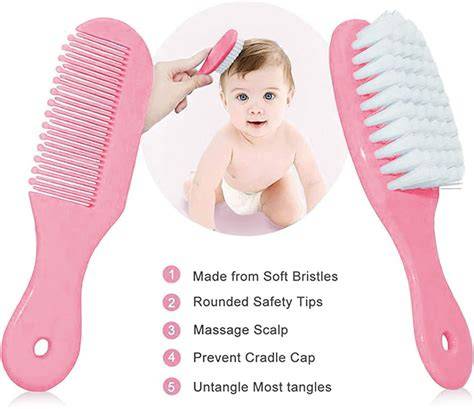
Best Baby Hair Brush In 2022 - Top 10 Baby Hair Brushes Review
Finding the best baby hair brush comes down to one thing: bristles soft enough for a newborn scalp but sturdy enough to smooth out real tangles once hair starts growing in. The transition from a newborn brush to a toddler specification is driven by hair development rather than a fixed age. Best practice is to adapt tools as your child’s hair changes, not to force one tool for all stages.
For brand developers and consumers alike, the key takeaways are clear: infant brushes require precise material choices, safety documentation, and age-appropriate designs; toddlers benefit from detangling capability; and maintenance-air-drying natural bristles and cleaning brushes regularly-extends tool life and scalp health.
Short care checklist
- Use soft bristles and a small ergonomic handle.
- Avoid hard or medium-stiff nylon pins and metal pins.
- Brush on clean, dry hair with light pressure and short strokes.
- Clean brushes weekly with warm water and mild soap.
- Store brushes in a dry place to prevent mildew.