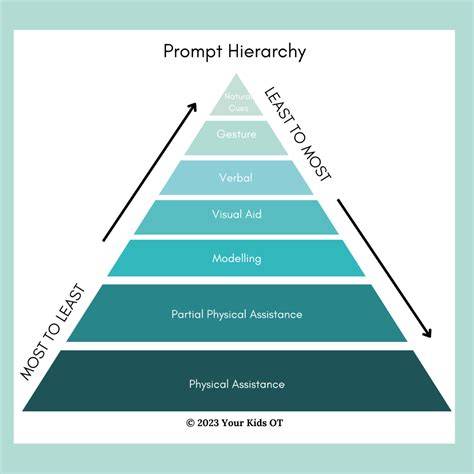
Learning a new skill can be challenging for anyone. For individuals with developmental disabilities, including autism, that process often requires more repetition, structure, and support. But with the right guidance from a Board Certified Behavior Analyst® (BCBA®), learners can build meaningful skills that support greater independence over time. Across many types of therapy, one instructional tool shows up again and again: prompts.
Prompts are used during instruction to guide learners toward the correct response in a given situation. Whether the goal is communication, daily living skills, or classroom behavior, prompts act as temporary supports that help bridge the gap between not knowing a skill and performing it independently.
What Is a Prompt in ABA?
In Applied Behavior Analysis (ABA), a prompt is a cue given before or during a learner’s response to help guide them toward the correct behavior. Prompts can take many forms, from physical guidance to verbal cues or visual supports. The purpose of prompting is to support learning. Over time, prompts must be reduced so the learner can respond correctly without external assistance. For example, when teaching a learner to put on their shoes, an RBT® might initially point to the shoes, model the action, or provide brief physical guidance until the learner can complete the task independently.
What Does Prompt Fading Mean?
Prompt fading refers to the gradual reduction of prompts over time so learners do not become dependent on them. The long-term goal of ABA therapy is independence, meaning the learner responds appropriately to a stimulus without cues, hints, or guidance. If prompts remain in place too long or are reduced inconsistently, learners may appear successful while still relying heavily on support. Planned prompt fading helps prevent that pattern by making independence the expectation, not the exception.
Difference between Stimulus and Prompts
A stimulus is a natural signal that should evoke a response on its own. For example, rain is the stimulus that may lead someone to grab an umbrella, or darkness is the stimulus that may lead someone to turn on a light. Prompts are different. They are added supports, used only during learning. For instance, telling a learner to “say hello” when someone enters the room is a prompt. The presence of a new person is the stimulus. The goal is for the learner to respond to the stimulus without needing the vocal reminder.
Types of Prompts Used in ABA
ABA uses several types of prompts, ranging from more intrusive to less intrusive. The prompt hierarchy, often described as a pyramid of help, guides how support is provided and gradually reduced. Instruction typically begins with more intrusive prompts and moves toward less intrusive prompts as the learner gains independence, although sometimes it is presented the other way around. There are two common ways to apply a prompt hierarchy in ABA:
- Most-to-least Prompting
- Least-to-most Prompting
Most-to-least prompting begins with the highest level of support to ensure the learner contacts the correct response. As the learner becomes more successful, prompts are reduced over time. This approach is often used when teaching multi-step tasks, such as preparing a snack or completing a morning routine, where early errors could be discouraging or confusing.
Least-to-most prompting starts with minimal support and increases only if the learner does not respond correctly. For example, teaching an autistic child to sit down might follow this sequence:- Visual: Placing a chair next to the person- Indirect vocal: Asking “Do you want to sit down?”- Direct vocal: Saying “Please sit down”- Gestural: Pointing to the chair- Modeling: The instructor sits on the chair first to signal the child to also sit down- Partial physical: Propelling the child towards the chair- Full physical: Physically making the child sit down on the chair.
In a busy session, this often means pausing briefly after each level to allow the learner a chance to respond before increasing support. The choice between approaches depends on the learner, the skill, and the instructional context. ABA teams often adjust prompting strategies based on real-time learner performance.
Time Delay Prompting in ABA
Time delay prompting involves increasing the pause between an instruction and a prompt. This gives the learner an opportunity to respond independently before help is provided.
Example of Time Delay Prompting
Teaching a child to identify a color (e.g., "red") using Constant Time Delay:- Immediate Prompt Phase: Instruction: "What color is this?" Prompt: Immediately say "Red." Response: The child repeats "Red." Reinforcement: Provide praise or a reward for the correct response.- Introduce Time Delay: Instruction: "What color is this?" Delay: Wait for 5 seconds. Prompt (if needed): Say "Red" if the child does not respond within 5 seconds. Response: The child says "Red." Reinforcement: Provide praise or a reward for the correct response.- Increasing Independence: Gradually, the child begins to respond correctly before the prompt is given. Continue to reinforce correct independent responses and maintain the 5-second delay until prompts are no longer needed. Independent responses can and should receive a more valuable reinforcer.
Why Prompt-Level Visibility Matters in Practice
An RBT may run dozens of trials across multiple targets in a single session, making rapid decisions about how much support to provide on each opportunity. On paper data sheets, this often means shorthand, such as circling “PP” for partial physical prompts or “G” for gestural prompts, while trying to keep instruction moving. Small inconsistencies in how those prompt levels are recorded can add up, especially once the session ends and the data needs to be reviewed. Data reconstruction can make fading patterns harder to discern.
Some ABA teams address this by capturing prompt levels during the session itself, so fading progress is visible immediately rather than inferred afterward. Tools like Motivity support this approach by recording prompt-level data in real time and reflecting it directly in session graphs, allowing supervisors to review prompt use in context. That visibility can change how quickly teams respond. At Northwest Behavioral Associates (NBA), clinicians recognized learner progress 340% faster after moving away from traditional paper-based programs. For teams moving beyond paper-based systems, having prompt-level data available in real time can shift prompt fading from a retrospective exercise to an active part of instruction. Motivity is designed to support this shift by making prompt use visible as sessions unfold, helping teams apply well-designed prompt hierarchies more consistently in practice.
“Pick up your shoes. Now put them in the closet. You’re not alone if you narrate every step of your child’s daily routine. Many parents fall into this pattern because it works quickly. Constant verbal cues can create prompt dependency, though. We’ll walk you through practical prompt fading techniques in this piece.”
Prompt Dependency, Variants, and Practical Techniques
Prompt dependency occurs when a child needs a prompt to initiate a skill they’ve already mastered. Research reveals something counterintuitive: help can backfire. When girls aged 6-11 received unsolicited help during a task, they reported feeling less smart after. The Natural Cue vs. Your child isn’t learning to respond to the actual situation. Look for these behavioral indicators: your child gives the instruction and looks at you, putting their hand out. There’s another telltale sign: performance drops the moment you step back. Your child nails the routine when you’re right there but falls apart when you move away.
Most-to-least prompting begins with full physical guidance to guarantee success from the first attempt. This approach works especially well for new or complex skills where errors might frustrate your child. Data collection reveals when to fade. Both approaches start the same way. You begin with a 0-second delay and provide the instruction and prompt at once. Wait time gives children processing space. Teaching assistants reported that taking those few seconds to sit quietly before offering help made a big difference to children’s attitudes and independence.
Start your morning routine with simultaneous prompting. Say “Brush your teeth” while guiding your child to the bathroom. After consistent success, introduce a 2-second delay. Wait silently and count “one one-thousand, two one-thousand”. Provide enthusiastic reinforcement if your child moves on their own. Differential reinforcement matters here. Offer bigger rewards when your child beats the prompt. Three M&Ms plus praise for independent responses, but only praise for prompted ones. The goal of stimulus control transfer is changing behavioral control from your prompts to environmental cues that exist naturally in your child’s world. You now have everything you need for effective prompt fading without sacrificing your child’s hard-earned skills.
ABA prompt fading takes patience, especially at the time you’re running late and it’s faster to just do it yourself. Begin with one routine and track your progress. Stay consistent with your fading strategy. Your child will respond to natural cues rather than wait for your instructions. The key is patience and consistency.
Frequently Asked Practical Questions
- Can you give a practical example of how to fade physical prompts? When fading physical prompts, follow a gradual sequence: start by supporting the child’s wrists, then progress to lightly touching their hands, next touch their forearm or elbow, and finally withdraw all physical contact.
- How does prompt fading help children learn new skills independently?
- What does the fading guidance teaching technique involve?
- How long should you wait before prompting a child during routines?
ABA prompt fading progressively encourages students to perform tasks without help. This article explores the steps and strategies behind it. You can also see detailed examples of prompt fading and download a cheat sheet for quick reference. What is Prompt Fading in ABA? ABA prompt fading is a method of gradually reducing assistance and cues until students can perform tasks independently. Instructors use prompt fading to teach people with developmental disabilities or autism. It enables students to learn skills in a way that works for them.
Common prompt fading approaches in ABA include:
- Physical: The therapist gradually lessens physical guidance while the student performs a task.
- Time Delay: The therapist gives the prompts but increasingly delays having the student perform the task.
- Proximity to Student: The therapist keeps moving further away while giving prompts.
- Muting the Stimulus: The therapist keeps softening the stimulus itself.
How to Start ABA Prompt Fading
The ABA prompt fading process starts with identifying the target behavior. Then, you assess the student’s baseline performance and plan appropriate prompts. Determine a Response Baseline, measure the student’s status to help determine a realistic goal and the time it might take to achieve it. To determine the prompts, consider what the student favors and what typically works for the target behavior. Create a sequence of prompts from most to least intrusive. Decide on a reinforcer for correct responses. Examples include smiles, praise, and food. Use the above research to create a treatment plan. Start using the prompts and prompt fading hierarchy with the student. Use the reinforcer when they perform the desired task or behavior correctly. Use corrections when they get it wrong. Track results and measure progress against the baseline. Keep detailed records of the prompts used and the level of independence achieved. This data helps in making informed decisions about the fading process.
ABA Prompt Fading Strategies
Two popular techniques for ABA prompt fading are most-to-least (MTL) and least-to-most (LTM). MTL starts with the most intrusive prompt, such as full physical guidance. LTM begins with the least intrusive, such as time delay. MTL prompt fading moves from the most intrusive prompts to the least. This strategy allows students to learn a task gradually and systematically, resulting in fewer errors and less frustration. Hatwig says that the MTL strategy is best for teaching new skills to a young student, such as writing their name or phone number. A 2016 study by the Association for Behavioral Analysis International found that MTL prompting led to the quickest skill acquisition in preschool children.
Least-to-most (LTM) prompt fading starts with the least intrusive prompts (like time delay) and moves to the most intrusive (full physical). Starting with the least assistance allows the learner to show independence and initiate a response. “The LTM strategy is useful when the learner has observed or been in contact with the skill and needs help mastering it,” Hatwig says. An example is identifying common animals. BCBAs call this tacting, which means naming or labeling living things, objects, or events that we experience through our five senses. This is a variation of most-to-least prompting. Graduated guidance involves providing physical guidance only as needed and fading this assistance immediately as the learner starts to perform the task independently. Time delay involves introducing a delay between the instruction and the prompt. This delay allows the learner to respond independently before the prompt is provided.
Types of ABA Prompts
Two main types of ABA prompts include full and partial physical assistance, where the teacher guides the student through a task. Other prompt types include modeling, gestures, visual aids, and spoken instructions. Full Physical Prompt: Provide complete physical assistance to guide the learner through the activity or task. Modeling: Demonstrating a specific task or activity while the learner watches. Verbal Prompt: Speaking directions to the learner.
Example of Fading a Physical Prompt
You are teaching a learner to clap their hands. First, put your hands over theirs and help them physically complete the action (hand over hand). After they master that skill with the physical prompt, fade the level of physical assistance by moving your hands to lightly touch their forearms to guide the learner to put their hands together and clap. “After he masters his name with the full verbal model, I will move to a partial verbal prompt by just starting the word without saying the entire name for him (e.g., “Co-”).”
Example of Fading a Visual Prompt: “Visuals are a great tool for learners,” Hatwig says. Example of Fading Stimulus Prompts: When teaching a learner to draw a circle, Hatwig says she starts by having them trace a fully outlined circle. Example of Fading Proximity Prompts: An example of proximity prompts that Hatwig uses is gradually increasing the distance between herself and the learner. This works for teaching independent table tasks as well as independent leisure tasks.
Best Practices for ABA Prompt Fading
ABA prompt fading best practices involve systematically reducing assistance to encourage independent behavior while remaining consistent, patient, and flexible. Be Consistent: Consistency creates a routine and leads to improvement and the desired result. Be Flexible: You should not be afraid to step back, add a more intrusive prompt if needed, or return to the last prompt level. “We want to make sure the learner still gets to access reinforcement and doesn’t get stuck in a cycle of repeating errors,” Hartwig says. “You can and should return to working on the same skill later in the session. If the learner starts to pick up on a skill, don’t be afraid to follow their lead. You won’t always end with an independent response every time. Be Gradual: Gradual progression ensures the learner completes one prompt correctly before moving to the next. You can divide the prompt fading process into small tasks within each prompt hierarchy step. Sometimes, you cannot simply fade from full physical to partial physical to gesture. It's helpful for some learners to break down a partial physical step into various parts (e.g., lightly tap hand, guide forearm, tap elbow) before you can stop the partial physical prompt. Monitor Closely: Monitoring helps track progress so you know whether to adjust your prompts schedule/frequency. Use session notes to document each session and the learner’s progress toward the goal. Use High-Powered Reinforcers: Hatwig recommends running preference assessments throughout your session to determine potential reinforcers. Suppose a learner displays problem behaviors such as hitting orbiting. In that case, the teacher should use a behavior intervention plan (BIP) to teach the learner to replace the problem behaviors with positive ones. Hatwig shares an example of a child who screams in the grocery store because they want cookies. “I’ll give the child a heads up or explain they’ll be in the store for a specific length of time,” she says. “Then I’ll tell the child that if they can help shop without screaming, they can have the cookies.” The BIP outlines what happens if the child meets the contingency and if they don’t.
How to Track ABA Prompt Fading
Track ABA prompt fading and stay on schedule by collecting data on the following metrics: criteria for changing prompts, number of days or sessions, level of prompt, and time delay. This data aids in assessing whether prompts are fading at an appropriate pace. Fading too quickly may result in incomplete task execution, whereas fading too slowly may foster dependence on prompts. Hatwig emphasizes the importance of updating the clinical team with the learner’s changes or patterns so they can make the necessary clinical changes. Some practices continue to track with pen and paper, which can be cumbersome and different to share. Electronic tracking through ABA software provides greater accuracy and efficiency and makes analysis, recording, and sharing easier. “ABA software greatly simplifies and streamlines client management and tracking,” says Jim Vrtis, CTO of Artemis ABA. “Without it, ABA practices are making things harder for themselves.”
Using Artemis ABA Software to Track Prompt Fading
ABA practices need an efficient way to collect data to track prompt fading. The most effective way is electronic collection using Artemis ABA practice management software. This software gathers and analyzes data from various sources, such as therapy sessions, assessments, and client progress reports.
Answer: Prompt fading involves gradually reducing the level of prompts to encourage independence in responding. Explanation: To effectively fade prompts within categories, we can implement a systematic approach that involves several key steps. Understanding Prompt Fading - Prompt fading is a technique used to reduce reliance on prompts over time, allowing individuals to respond independently. This process is essential in fostering skill development and promoting autonomy. Implementing a Time Delay - One of the most effective methods for fading prompts is to introduce a time delay. This involves separating the natural or educational cue from the prompt by a predetermined period. Initially, you can start with a zero-second delay, meaning that the prompt is given immediately after the cue. This ensures that the instruction is clear and minimizes errors. Gradual Reduction of Prompts - As the individual becomes more comfortable and proficient in responding correctly, you can gradually reduce the level or intensity of the prompts. This can include decreasing the amplitude, timing, or frequency of the prompts. The goal is to create a situation where the individual can respond accurately without needing the prompt. Monitoring Progress - Throughout the fading process, it is crucial to monitor the individual’s responses. This helps in determining when to further reduce the prompts or when to maintain the current level of support. Encouraging Independence - The ultimate aim of prompt fading is to encourage independence.