Long Haired Dachshunds are a charming and distinctive dog breed known for their elongated bodies and silky, flowing coats. Originating in Germany, they were initially bred for hunting small game, particularly badgers. With their unique appearance and friendly nature, Long Haired Dachshunds have become popular as companion pets and show dogs.
Breed overview
The heart of the breed lies in its proportions and temperament. Long Haired Dachshunds are generally good-natured and enjoy being part of the family, but they require thoughtful handling due to their delicate long backs. Socialisation from a young age helps them feel comfortable around people and other animals. They have an average height of around 20-25 cm and weigh between 4.5-7 kg. In terms of life expectancy, they typically live for 12 to 16 years.
Appearance and coat
Long Haired Dachshunds have a silky, flowing coat that requires regular grooming to stay healthy and tangle-free. Their appearance can vary with three coat varieties in the broader Dachshund family, and the long-haired type is distinguished by its luxurious locks. They are moderate shedders, so regular brushing helps minimize loose hair around the home. Regular baths can help keep the coat clean, with professional grooming support when needed.
Temperament
Long Haired Dachshunds are known for their friendly, affectionate, and lively temperament. They are intelligent dogs with a curious nature. While they can be a bit stubborn at times, early and consistent training can help channel their energy and independence in a positive direction. They are generally good-natured and enjoy family life, but supervision is important with young children due to their delicate backs. Socialisation from a young age is crucial to help them feel comfortable around people and other animals.
Exercise needs
They require regular exercise to maintain a healthy weight and mental stimulation. Aim for around 30 minutes to 1 hour of exercise per day, including walks, playtime, or interactive games. Be mindful of their long backs and avoid activities that put excessive strain on their spines, such as jumping from heights or navigating steep stairs. For puppies, provide age-appropriate exercise: limit to short, gentle play sessions and controlled walks, increasing gradually as they grow. Full adult exercise levels can typically be reached around 12 to 18 months of age; consult your veterinarian for individualized guidance.
Grooming needs
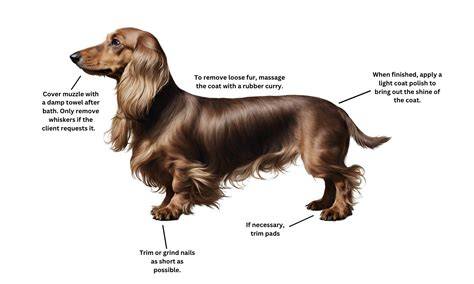
Long Haired Dachshunds have beautiful coats that require regular grooming. Brush their coats at least a few times a week to prevent matting and remove loose hair, paying special attention to areas behind the ears, under the belly, and around the legs. They are moderate shedders, so regular brushing helps minimize loose hair around the home. Occasional baths (every 2-3 months or as advised by your vet) keep the coat clean. A professional groomer can help with more intricate grooming needs. Regular tooth brushing with dog-specific toothpaste twice daily is ideal, or as often as possible.
Training
They can be moderately easy to train, but they have a reputation for being a bit stubborn. Patience, consistency, and positive reinforcement methods work best. Early socialisation and obedience training are crucial to ensure they grow up to be well-rounded and obedient dogs. Consider puppy training classes or professional guidance to navigate the training process. Remember, each Long Haired Dachshund is unique and may have different needs.
Diet and feeding
Provide a balanced and nutritious diet suitable for their age, size, and activity level. Monitor their weight and adjust portion sizes to prevent obesity. For puppies, feed a small-breed puppy food 3-4 times a day until around 6 months, then transition to twice daily feeding. Transition to adult dog food typically occurs around 10-12 months of age; consult a veterinarian for specific guidance on feeding schedules and transitioning.
Health considerations
Long Haired Dachshunds, like other Dachshund varieties, are prone to certain health conditions. These can include:
- Bones and joints: Intervertebral Disc Disease (IVDD) due to their long backs
- Eyes: Cataracts, Dry eye, Progressive Retinal Atrophy (PRA)
- Heart disease and other inherited issues
Regular veterinary care, weight management, gentle exercise, and avoidance of excessive jumping or stair climbing help mitigate some risks. If you have concerns about health or suitability for your family, consult your veterinarian. Space considerations: due to their long backs, use ramps or steps to prevent jumping on/off furniture, and ensure safe home layouts. They can adapt to single-story living with proper exercise and enrichment.
About the Long Haired Dachshund breed
Long Haired Dachshunds are a one-of-a-kind breed with a blend of warmth, energy, and loyalty. They often form strong bonds with a single person while remaining affectionate with the whole family. They enjoy run-and-play sessions but also cherish cuddles, making them versatile companions for various households.
There are three Dachshund coat types overall: Wire-Haired, Smooth-Haired, and Long-Haired, and three sizes: Miniature, Standard, and Kaninchen. Kaninchen is the smallest size developed to hunt rabbits. Standard Long-Haired Dachshunds should be kept warm, as their small bodies don’t hold up well in cold weather. Canine-appropriate winter gear can be a good idea in cooler climates.
Practical notes for owners
These dogs are not couch potatoes, but their energy levels are manageable with regular exercise. They bond closely with their people and enjoy being by their side. They can be good with children under supervision, but care should be taken to avoid rough play that could injure their backs. Regular socialisation helps them interact harmoniously with other dogs and people. A calm, patient approach to training yields the best results, and a supportive environment helps them thrive.
Dachshund Dogs 101: Pros & Cons, Hidden Facts, and Puppy Care Tips
The heart of a warrior beats strongly in this little pup, and their curious nature keeps daily life interesting. They may be quiet at times, but they are always ready for a cuddle, a game, or a walk. The breed’s distinctive look and lively spirit make them a memorable addition to many families.