Minoxidil applied to the scalp is used to stimulate hair growth in adult men and women with a certain type of baldness. The exact way that this medicine works is not known. If hair growth is going to occur with the use of minoxidil, it usually occurs after the medicine has been used for several months and lasts only as long as the medicine continues to be used. This is a decision you and your doctor will make.
What is Rogaine and who is it for?
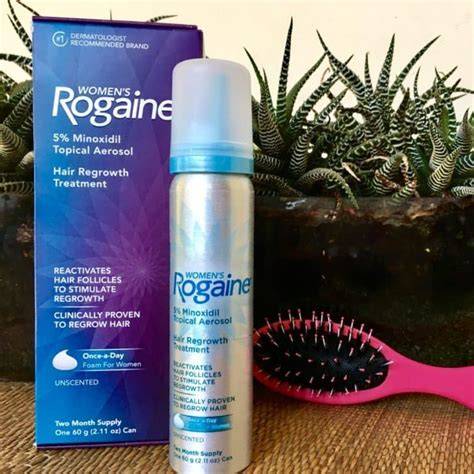
Rogaine is the brand name for minoxidil, a topical solution or foam used to treat hair loss. It’s FDA-approved for androgenetic alopecia (male and female pattern baldness) and works by extending the growth phase of hair follicles, helping to slow hair loss and promote regrowth. Rogaine is available in 2% and 5% strengths, with the higher concentration typically recommended for men. It’s applied directly to the scalp once or twice a day, depending on the formulation.
Rogaine is meant for scalp use only and should not be applied to cuts, irritated skin, or other areas of the body. It’s generally safe when used as directed, but some may notice mild scalp irritation, dryness, itching, or flaking. In rare cases, Rogaine can cause increased hair shedding in the first weeks and, if it drips, unwanted facial hair growth.
How minoxidil is thought to work
Rogaine helps with hair loss by stimulating hair follicles and extending the growth phase of the hair cycle. While the exact mechanism isn’t fully understood, researchers believe it works in three key ways. First, minoxidil is a vasodilator, widening blood vessels and increasing blood flow to the scalp, delivering more oxygen and nutrients to hair follicles. Second, it prolongs the anagen (growth) phase of hair. Third, it helps revive miniaturized hair follicles, tending to shrink over time in pattern baldness, thereby encouraging thicker, stronger hair growth.
Minoxidil’s effects are not a cure for baldness and do not address the hormonal root causes such as dihydrotestosterone (DHT). Clinical studies show that about 40% of men experience moderate regrowth, with results varying between individuals. For many, the benefits are most meaningful when treatment begins early in the thinning process.
In addition to its vascular effects, some research suggests anti-inflammatory, anti-androgenic, and local growth-stimulating properties may contribute to its action, though the exact pathways remain an active area of study. The formulation (foam vs. liquid) and concentration (2% vs. 5%) influence effectiveness, with higher-concentration products generally showing stronger results in men.
What to expect: timelines and outcomes
Rogaine isn’t an overnight solution. Most users notice reduced shedding within 2 to 3 months, and visible regrowth can take 4 to 6 months, sometimes up to a year with consistent use. Crucially, any regrowth tends to last only as long as the treatment is continued. If treatment stops, newly regrown hair will shed and scalp hair may return to pre-treatment levels within months.
Rogaine works best in the early stages of hair loss and is not typically effective for completely bald areas. For men, it’s FDA-approved for male pattern baldness and is particularly helpful for thinning at the crown; for women, it can help with general thinning on top. Consistency is essential: use twice daily for men and once daily for women to maintain results.
How to use Rogaine correctly
Rogaine comes in foam and liquid forms. For the topical solution, apply 1 mL to the scalp twice daily for adults; for the foam, apply about half a capful to the thinning area twice daily. Ensure hair and scalp are dry before application, part the hair to expose thinning areas, and massage gently into the scalp. Do not shampoo for 4 hours after application, and wash hands after use to remove any medicine.
Apply only to the scalp and avoid contact with eyes, nose, or mouth. Do not use other skin products on the same area on which minoxidil is applied. If the scalp is irritated, abraded, or sunburned, consult a doctor before continuing. The treatment should be used as directed by a healthcare professional, and dosing adjustments should only be made under medical supervision.
Who should consider Rogaine and who should not
Rogaine is approved for adult men and women with androgenetic alopecia. It is not typically suitable for all types of hair loss, and a correct diagnosis is important before starting treatment. People under 18, those who are pregnant or breastfeeding, or individuals with certain heart conditions should consult a physician before use. Rogaine is not a substitute for addressing underlying hormonal causes of hair loss, and in some cases, prescription therapies addressing DHT may be recommended instead or in combination with minoxidil.
Results vary, and some individuals may experience only modest improvements. In some cases, hair shedding may temporarily increase at the start of treatment as new hairs replace older ones. For persistent or worsening hair loss, or if no improvement is observed after several months, a consultation with a hair loss specialist is advised to discuss alternatives or complementary treatments.
Comparisons and context: what else matters
Compared with other hair-loss treatments, minoxidil addresses early-stage hair thinning but does not address DHT directly. 5-alpha reductase inhibitors like finasteride or dutasteride target DHT and may be considered in men, though these are not typically used in women due to pregnancy risk. Some clinicians may combine therapies for enhanced effects, particularly in men, but this should be guided by a physician. Rogaine remains a widely used non-prescription option with decades of clinical data supporting its use, though it is not a universal solution and requires ongoing use to maintain results.
For those seeking more permanent solutions, methods such as hair transplantation offer options beyond pharmacologic therapy. A comprehensive plan that includes medical treatment, lifestyle considerations, and professional guidance from a licensed clinician yields the best chance of satisfying results over the long term.
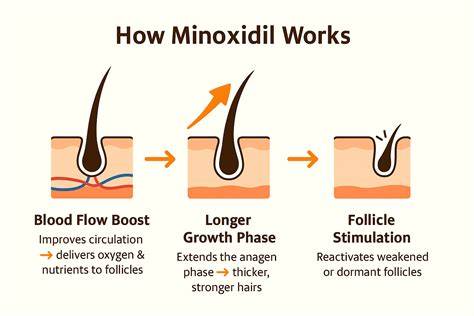
How Does Minoxidil Work For Hair Growth? Mechanisms Of Action Explained
Rogaine can be a helpful tool in slowing hair loss and promoting regrowth for some individuals, especially when started early and used consistently. It’s important to manage expectations, recognize its limitations, and coordinate with a healthcare professional to determine the best overall strategy for hair health and growth.