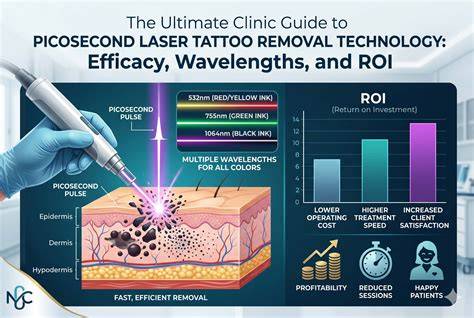
As the tattoo industry continues to grow, so does the demand for laser tattoo removal services. You may be wondering how to get started in the tattoo removal industry. The first step is understanding the medical regulations in your state. For those interested in starting their own business, this guide explains the technology behind laser tattoo removal, the types of laser wavelengths used, key factors to evaluate when purchasing a tattoo removal machine, and the typical cost of professional equipment.
How a tattoo removal laser works
Laser tattoo removal devices generate short pulses of high intensity light directed at the tattoo pigment. Once shattered, the ink particles are gradually cleared by the body’s immune system over the following weeks. Another important factor when determining the best removal equipment is wavelength, pulse duration, and spot size. Most professional lasers allow operators to use multiple wavelengths to effectively target different ink colors.
Typically, tattoo removal relies on two primary wavelengths: 1064 nm and 532 nm. Q-switched Nd:YAG laser (1064 nm, 532 nm) - The 1064 nm wavelength is FDA approved to remove black and dark blue pigments. Laser wavelengths exist across a spectrum. The 1064 nm wavelength falls within the infrared range and is invisible to the human eye. Wavelengths such as 755 nm and 694 nm are effective for treating green and blue pigments, while 532 nm is best suited for red and orange ink.
Wavelengths and pigment colors
There are two common types of Q-Switched lasers in the tattoo removal industry: Nd:YAG and ruby. The go-to laser for most tattoo removal practitioners is an Nd:YAG laser because it is capable of producing the most versatile wavelengths: 1064 nm and 532 nm. The 1064 nm wavelength is a powerhouse for treating black, blue, and other dark ink colors; the 532 nm wavelength is highly effective for removing red, orange, yellow, and other bright colors. These two powerful wavelengths can completely remove 95% of tattoos. Elite practitioners who are worried about the remaining 5% of tattoos often invest in an additional ruby laser (694 nm) to compliment their purchase of an Nd:YAG laser. Both ruby and Alexandrite (755 nm) wavelengths function very similarly and are excellently absorbed by difficult-to-treat ink colors such as lime green, teal, and turquoise.
Pulse duration and technology type
Another major distinction in tattoo removal technology is the difference between picosecond and nanosecond pulse durations. A picosecond is 1,000 times shorter than a nanosecond. For this reason, many experts recommend choosing a picosecond tattoo removal machine. Picosecond lasers, such as the PicoWay system, allow ink particles to be targeted more precisely while reducing heat exposure to surrounding tissue. In contrast, nanosecond platforms remain reliable for broad color ranges and established workflows.
Device configurations and use cases
Tattoo removal equipment may be used for cosmetic tattoos, professional tattoos, or amateur tattoos. Cosmetic ink can usually be removed but may oxidize depending on the pigment color. Professional tattoo ink may contain heavy metals, lipids, and other compounds that influence how easily the tattoo can be removed. Amateur tattoo ink can vary widely and may include substances such as Indian ink or soot. The best tattoo removal machines offer multiple spot sizes, enabling treatment of various tattoo areas with controlled energy delivery.
Popular machines and considerations when purchasing
Nd:YAG lasers (1064 nm and 532 nm) are often recommended for dark pigments such as black and blue or warm tones. The price range for tattoo removal lasers varies widely, with machines costing anywhere from about $100 to $200,000 depending on technology and manufacturer. For businesses, investing in professional grade laser technology helps ensure the highest quality results for clients.
The Candela PicoWay laser sits at the top of many professional rankings and is the only laser used by Removery clinics. PicoSure was the world’s first picosecond aesthetic laser. The RevLite SI is a Q switched multi wavelength laser designed for tattoo removal, acne scars, wrinkles, and pigmented lesions. The Quanta Q Plus laser offers multiple configurations and optional add ons, including Q switched and Er:YAG technologies. The Neatcell handheld laser is a small portable device marketed for at home tattoo removal. When selecting tattoo removal equipment, consider the overall quality of the laser, available wavelengths, treatment settings, and total cost of ownership.
Clinical and practical perspectives
According to Clinical Advisory Board member and Co Chief Medical Officer Bill Kwan, MD, early tattoo removal treatments relied on Q switch lasers. Picosecond lasers, such as the PicoWay system, allow ink particles to be targeted more precisely while reducing heat exposure to surrounding tissue. Removery utilizes the Candela PicoWay laser at locations around the world and combines advanced technology with clinical oversight from dermatology experts.
“I expected complications removing red ink, but instead I ended up with a fully removed tattoo. I’ve had five sessions so far and my tattoo has faded significantly.”
Business opportunities and marketing
Passionate about providing safe and effective tattoo removal care? Consider applying to Removery, the world’s largest tattoo removal company. Get the fastest and most comprehensive removal possible - our arsenal includes three top-tier laser machine series, allowing us to customize the treatment for maximum efficiency. Discovery Pico Series offers high-performance platforms designed with features for different clinical goals, delivering leading picosecond technology with multi-wavelength capabilities and precise energy delivery. The Q-Plus Series is built for artists, studios, and aesthetic practices that want fast results, powerful technology, and growth. Chrome Unleash the power of the Chrome Lase-Station®, the ultimate Q-Switched 1064/532 nm Nd:YAG laser system that offers more than 50 treatment indications with modular options.
Expanding a business with laser tattoo removal often includes clear pathways: professional training, marketing support, financing options, and scalable equipment. Astanza and other providers offer FDA-cleared devices, hands-on training, and extensive warranties, along with business development assistance to help clinics grow. Financing the purchase of a laser removal system is common, with third-party options to simplify the acquisition process for new and expanding practices. A typical session costs around $200 and takes about 15 minutes, with many tattoos requiring 5 to 10 sessions, translating to substantial potential revenue over the treatment course.
Industry considerations and regulatory notes
The United States FDA classifies laser tattoo removal as a medical procedure, and devices are regulated accordingly. FDA clearance means the removal method complies with safety and effectiveness requirements. Be wary of low-cost online listings that lack FDA clearance, as they pose legal and safety risks. Regulations vary by state, affecting what services can be offered and how equipment can be purchased. A well-planned startup often includes a dedicated space for treatment, a marketing budget, and professional-grade equipment backed by reputable manufacturers.
Practical guidance for launching a tattoo removal business
For practitioners, the space requirements are modest: a waiting area, a treatment room, and an office. The treatment room can be small, as many laser systems are compact and space-efficient. Consumable costs are relatively low, making the procedure potentially high in net profitability. A robust business model combines clinical excellence with strong marketing and ongoing staff training to ensure consistent results and client satisfaction.
- Understand local regulations and obtain necessary medical certifications.
- Choose a laser system with appropriate wavelengths, pulse durations, and spot sizes.
- Budget for purchase, maintenance, and potential financing options.
- Establish a clear revenue model with realistic session pricing and treatment plans.
- Build a team with clinical oversight and ongoing training.
Resources to start a laser tattoo removal business include starter kits and access to expert consultation. A well-structured plan helps minimize surprises and streamlines the process of launching a new aesthetic service offering. For entrepreneurs, tattoo removal represents a compelling investment due to growing demand, high client satisfaction potential, and opportunities for scalable growth.