The nose serves a dual role as an essential component of the respiratory system and a prominent facial feature. The nose consists of two main parts, each playing a vital role in both the aesthetic and physiological aspects. Nasal surgery can target either or both parts, depending on the specific purpose of the procedure.
External Nose: structure and surgical targets
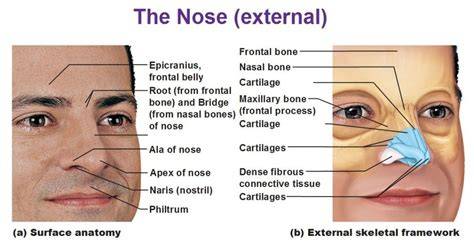
External Nose: This is the visible part of the nose and includes the bridge, nostrils, and tip. The nasal bridge, also known as the dorsum, is the central portion of the nose located between the radix and the nasal tip. The radix is located at the nasal root and serves as the starting point of the nose, positioned between the eyebrows on the face. The radix holds particular significance in ethnic rhinoplasty or nose augmentation procedures. These interventions aim to address a flatter or less defined radix in certain ethnicities. To enhance the appearance of the radix, surgeons may use a cartilage graft.
The nasal bridge is the central portion of the nose located between the radix and the nasal tip. The columella is the vertical strip of tissue that separates the nostrils at the base of the nose. The columella can vary in shape and size among individuals. In some cases, it may appear too prominent or droopy, affecting the aesthetics of the nose. Surgical procedures can be performed to address concerns related to the columella. Columellar surgery can help improve the symmetry, proportion, and overall balance of the nose. The nasal bones form the framework for both the internal and external nose shape. They are important for the shape and projection of the nose, but unlike other bones in the body, the nasal bones are not as hard. The upper nasal cartilages are the cartilages apart from the alar cartilages and the septal cartilage, that is found over the nasal bones in the upper and lateral parts of the nose. This cartilage is important for determining the appearance of the nasal root as weak cartilage in that region gives the nasal root a pinched appearance. The external nose consists of various components, including the radix, nasal bridge, and nasal tip, which contribute to the overall shape and appearance of the nose. The alae flare out to form a rounded eminence around the nostril and are shaped by the alar cartilage, contributing to the appearance of the nasal tip.
The nasal tip is a prominent and noticeable part of the nose that protrudes outward. A desirable nasal tip is often petite, round, and slightly upturned. Nasal tip surgery, known as tip rhinoplasty, is a procedure that can be performed to address Nasal Tip concerns. The procedure involves reshaping the nasal cartilage and sometimes removing excess tissue to refine and contour the nasal tip. The wings (alae) are the extension of the nasal tip on the sides, and they are responsible for supporting the nasal tip.
Internal Nose: function and key structures
Understanding the anatomy of the internal nose is essential when considering nose surgery. The internal nose primarily contributes to the nose’s functionality, including breathing and smell, and is interconnected with its external features. The internal nose consists of various structures that play crucial roles in breathing and overall nasal function. These include the nasal septum, turbinates, nasal valves, and sinuses. The nasal septum is the cartilage wall between the two nostrils that is responsible for keeping both the nasal cavities open and unobstructed. The nasal septum gives the nasal bridge its shape, so any deviation of the nasal septum equates to the deviation of the bridge. A deviated nasal septum (DNS) is a cosmetic and physical deformity. Depending on the severity, the surgery of choice might be either a septoplasty or rhinoplasty.
The internal nose also contains the mucous membrane, turbinates (conchae), nasal valves, and sinuses. The nasal mucosa lines the nasal cavity and paranasal sinuses, warming, humidifying, and filtering the air. The turbinates increase the surface area of the nasal cavity, disrupt laminar airflow to slow and turbulize it, and aid in heating and humidifying the inhaled air. The nasal valves regulate airflow and resistance; the internal nasal valve is the narrowest region of the nasal cavity and a primary site of nasal resistance, bounded medially by the dorsal nasal septum and laterally by the upper lateral cartilage. The sinus ostia connect paranasal sinuses to the nasal cavity, allowing drainage-most notably the maxillary sinus draining into the middle meatus within the ostiomeatal complex.
Another essential element is the nasal cavity’s sense of smell, carried by the olfactory nerves. The olfactory epithelium contains olfactory cells that detect scents and send signals to the brain. The internal nose houses several important internal structures, including the mucous membrane, septum, and turbinates, which play key roles in nasal function and protection.
Septum, deviations, and nasal airflow
The nasal septum is the central supporting skeleton inside the nose, covered on each side by mucous membrane. The front portion is formed by cartilage, while the bony part comprises the perpendicular plate of the ethmoid bone and the vomer. A deviated septum can produce a crooked nasal bridge and obstruct airflow, sometimes necessitating septoplasty or rhinoplasty. A detailed consultation with a facial plastic and reconstructive surgeon includes an internal and external nasal exam and imaging such as a CT scan. Depending on the severity of symptoms and diagnosis, part or all of the surgical cost to correct a deviated septum may be covered by insurance.
Growth, variation, and ethnic considerations
The nose is formed by the fusion of facial prominences during development, with the frontonasal process giving rise to the bridge, medial nasal processes to the crest and tip, and lateral nasal processes forming the alae. Variations in nasal size and shape arise from differences in nasal bone shapes and the bridge formation, influenced by ethnic and evolutionary factors such as temperature and humidity. Ethnic rhinoplasty often focuses on augmenting or refining the radix to achieve a balanced, harmonious profile and may employ cartilage grafts when needed. While rhinoplasty can address hump, tip, and certain asymmetries, natural variations in facial projection remain important considerations.
Practical considerations for patients
When considering nose surgery, consult with a qualified ENT or facial plastic surgeon who specializes in nasal procedures. Realistic expectations and an understanding of potential risks and complications are essential for successful outcomes. A thorough internal and external nasal exam, along with imaging, helps determine whether procedures such as septoplasty, rhinoplasty, or columellar adjustments are appropriate. For those experiencing crookedness, breathing issues, or recurrent sinus problems, a professional consultation can determine if surgery is the right path.
The nose is an olfactory and respiratory organ that warms, conditions, and filters the air you breathe. It also houses your olfactory organs, which give you your sense of smell, and contributes to speech through nasal resonance. The external and internal components together form a complex, integrated system that shapes both function and appearance.
Rhinoplasty Anatomy
In summary, a comprehensive understanding of both the external and internal nose-its bones, cartilages, mucosa, and functional pathways-guides informed decisions about surgery and helps patients and surgeons align on the desired outcomes.