If you are experiencing persistent numbness, tingling or pain in your hand and arm, it is possible that you might be suffering from a common condition known as Carpal Tunnel Syndrome (CTS). At the heart of CTS is the median nerve, a crucial component that supplies sensation to most of the hand and controls the muscles of the thumb. This nerve can be squeezed or compressed within the carpal tunnel, mainly when the already limited space in the tunnel decreases further due to changes resulting from age, disease, or injury.
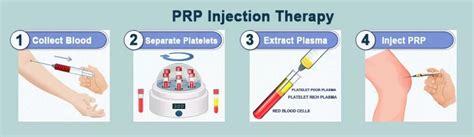
Traditional treatments for CTS usually involve wrist splinting, corticosteroid injections, and surgery to alleviate the pressure on the median nerve in severe cases. However, modern medicine constantly evolves, bringing innovative, less invasive methods to address health issues. Platelet-Rich Plasma (PRP) Therapy is a breakthrough in the world of regenerative medicine. The process starts with taking a small blood sample from the patient. This blood is then spun in a centrifuge, which separates its components. The result is a concentrated solution rich in platelets and growth factors, proteins that drive the body’s healing process. This platelet-rich plasma is then precisely injected back into the patient’s body, targeting the affected area, in this case, the carpal tunnel.
PRP therapy is often presented as part of a comprehensive recovery program for patients with CTS, aiming to reduce inflammation, promote nerve healing, and improve functional outcomes. The approach relies on growth factors released by platelets, including nerve growth factor (NGF) and vascular endothelial growth factor (VEGF), which may support nerve repair and revascularization in the affected region. Evidence from multiple randomized controlled trials (RCTs) suggests that PRP injections can provide meaningful improvements in symptoms and function for many patients with CTS, particularly those with mild to moderate disease.
What Is Carpal Tunnel Syndrome? The Median nerve runs under a ligament in the wrist called the Transverse Carpal Ligament. Due to wear and tear, arthritis in the wrist Carpal bones, or instability in these small bones, the Median nerve can get beat up and become swollen. With enough time the nerve can become dysfunctional leading to nerve damage. Given that this nerve supplies an important thumb muscle, the patient can lose grip strength and dexterity, and power in the thumb. The most common early symptom is pain or numbness in the thumb with use of the hand. The diagnosis can be made on a physical exam, nerve conduction study, or ultrasound imaging. The most common treatment is a high-dose steroid injection, but this can cause side effects. Surgery can be performed to cut the ligament, but this destabilizes the Carpal bones and may lead to bigger problems down the road.
Is There Evidence that PRP helps Carpal Tunnel Syndrome? Two years ago when I performed a general literature search on PRP I was astounded to find high-quality RCTs on using PRP to treat Carpal Tunnel Syndrome. At that point, I put a deeper dive into this topic on my list of things to do. Using the US National Library of Medicine I ran searches on PRP and Carpal Tunnel Syndrome and only included RCTs. I found 8 to date, which are listed in the Infographic above. PRP has been compared to steroid shots, dextrose injections, versus bracing, saline, PPP, shock wave therapy and used with surgery. Seven of eight studies showed positive results. Hence, at this point, we have good evidence that PRP injections help Carpal Tunnel Syndrome. We even have a small randomized controlled trial that shows that adding it to surgery improves outcomes.
What You Should Look for When Trying PRP to Treat Your Carpal Tunnel? If this is something you want to try to avoid Carpal Tunnel Release Surgery, then there are a few pointers to keep in mind. First, amber PRP (leukocyte-poor) is preferred as that will cause less flare-up. Second, the provider should be experienced with using ultrasound guidance to inject around nerves. Given that it’s critical that the nerve not be injected directly, avoid anyone who doesn’t have extensive ultrasound experience injecting your Carpal Tunnel with PRP. It should also go without saying that nobody should stick a needle into the area blind. Finally, and perhaps most importantly, find an experienced provider who can use Ultrasound-Guided Hydrodissection to carefully inject PRP around the nerve to break up scar tissue.
The upshot? There is a substantial amount of research showing that PRP injections can be effective for CTS when used with precision. If you want to try this, seek a provider with discipline and training to perform this procedure accurately. PRP can be delivered via a procedure called hydrodissection, using ultrasound guidance to surround the median nerve and inject PRP around scar tissue and inflamed areas. The goal is to reduce inflammation, relieve nerve compression, and restore function with minimal downtime.
Is PRP safer or more advantageous than traditional CTS treatments? Compared with repeat steroid injections or surgery, PRP offers a regenerative approach that may avoid some of the adverse effects associated with steroids and the risks of surgical intervention. In moderate CTS, PRP has shown promising results in improving symptom scores and functional measures, with several studies indicating safety and effectiveness. However, as with any therapy, outcomes vary based on disease severity, patient factors, and the expertise of the treating clinician.
What Is PRP? PRP stands for Platelet-Rich Plasma. This is made by centrifuging whole blood and concentrating platelets. These platelets release growth factors which can aid in healing. One of those growth factors is NGF (Nerve Growth Factor) and it’s believed that through this growth factor as well as others like VEGF, PRP may be able to help nerves repair.
Evidence and Trials Summary: There are multiple randomized trials and reviews evaluating PRP for CTS. In general, seven of eight trials show favorable outcomes for PRP compared to other non-surgical or surgical options, with improvements in pain, function, and nerve parameters. Meta-analyses and systematic reviews corroborate that PRP can be an effective nonsurgical option for mild to moderate CTS and may serve as an adjuvant to surgical release in some cases. Still, the quality and heterogeneity of studies vary, and longer-term data are evolving.
What You Should Expect During Treatment and Recovery? Recovery after a PRP procedure is typically quick, with mild soreness at the injection site for a day or two. The number of treatments needed can vary, but many patients require 1-2 sessions to achieve meaningful improvements. If PRP is used when the disease is mild or moderate, success rates are higher; if nerve damage is advanced with marked thenar muscle atrophy, the likelihood of improvement decreases and surgical options may be more appropriate. We recommend discussing with a trained regenerative medicine specialist who can tailor the plan to your CTS stage and goals.
Imaging and Diagnosis Considerations: CTS is diagnosed through a combination of physical examination, nerve conduction studies, ultrasound imaging, or MRI in some cases. An ultrasound can show thickening or inflammation of the median nerve and helps guide PRP injections to avoid direct nerve injection while enabling precise hydrodissection.
Potential Risks and Safety Considerations: PRP is autologous, generally well tolerated, and has a favorable safety profile in CTS populations. Risks are typically related to the injection procedure itself, such as infection, bleeding, or transient soreness. Compared with steroids, PRP avoids systemic side effects and immune suppression, though evidence on long-term comparative safety remains an active area of research.
Clinical Experience and Registry Data: Regenexx and affiliated clinics track patient outcomes in registries, offering transparency about real-world results for hand and wrist CTS treated with PRP and related regenerative techniques. This ongoing data collection supports ongoing understanding of which CTS patients are most likely to benefit from PRP therapy and informs best practice in ultrasound-guided hydrodissection and perineural PRP approaches.
Considerations for Practitioners: For clinicians offering PRP for CTS, key considerations include using amber leukocyte-poor PRP, ensuring ultrasound guidance, performing hydrodissection when appropriate, and personalizing treatment based on disease stage and patient goals. A careful approach helps maximize safety and potential benefits while avoiding blind injections and unnecessary risks.
In conclusion, PRP therapy for carpal tunnel syndrome represents a promising non-surgical option, particularly for patients with mild to moderate CTS who seek to avoid steroids or surgery. With careful patient selection, image-guided delivery, and a focus on nerve-friendly techniques, PRP can contribute to symptom relief, improved function, and potentially longer-term relief from CTS symptoms. The available randomized controlled trials and systematic reviews provide a favorable, though nuanced, picture of PRP’s role in CTS management.
- Amber PRP is preferred for reduced inflammatory flare.
- Ultrasound guidance is essential for safe, precise injection around the median nerve.
- Ultrasound-Guided Hydrodissection can help release nerve compression.
- Multiple studies show PRP can be effective, especially in mild-to-moderate CTS.
- Surgery remains an option if PRP does not achieve sufficient relief or in advanced nerve damage.
Video discussion and demonstration of PRP hydrodissection for carpal tunnel syndrome provide visual understanding of the technique and potential benefits. See the video below for an example of Median Nerve Hydrodissection using PRP.
Non-Surgical Carpal Tunnel Treatment with Nerve Hydrodissection
What Is the Regenexx Approach?
PRP can be used to treat carpal tunnel syndrome. We perform a procedure called hydrodissection. We use ultrasound to guide a very small needle around the median nerve and inject local anesthetic and our specialized PRP called platelet lysate. Injecting the fluid releases the nerve from surrounding tight or scarred tissue then the platelet lysate has growth factors shown to heal and repair nerves. This reduces inflammation naturally, releases nerve compression, and heals the nerve so that pain is reduced and muscle function restored. Usually, 1-2 procedures are needed to fully treat this problem. Recovery is quick, with mild soreness for a day or two. If PRP for Carpal Tunnel is used in mild-to-moderate disease, success rates are very high; in severe nerve damage with substantial atrophy, PRP is less likely to help, and surgery may be needed.
Researchers continue to analyze data from randomized trials and registry studies to refine indications, protocols, and long-term outcomes of PRP for CTS. The growing body of evidence supports a role for regenerative injections as part of a comprehensive CTS treatment strategy that prioritizes nerve preservation and function.