Dry shampoo is a product to absorb the dirt, oil and grease of your scalp without washing it. Many people use it to freshen their hair after working out, a humid commute, extend the life of a blowout, etc. It can also be useful for people with disabilities who have a hard time taking showers without assistance.
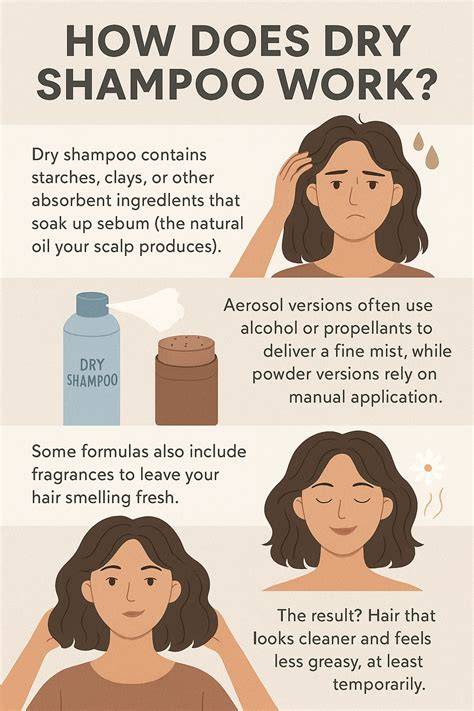
Commercial dry shampoos usually come in a spray bottle. They are made with a base of alcohol or starch. When you spray the product into your hair, the alcohol or starch soaks up oil and grease, making it look cleaner. Experts say dry shampoo is great once in a while, but it shouldn’t be a full-time substitute for washing your hair with water.
You can consider dry shampoo to be more of a hair freshener than a hair cleaner. It does nothing to clean your scalp, which collects dirt. Many shampoos help moisturize your hair. If you use only dry shampoo, it can actually dry out the strands so they’re more likely to break. Dry shampoo may also leave residue on your scalp. Without regular shampooing with water, that residue will build up.
If you don't clean your scalp and use only dry shampoo, you can get rashes and inflammation there. You can also get dandruff if you use dry shampoo too often without properly washing your scalp. Additionally, shampooing in the shower clears away bacteria and yeast. It can help you avoid clogged pores in the scalp and washes away styling products.
Experts recommend that you still wash your hair with shampoo and water a few times a week as part of your routine. People with hair that is not dry or oily can usually wash it two or three times a week. Those with curly or textured hair usually follow other hair care routines and may wash it less often. For example, those who use the Curly Girl Method wash their hair with traditional shampoo infrequently but use conditioner to keep their hair clean.
Depending on their hair texture, Black people may wash their hair with shampoo once every 1 or 2 weeks. Use dry shampoo correctly to prevent damage to hair and scalp build-up. Hold the bottle about 6 inches from your head and spray only as much as needed. Once you’re done spraying, massage your scalp or run your fingers through your hair to make sure the dry shampoo gets spread evenly and can’t be seen.
Experts recommend using it no more than 2 days in a row. They also recommend using it for no more than 3 months at a time, to avoid scalp and hair damage. There are many types of dry shampoo. Some add volume to your hair. Others are for extra oily hair, and still more claim to cover undyed roots. You may have to try a few products to find the one that works the best for you. If you end up picking the wrong color, the dry shampoo can discolor your hair temporarily.
How residue can occur and how to minimize it
Residue on the scalp can occur when dry shampoo is used too often or not distributed evenly. To minimize residue, spray as needed at a distance of about 6 inches and massage to distribute. A thorough rinse with water during regular washes helps prevent buildup.

Practical guidelines for different hair types
- For straight hair: Use sparingly, focus on roots, and re-smooth with hands or a brush after application.
- For curly or textured hair: Apply to roots gently and let it absorb oil before styling; avoid overloading curls.
- For damaged or fine hair: Choose lighter formulas and consider alternatives like powders designed for low residue.
Depending on their hair texture, people may wash their hair with shampoo once every 1 or 2 weeks. Use dry shampoo correctly to prevent damage to hair and scalp build-up. Hold the bottle about 6 inches from your head and spray only as much as needed. Once you’re done spraying, massage your scalp or run your fingers through your hair to make sure the dry shampoo gets spread evenly and can’t be seen. Experts recommend using it no more than 2 days in a row. They also recommend using it for no more than 3 months at a time, to avoid scalp and hair damage.
In summary, not all dry shampoos leave visible residue, but many can contribute to buildup if overused or misapplied. They are best used as a supplement to regular washing rather than a replacement, with attention to scalp health and hair integrity.