Curly hair is distinguished by its spiral structure, which can sometimes be irregular, making the fiber more porous and prone to dehydration and breakage. The core of the hair is weakened and requires targeted support. Contrary to popular belief, keratin does not always mean straightening. It is no coincidence that we have chosen it as our flagship ingredient. You have to experience it to understand it: after a plant-based keratin treatment, curly hair feels different to the touch. It retains its shape but becomes softer and more manageable. At Madame d'Alexis, we believe that true beauty does not impose itself: it reveals itself. Using keratin on natural curls is not about trying to tame them, but rather to enhance them, just as one would preserve and beautify a rare fabric.
Does keratin remove curls? The answer is nuanced and deserves to be formulated with precision. Keratin treatments are too often confused with products enriched with plant-based keratin. The former-the famous Brazilian blowout-uses heat and chemicals to semi-permanently alter the structure of the hair. The second one, which we chose at Madame d'Alexis, is not designed to smooth hair. It repairs, coats, and strengthens, while respecting the natural wave. A sulfate-free keratin shampoo, well formulated, will not relax your curls. However, there is one caveat: too much keratin, or keratin that is poorly combined (often with occlusive silicones), can weigh down the hair fiber. At Madame d'Alexis, each formula has been designed tohonor the nature of the hair, not to constrain it. The use ofkeratin on curly hair inspires both admiration and caution. And rightly so.
I myself experienced this mistake at a time when I was using multiple strengthening treatments without considering the cumulative impact. Plant-based keratin, extracted from natural sources, offers biomimetic affinity with the fiber without adding excess weight. This is the essence of Madame d'Alexis' philosophy: to enhance without altering, to strengthen without overwhelming. Introducing keratin into a hair care routine for curly hair requires precision and intention. It's not about doing too much, too quickly. Keratin, even plant-based keratin, is a structural active ingredient. Each strand of hair is unique. Some are fine and fragile, others denser, sometimes porous, and often sensitive to damage. Some hair types will benefit from weekly application, while others will prefer less frequent use. At Madame d'Alexis, we have designed each treatment to be just right. When properly integrated, plant-based keratin enhances curly hair without ever overpowering it.
At Madame d'Alexis, we believe that caring for curly hair is an art. An art of balance, texture, and respect for the nature of the hair. We have made the exclusive choice of a plant-based keratin, extracted from wheat and corn proteins, with a biomimetic structure. It blends harmoniously with the hair fiber without ever suffocating it. All our products are formulated without sulfates, silicones, parabens, or added water. The fortifying mask, rich in plant-based keratin, prebiotics, and cationic hyaluronic acid, deeply strengthens the hair fiber while respecting the natural elasticity of curls. The day serum protects and beautifies. Each product has been formulated with a light, melt-in, non-greasy texture to preserve the volume and bounce of curls.
No, provided it is used in gentle cosmetic treatments based on plant keratin, such as those we have chosen at Madame d'Alexis. They simplystrengthen the hair fiber, smooth the cuticle, and reveal the natural shape of the curl without altering it. Absolutely. The common misconception that all keratin treatments straighten hair is incorrect. A sulfate-free shampoo, mask, or serum containing plant-based keratin will not relax your curls. The safest hair care products are those that are sulfate-free, silicone-free, and free of occlusive ingredients, formulated with plant-based keratin. This type of keratin is lighter, gentler on the hair ecosystem, and ideal for textured hair. This effect often occurs when you use too much product or use treatments that combine keratin and heavy polymers. Animal keratin is extracted from wool, horns, or feathers. Although effective, it can be heavier and sometimes less well tolerated. Its structure is biomimetic, meaning it is better absorbed by the hair.
Colored or bleached hair is often fragile, porous, and needs targeted repair. Plant-based keratin strengthens its internal cohesion, improves its resistance to breakage, and preserves color. Yes, provided you choose products formulated for this purpose. At Madame d'Alexis, our textures have been developed to avoid weighing down even the finest hair. It all depends on the condition of your fiber. The key isto listen to your hair. Yes. By filling in gaps in the fiber and smoothing the cuticles, plant-based keratin improves light reflection and hair cohesion, resulting in more defined curls. And it does all this without the stiff or greasy effect of some styling products.
Real-world experiences and the balance of outcomes
For the past month or so, I’ve been the proud owner of a newly keratin’d head of hair and oh my lord, I could not tell you what took me so long to take the plunge. Really. Hair stylists have suggested it to me for the past decade and I’ve always said no, out of-I don’t know, fear? Sure, I’ve been wearing my naturally 3B, coarse, prone-to-frizz, curly hair straight pretty much non-stop for the past two and a half years. But anything more permanent than that gave me pause. Mainly because I didn’t really understand the landscape of hair treatments-sure, we've covered it in the past, but I remained unmoved. That was until I met Joey Silvestera, chillest hair guy in the biz and owner of Blackstones. During a routine haircut, I asked him to take some weight out of my hair (what I ask at the beginning of most haircuts), and he flat out said no. “If I thin it out, it’s going to lose the weight but it's also going to expand,” he explained. That’s the thing with curly hair: It has a mind of its own. Take any of the bulk out and you’re encouraging the poof to make up the difference. “What you need is a smoothing treatment.” The keratin talk again…but with a twist. Get a keratin treatment and a whole world of haircuts could open up to me. Joey then introduced me to Pooja Shah, who is a walking billboard for how to get the best hair of your life. She’s waist deep in it and it swings behind her like she’s in a Pantene commercial. Or Living Proof, more accurately, because that’s the line she swears by. Pooja stuck her hands in my hair and started to nod-yes, this is hair she could work with.
Before a month ago, I didn’t even wash my own hair. I’d gotten myself into a dangerous, vicious cycle of blowouts. I say dangerous not because of the cost or damage to my hair, but because I had backed myself into a corner of learned helplessness: Stop washing and styling your hair for long enough and you will actually forget how to do anything to it yourself. Anyway, when I came back to see Pooja, she explained the routine to me: They were going to wash the crap out of my hair first-three rounds with a special clarifying shampoo. Then she was going to paint it with Keratin Complex’s Smoothing Treatment, a semipermanent treatment that lasts around five months and smells delightfully of coconut. After I marinated in that for 30 minutes, she would flatiron it into my hair, leaving me with stick-straight hair for 72 hours. While the treatment continues to work, I couldn't touch my hair, pull it into a ponytail, or style it all. Pooja did a great job and was a wonderful conversationalist during my four-hour salon visit.
But afterwards was when the real work began. Getting a keratin treatment is not the same thing as a crash course in blowdrying technique. Getting a keratin treatment cannot fix a bad haircut. I’ve been growing out someone else’s mistake for close to nine months and the treatment makes it easier to hide, but the haircut is still there. Most importantly, getting a keratin treatment is not the same as getting a hair transplant. Nothing will give me the floaty baby hair I’d like to have. But whatever. That’s life. If I could leave you with any takeaway it’s that a semipermanent keratin treatment won’t change the hair you have-mine feels the same for the most part, maybe a little softer-but it will make your hair worlds easier to manage if you blowdry/flatiron with any regularity. Right after I wash my hair, it’s still a little curly (2B instead of 3B). So if you’re looking to keep your texture intact, rest assured you can. But this texture is more like Play-Doh than it was before.
- Sulfate- and paraben-free products are non-negotiable to protect the treatment.
- Keep the hair away from water for at least two days after the appointment to avoid disrupting the smoothening process.
- Avoid tying the hair in a tight ponytail during the setting period to prevent bends in the hair.
For styling, I tried Living Proof’s Timeless Shampoo and Conditioner pairing, praised for being free of nasties, and I relied on Bumble and bumble Hairdresser’s Invisible Oil for moisture. The routine can be surprisingly quick, with some finding the process manageable in about 15 minutes, especially when the goal is to maintain texture and shapely curls rather than achieve a flat straight look.
What to expect and who should consider keratin for textured hair
Many say keratin treatments can change the curl pattern, making some textures easier to manage but looser. If you naturally have springy curls, they may appear closer to looser curls once the silk press reverts. The exact outcome depends on the number of passes with the flat iron and the specific formula used. If you want to preserve texture, a careful, measured approach is essential. In skilled hands, a keratin treatment can temporarily soften and smooth without fully relaxing the curl.
As a rule, keratin sits on top of the cuticle and washes out over time, unlike a permanent relaxer. This makes it possible to revert to your natural texture after some months, though there are cases of lasting changes when heat application was excessive. Therefore, a thorough consultation with a trained professional is crucial to determine the exact results you want and the safest approach for your hair type.
Colored or bleached hair, often fragile and porous, can benefit from plant-based keratin to strengthen internal cohesion, improve resistance to breakage, and preserve color. A key criterion is choosing products designed for this purpose, and avoiding heavy formulations that weigh down fine hair. Ultimately, listening to your hair and applying keratin with precision will yield the best results-improving light reflection and cohesion while maintaining volume and bounce.
Переходы к практике и выбор подходящих средств
Yes, colored or bleached hair can benefit from plant-based keratin when the products are formulated to repair and protect. The textures have been developed to avoid weighing down even the finest hair, and the condition of your fiber will guide how often you should use keratin-based products. Plant-based keratin strengthens, smooths, and reveals the natural curl without a stiff or greasy finish. In short, keratin can enhance curl definition and cohesion if applied thoughtfully and with appropriate formulations.
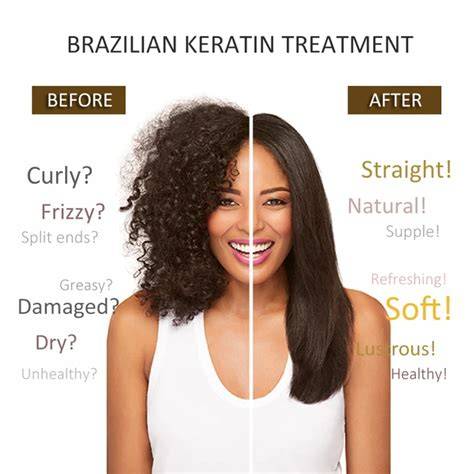
The Truth about Keratin For Natural Hair Curls Ft: Cliove Organics Keratin Treatment
Ultimately, the decision to pursue keratin for curly hair should balance desire for manageability with respect for natural texture. When done correctly, plant-based keratin enhances curls by filling gaps and smoothing cuticles, leading to better light reflection and defined curls without heavy stiffness.