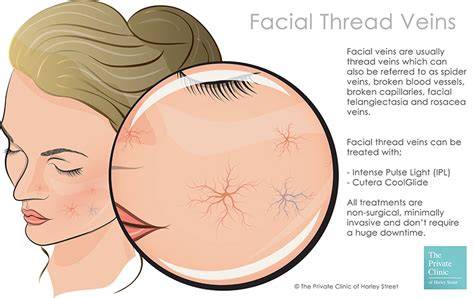
Red veins and spider naevi are common cosmetic concerns that appear as a fine network of red, wavy lines near the surface of the skin. They are often found on the face and legs, but can also appear on the chest and rib area, front and back. The appearance may be clusters or individual, with some lines darker than others, and a cluster can resemble a spider.
What are red veins and spider naevi?
Red veins lie superficially in the skin and can be caused by exposure to harsh elements, stress, sun damage, smoking, and other factors. Pregnancy, heredity, lifestyle, and skin type influence their development and severity. They are common around the corners of the nose, across the cheeks, and toward the edge of the face, and can affect both men and women in their late 20s or early 30s, growing with age.
Overview of Advanced Electrolysis for treatment
Electrolysis is used to treat red veins and spider naevi by placing a very fine sterile probe beside or into the blemish and applying a tiny amount of electric current. The current heats and seals the capillary, causing the lesion to dry up and disappear. This method can also treat skin tags, milia, blood spots (Campbell De Morgans), and other blemishes with a similar pattern. The treatment is medically approved and has been used for over a century as a safe and cost-effective option for lesion removal.
During the procedure, a very fine needle pricks the skin of the thread vein, and a small electrical current is passed through it. A numbing cream may be used prior to treatment to reduce discomfort. The skin may appear red and puffy immediately after the procedure, but this usually fades within a few hours. Healing guidance emphasizes avoiding touching the area, not picking scabs, and protecting the treated skin from sun exposure.
What to expect in terms of number of treatments
Red vein treatments may require up to three sessions, depending on the severity and area. Deeper capillaries will not respond to this superficial electrical treatment. The typical healing and fading process begins a few weeks after treatment, with noticeable improvement after one treatment in some cases and continued improvement after subsequent sessions. The exact number of treatments depends on the extent of the condition and how the skin heals.
Who administers the treatment and prerequisites
Therapists offering this treatment should have specialist professional training, including extensive experience with electrolysis. A confidential consultation and medical history review are part of the process to assess skin sensitivity and tailor the treatment accordingly. The practitioner’s expertise is essential to determine suitability, especially for different skin tones and sensitivities.
Other treatment modalities for thread veins
In addition to electrolysis, several other options exist for treating thread veins, depending on size, location, and color:
- Intense Pulsed Light (IPL): Delivers flashes of light to break up the haemoglobin in the veins; may require multiple sessions.
- Laser therapy (e.g., Nd:YAG 1064nm): Similar principle to IPL but uses laser light; effectiveness varies with skin tone.
- Microwave therapy (therocoagulation): Uses heat energy to cause coagulation and reabsorption of veins; can provide rapid results.
- Sclerotherapy: For varicose veins on legs, a salt-based solution is injected to collapse the vein.
- Microcoagulation or microwave/thermo coagulation: Provides quick improvements for some cases.
Aftercare and lifestyle considerations
Post-treatment care includes keeping the area clean, avoiding infection, and protecting treated areas from the sun. Use sun protection SPF 50 and avoid picking scabs. Aftercare guidance also covers avoiding strenuous activities, swimming, saunas, and aggressive nose blowing after nasal thread veins are treated. Minimal trauma is expected because the veins lie superficially, but over-treatment can risk skin trauma. It is important to follow the specific aftercare sheet provided by the clinic.
Expected results and safety
The success rate for treating red veins with electrolysis is around 95%, with a slim chance of veins reappearing over time. Immediate results may be modest, but gradual fading occurs as the coagulated blood is cleared by the body. There are generally no permanent side effects, though short-lived mild scabbing or redness can occur during healing. The depth of the veins and individual skin response influence outcomes.
Client experiences and testimonials
Testimonials emphasize professional care, comfort, and positive results. Clients report feeling at ease, confident in the treatment, and satisfied with outcomes, often noting the care and expertise of the practitioners. While anecdotal, these reviews highlight the importance of experienced, compassionate clinicians in achieving optimal results.
Technical notes and terminology
Thread veins are thin, red, wiggly lines that show up on the face and legs. They can be superficial or deeper, requiring different treatment approaches. The procedure uses a fine needle to introduce a current that coagulates the vessel, sometimes achieving substantial clearance after one to three treatments. If you have varicose veins rather than thread veins, sclerotherapy is a more appropriate option.
Thread Vein Removal using Advanced Electrolysis, London & Essex, 01708 727239
Key considerations for choosing treatment
Which treatment is best depends on the size, location, color of the thread veins, and skin tone. For darker skin tones, some laser and IPL options may be less safe or require specialized settings. Consultation with a qualified practitioner is essential to determine the optimal approach for each patient, balancing effectiveness, safety, and comfort.
| Treatment Modality | Typical Target | Typical Sessions | Notes |
|---|---|---|---|
| Advanced Electrolysis | Red veins, spider naevi, skin tags, milia | 1-3 depending on extent | Superficial veins respond; higher risk if deep |
| IPL | Thread veins, facial veins | Multiple | Light-based; variable by skin tone |
| Laser (Nd:YAG 1064nm) | Facial and leg veins | Multiple | Depth and skin tone considerations |
| Microwave therapy | Thread veins | Often immediate or few sessions | Thermo‑coagulation technique |
| Sclerotherapy | Varicose veins in legs | One or few | Injection-based, different mechanism |
In summary, red vein electrolysis and related modalities offer effective options for reducing or removing thread veins and spider naevi, with treatment plans tailored to individual skin type, vein depth, and area. A consultation with a qualified professional provides the best guidance on selecting the most suitable approach and achieving safe, satisfactory results.
tags: #red #vein #electrolysis